Return Visitor Retargeting Inside Chat: A Shopify CRO Tactic Most Stores Skip
Most Shopify stores see high traffic from returning visitors but fail to convert them. A proactive Shopify return visitor chat strategy can fix this by engaging shoppers at the exact moment they're reconsidering a purchase.


You’re in your Shopify analytics, maybe for the tenth time this week, staring at a familiar, frustrating story. The numbers are a constant loop. Your store gets a healthy amount of traffic, and a good portion of it, maybe 30% or more, is from returning visitors, a segment that should be your most profitable. These aren’t strangers; they’ve been here before, indicating a level of trust and interest far beyond a first-time browser. They’ve clicked around, viewed products, maybe even added to cart in a past session. Yet, their conversion rate is nowhere near what you feel it should be, hovering just slightly above that of cold traffic. They come back, look around again, and leave. It feels like money is walking in the door, picking up a product, looking at it, and then setting it back down before walking out for good. This is one of the most common and frustrating leaks in an ecommerce business: the high-intent, low-conversion returning visitor. While email flows and retargeting ads work to bring them back, what are you doing to convert them in the critical moments they are *currently* on your site for the second or third time? For most stores, the answer is a resounding nothing. A proactive shopify return visitor chat strategy is the tool designed to plug this specific leak, engaging this high-value segment when they are most likely to buy and finally capitalizing on the interest they are so clearly showing you.
The Quietly Expensive Problem of Unconverted Return Traffic
The obsession with customer acquisition often overshadows a more profitable truth: the gold is in the customers you already have. The cost to acquire a new customer has climbed dramatically, making it significantly more expensive than retaining an existing one. This isn't just a talking point; it's a direct hit to your profit margin. An existing customer has a much higher chance of buying again, while a brand-new prospect, acquired through expensive ad campaigns, sits at a much lower chance. This isn't just about saving money; it's about making it. Existing customers spend more, with some data suggesting they spend 67% more on average than new ones. According to research originally from Bain & Company, a modest 5% lift in customer retention can increase profits by a staggering 25% to 95%, depending on the industry. The business case is clear and has been for years. Yet, many Shopify stores operate like a leaky bucket, pouring expensive, newly acquired traffic into the top while failing to patch the holes where existing, high-intent customers are slipping away, taking their potential lifetime value with them.
This is where the returning visitor comes into sharp focus, representing the most significant of these leaks. A healthy ecommerce store might see a returning visitor rate of around 30%. These are people who have overcome the first major hurdle; they know your brand and have shown enough interest to come back, a clear signal of purchase intent. They are dramatically more likely to engage, adding items to their cart 70.6% more often than new visitors and viewing more pages per session. They are, by every measure, a qualified lead on the verge of a decision. So why don’t they convert at a higher rate? The reasons are numerous but often boil down to unresolved questions, lingering doubts, or a simple loss of momentum. They might be unsure about sizing for a piece of apparel, have a question about shipping to their specific location, or wonder if the return policy is truly risk-free. Perhaps they’re comparing your product to a competitor’s on another tab, weighing nuanced differences in features or materials. In these moments of hesitation, the visitor is silently asking for a reason to complete the purchase. But for most stores, that request is met with absolute silence, leaving the visitor to abandon their cart and the site once again.
The cost of this silence is immense and multifaceted. Every unconverted returning visitor represents not just a lost sale, but a failed retention effort and wasted acquisition spend. You spent money, perhaps through a costly Google or Meta ad campaign, to acquire them the first time, and now the potential for a long-term, high-value relationship is dissolving in real-time. They are on your site, signaling through their behavior a renewed interest, and the opportunity is completely missed. Consider the math: if 500 returning visitors per month leave your site without completing a purchase for a product with an average order value of $85, that's over $42,000 in lost monthly revenue, or half a million dollars a year. This isn't a failure of your product or your brand, but a failure of engagement at a critical point in the customer journey. Traditional retargeting tools are designed to solve the problem of getting them back to the site, but they are completely powerless in the moment the visitor is already there, actively considering a purchase. Fixing this requires a different tool, one designed for real-time, contextual intervention that serves the customer precisely when they need it most.
Why Standard Retargeting Fails in the Moment of Hesitation
Store owners rightfully invest heavily in bringing customers back, understanding that repeat business is the lifeblood of profitability. The standard toolkit includes email marketing campaigns targeting previous buyers and abandoned carts, alongside paid social and search ads that follow non-purchasers across the web. These are powerful, necessary tools for driving repeat traffic and are fundamental to modern marketing. Their fundamental limitation, however, is that they are designed to work *after* the visitor has already left your store. They are instruments of recall, not of in-the-moment conversion. When a returning visitor is on your product page for the second time in three days, pausing and moving their cursor towards the back button, an email sent three hours from now is useless. An ad they see on Instagram tomorrow while scrolling through reels is an irrelevant distraction. The opportunity is now, in the seconds of indecision before they navigate away. Standard retargeting methods, by their very nature, are simply not built for this context and cannot address the friction happening in real-time.
Consider the timing and user experience of each common method with a critical eye. Email marketing, while effective for nurturing and announcements, operates on a significant delay. An abandoned cart email is, by definition, reactive. It concedes the initial loss of the conversion and attempts a recovery later, often hours after the user's intent has cooled. It’s a good safety net, but it’s not a proactive sales tool. And for the returning visitor who hasn't even added an item to their cart yet, email has no trigger. This visitor is browsing, reconsidering, and your email marketing platform is completely unaware of their presence until they take a specific action, by which point their hesitation may have already led them to leave for good. The context is lost. The immediacy is gone. You are speaking to them about a decision they made hours or days ago, not the one they are making right now, and hoping they will re-engage from a cold start.
Paid retargeting ads on platforms like Meta or Google have a similar, and perhaps more jarring, disconnect from the user's immediate needs. They are designed to find your lost visitor in a completely different environment, reminding them of a product they looked at while they are trying to read the news, watch a video, or connect with friends. While this can be effective for brand recall, it relies on interruption and memory, and it cannot answer a specific question or resolve a point of friction that is occurring live on your website. Furthermore, the rising cost of digital advertising means you are paying a premium for every click back to your site, a cost that has risen significantly in recent years. You are spending more and more money to bring a visitor back to the very same environment where their questions and doubts went unanswered the first time. The final common tool, the on-site pop-up, attempts to solve this timing problem but often creates a worse one. Generic "10% off" or "Sign up for our newsletter" pop-ups that fire for every visitor are easily dismissed and can feel disruptive, cheapening the brand experience and training users to ignore them. They lack personalization and context, treating a loyal returning customer the same as a first-time visitor, and they rarely address the specific friction point that is causing the hesitation.
A Framework for Proactive Shopify Return Visitor Chat
Addressing the returning visitor requires a fundamental shift in mindset from passive reaction to proactive engagement. Instead of waiting for them to leave and then chasing them across the internet, you engage them while they are on the site, demonstrating hesitation and signaling need. A proactive chat strategy, specifically tailored for returning visitors, turns your chat widget from a passive customer service channel into an active sales and conversion tool. This is not just a theoretical improvement; the data proves its effectiveness. Research has found that proactive chat can yield a 105% incremental ROI over purely reactive chat, precisely because it initiates valuable conversations that would otherwise never happen. The key is to be helpful, not intrusive, by using the context of their return visit to offer relevant assistance at the exact right time. This is not about a generic, disruptive "Can I help you?" message that appears on page load. It's about using behavioral data to make an informed, personalized offer of help at the perfect moment of indecision, turning a moment of friction into a moment of connection.
A successful framework is built on two pillars: intelligent segmentation and contextually tailored messaging. First, you must identify the returning visitor and understand their context with as much detail as possible. A simple trigger, "Number of Visits is greater than 1," is the starting point, but the real power comes from layering additional conditions. Are they a returning visitor who has viewed a specific product page more than once in the last week? Are they a returning visitor who has an item in their cart from a previous session and is now browsing your help center? Are they a returning visitor who has spent a certain amount of time on a high-value page, like a detailed technical spec sheet or a complex sizing guide? Each of these behaviors signals a different type of intent and a different potential friction point that can be addressed. A visitor repeatedly viewing the same expensive camera might have questions about the warranty or included accessories. A visitor with an abandoned cart might have concerns about shipping costs or delivery times. Recognizing these distinct scenarios is the first step to building a truly effective proactive engagement strategy.
The second pillar is crafting the right message for each specific scenario, ensuring your outreach feels less like an automated script and more like a helpful store associate noticing a customer who seems to be pondering a decision. The goal is to provide value and make it easy for them to say yes.
- For the Repeat Product Viewer: Before they get frustrated or feel choice paralysis, a gentle, specific prompt can open the door. Instead of "How can I help?" try, "Welcome back! I see you're looking at the Expedition Backpack again. It's one of our best-sellers. Many people ask about the waterproofing or strap adjustments. Do you have any questions I can answer?" This shows you recognize them, references the specific product, and proactively surfaces common questions, making it easy for them to engage and get the information they need to feel confident.
- For the Abandoned Cart Returnee: The context is a near-purchase, so the goal is to remove any final barriers. The message should be about closing the gap. "Welcome back! It looks like you still have the Classic Leather Jacket in your cart. We do offer free returns, so you can try it on at home without any risk. Can I help you complete your order?" This addresses a common objection (fit/risk) and provides a clear, low-friction path to purchase, reminding them of a key value proposition.
- For the High-Value Page Dweller: If a visitor is spending several minutes on your shipping policy or returns FAQ page, they are actively looking for information that is a barrier to their purchase. They are in research mode. A targeted message like, "Just wanted to let you know that all our US orders over $75 ship free and typically arrive in 3-5 business days. Let me know if you have any other questions about shipping!" can resolve their concern instantly, without them needing to hunt for the information or initiate a chat themselves.
Designing Chat Triggers That Help, Not Harass
The difference between a helpful proactive chat and an annoying pop-up lies entirely in the intelligence and patience of its triggers. Firing a message the instant a visitor lands on a page is a recipe for immediate dismissal and brand damage. The user hasn't even had a chance to read the headline or process the product image, let alone form a question or feel hesitation. Effective implementation requires patience and a deep respect for the user's on-site experience. The goal is to find the "Goldilocks moment" where interest has peaked and hesitation is just setting in. This involves setting rules based on a combination of time, behavior, and visitor history. A good starting point is to disable triggers on the homepage and set a time delay of at least 30-60 seconds on product or category pages. This gives the visitor time to orient themselves and engage with the content before you offer help, ensuring your message is a welcome interruption, not an intrusive one.
For a Shopify return visitor chat strategy, the triggers can and should be much more sophisticated, layering conditions to identify high-intent moments with surgical precision. Instead of just time on page, you can create powerful trigger recipes. For example, you might set a trigger to fire only for a returning visitor who has been on the same product page for over 45 seconds and has scrolled more than 50% of the way down. This combination of behaviors strongly suggests they are not just casually browsing but are actively evaluating the product details. Another powerful trigger is exit intent, which activates when the user's cursor moves rapidly towards the close or back button. This is a last-ditch effort to save a sale, offering help at the precise moment they are about to leave. For a returning visitor, an exit-intent prompt can be particularly effective, framed as a final, humble offer of assistance: "Before you go, was there a question about the product I could have answered for you? I'm here to help."
It's also crucial to control the frequency of these triggers to avoid user fatigue. A visitor shouldn't be met with a proactive chat on every single page they visit during a session, which can feel robotic and harassing. Set global frequency rules to ensure that once a proactive chat is either engaged with or dismissed, no other automatic prompts will fire for the remainder of that session or for a set period of time. This prevents annoyance and ensures the interaction feels special and intentional, not like a persistent, automated annoyance. The cart and checkout pages are special exceptions where the rules can be more aggressive. A returning visitor who has items in their cart and is lingering on the checkout page is the highest-value target on your entire site. A proactive chat here, perhaps triggering after 30 seconds of inactivity on this page, can be the final nudge needed to overcome last-minute doubts about shipping costs, discount codes, or payment security. The key is to think like a helpful retail employee: be available and observant, but don't hover and pester. Use the data and triggers to anticipate needs and offer help at the moment of friction, transforming the chat window from a static icon into a dynamic, revenue-driving asset.
From Answering Questions to Proactively Driving Revenue
For too long, store owners have viewed live chat as a customer support tool, a necessary cost center for answering questions about order status or return policies. This is a limited and outdated perspective that leaves enormous value on the table. When implemented with proactive triggers, especially for high-value segments like returning visitors, chat becomes a powerful, direct-response sales channel. The data consistently shows that customers who engage with a business via live chat are significantly more likely to convert. Some studies report significant conversion rate increases, with shoppers who use chat being much more likely to make an online purchase. The impact isn't just on conversion but on order value as well; customers who use live chat can spend significantly more per purchase than those who do not. These numbers aren't driven by simply having a chat widget available. They are the direct result of using that widget to actively engage customers, answer their questions in the middle of a purchase decision, and guide them toward a confident sale.
This is where the distinction between a simple, first-generation chatbot and a true AI sales agent becomes critical. A basic, reactive chatbot can handle simple, repetitive queries like "Where is my order?" by following a rigid, predefined script, but it cannot sense hesitation, understand context, or proactively start a conversation designed to sell. It waits for the customer to do all the work and can only answer what it's been explicitly programmed to understand. A more advanced AI agent, however, can be configured with the proactive triggers discussed earlier. It can identify a returning visitor, see that they are looking at a product they've viewed before, and initiate a personalized, helpful conversation based on a deep understanding of your product catalog and policies. It can do more than just answer questions; it can make recommendations, suggest complementary products, and create bundles, all within the chat conversation. This turns a support interaction into an upsell or cross-sell opportunity, directly driving revenue that would have otherwise been lost and increasing the average order value of the sale.
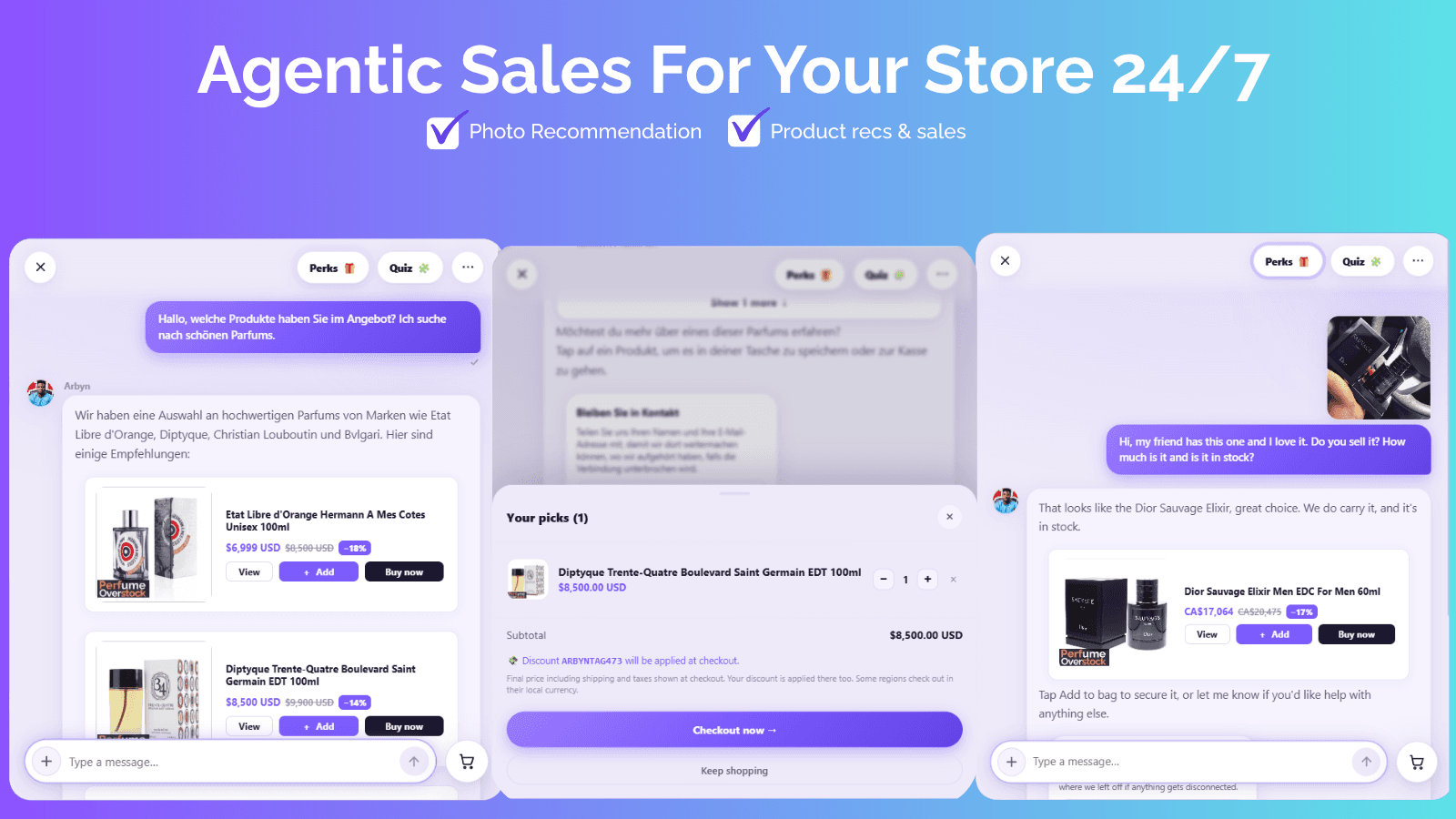
This is the philosophy behind tools like Arbyn, which is designed not just as a support agent, but as a proactive sales agent that lives on your site. Features like the return visitor trigger are built specifically to empower Shopify stores to execute this CRO strategy without manual effort. When a visitor who has been to your store before comes back, Arbyn can be set to automatically reach out with a custom message that reflects their history. It can see the products they're viewing and use that context to start a relevant conversation, like offering a sizing guide for a pair of shoes they've viewed three times. If the visitor adds an item to their cart, it can suggest a matching accessory, saying "Great choice on the camera! Photographers often pair it with this high-speed memory card to make sure they never miss a shot. Can I add one to your order?" This moves beyond the passive, reactive model of customer service and into the realm of active, conversational commerce. By treating your chat window as a proactive sales channel, you can finally capitalize on the valuable traffic of returning visitors, converting their hesitation into closed sales and building the long-term loyalty that fuels sustainable growth. If your store is ready to stop letting these high-intent customers slip away, you can install Arbyn from the Shopify App Store and configure your first return visitor prompt today.
Ultimately, the analytics data that shows a high volume of unconverted return traffic is not a sign of failure, but a map to a hidden opportunity for immense growth. These visitors are telling you they are interested with their actions, not their words. They are giving you a second and third chance to win their business, an opportunity most brands have to pay dearly for with every ad click. Using a proactive, context-aware chat strategy is how you finally accept their offer, listening to their behavior and responding with genuine, timely help. It is the bridge between their silent browsing sessions and your next profitable conversation. By implementing this strategy, you can transform a leaky bucket into a well-oiled conversion machine, turning hesitant clicks into confident checkouts and laying the foundation for a more resilient and profitable ecommerce business.
Written by
For seven years I have led customer success and technical support inside high-growth SaaS and e-commerce companies. Customer Support Lead at DripShop.live, a live-commerce SaaS. Technical Support Specialist at Replo (Y...
View full profileKeep reading
View all posts
Spend-Threshold Triggers: The Free-Shipping Nudge Your Shopify Chat Should Be Making
Odera Joseph · 8 min

Does Live Chat Actually Increase Shopify Conversion Rate? What the Data Shows
Odera Joseph · 6 min
Why Your Shopify Live Chat Widget Isn't Converting (And What to Fix First)
Odera Joseph · 9 min