8 Best Zendesk Alternatives for Shopify Stores in 2026
Zendesk was built for a different era of the web, and its price and complexity reflect that; for most Shopify stores, these eight alternatives offer a better fit.

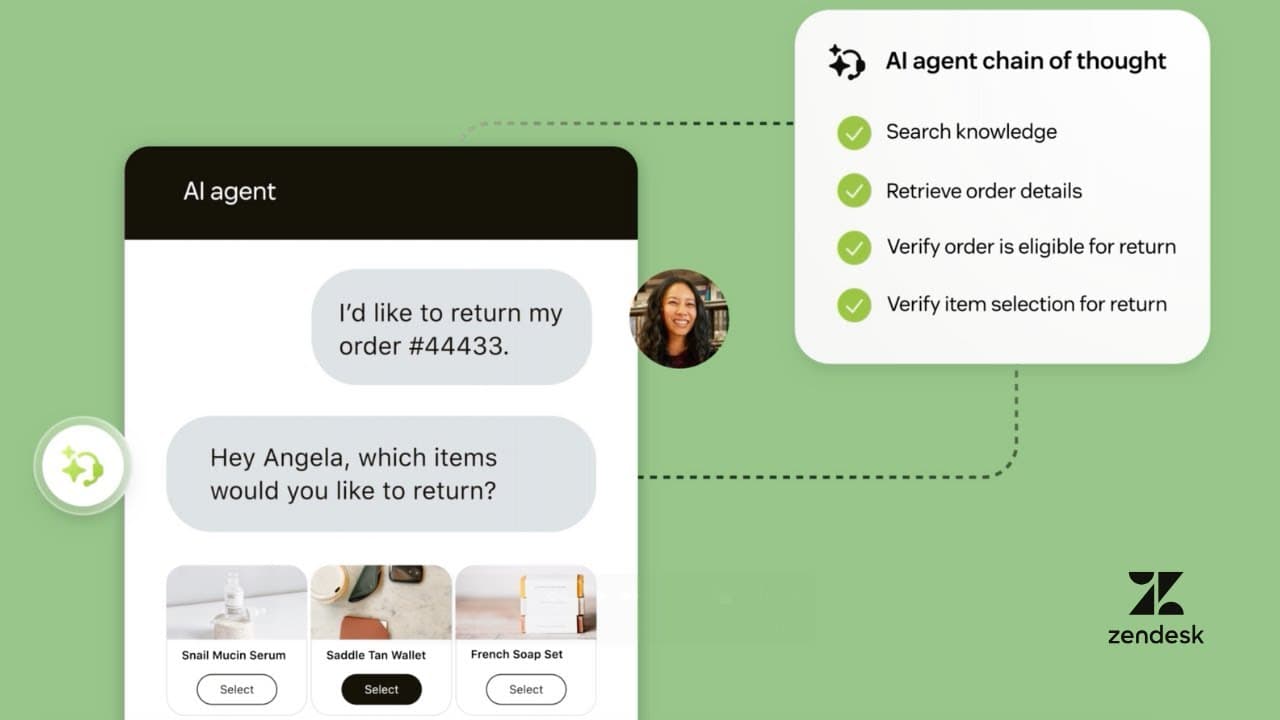
Zendesk was architected for a different internet. For a time when software was sold in sprawling suites to large enterprises with dedicated IT departments, its power and complexity made sense. But for a Shopify store owner in 2026, navigating its ecosystem can feel like trying to park an aircraft carrier in a garage. The per-agent pricing, the expensive and separately billed AI add-ons, and the sheer overhead of a system not built with ecommerce at its core create a fundamental disconnect. Store owners find themselves paying for a heavyweight championship boxer's training camp when all they needed was a sparring partner who understands their business. The search for Zendesk alternatives for Shopify stores isn't just about finding a cheaper tool; it's about finding the *right* tool, one whose business model and feature set are aligned with the realities of modern commerce.
The Core Disconnect: Why Zendesk Feels Heavy for Shopify
The friction between Zendesk and a growing Shopify store often begins with the pricing model. Zendesk’s core plans are built around a per-agent, per-month structure. The popular Suite Team plan starts at $55 per agent per month when billed annually, with the Professional tier reaching $115 per agent. This model seems straightforward until you factor in the additional costs that are nearly unavoidable for a modern support operation. The Advanced AI add-on, which provides features like intelligent triage and agent-assist tools, costs an additional $50 per agent per month. For a small team of three agents on the Professional plan, the base cost is already $345 per month; adding AI brings the total to nearly $500 per month before a single customer has been helped. This structure forces store owners to make difficult choices between adding a new support team member or investing in the tools that would make their existing team more efficient.
Beyond the direct cost, there's a deeper misalignment in product philosophy. Zendesk is a horizontal platform designed to serve every industry, from software companies to hospitals. This breadth means its Shopify integration, while functional, is an application built *on top* of the platform, not woven into its DNA. For a support agent, this translates to a workflow that often involves switching between the helpdesk and the Shopify admin. Answering a simple "Where is my order?" question might be easy, but processing a return, editing a shipping address, or applying a discount often requires leaving the ticket, finding the customer in Shopify, performing the action, and then returning to Zendesk to close the loop. This context-switching slows agents down and introduces opportunities for error. In contrast, purpose-built platforms for ecommerce surface Shopify data and actions directly within the support conversation, turning a multi-step process into a one-click action. This difference in workflow is not just a matter of convenience; it's a fundamental difference in operational efficiency that compounds with every ticket.
Finally, the complexity of Zendesk's setup and administration represents a significant hidden cost for Shopify store owners, who are typically store owners, not IT administrators. Configuring complex routing rules, setting up multi-brand support, and integrating third-party apps can require specialized knowledge or paid implementation services. The platform’s power is also its burden. For a team that needs to get up and running quickly, the learning curve can be steep. The promise of an all-in-one suite can quickly turn into a tangle of features that are never used but are paid for every month. This overhead is a tax on a store owner's most valuable resource: time. The ideal solution for a Shopify store is one that works out of the box, with an intuitive interface and integrations that don't require a manual to configure. For many, Zendesk's enterprise-grade power feels less like a feature and more like a liability.
The Hidden Costs of Usage-Based Billing Models
As store owners look for alternatives, they often encounter two other pricing models that seem more modern than Zendesk's per-agent fee but carry their own hidden costs: per-ticket and per-resolution billing. These models are common among platforms that are more deeply integrated with Shopify, like Gorgias and Intercom. At first glance, paying for what you use feels fair. However, the reality for a growing ecommerce brand is that support volume is rarely predictable. A successful marketing campaign, a seasonal spike during Black Friday, or an unexpected shipping delay can cause ticket volume to double or triple overnight. With a usage-based model, your support software bill follows that spike precisely, eating into margins at the exact moment you should be maximizing profit. This creates a painful incentive structure where the store owner is implicitly penalized for growth.
Gorgias, a powerful and popular helpdesk built for Shopify, prices its plans based on billable ticket volume. The Pro plan, for example, starts at $360 per month for 2,000 tickets. The AI Agent, which automates resolutions, is an add-on that charges approximately $0.90 to $1.00 per automated conversation. Crucially, this AI fee is often stacked on top of the ticket fee, meaning a single automated interaction can be double-billed. A store owner might be paying for the helpdesk ticket *and* the AI resolution. During a busy month, a store that exceeds its 2,000-ticket limit on the Pro plan will face overage charges for each additional ticket, on top of any AI resolution fees. This "double-dipping" model means that the cost of automation, which is meant to save money, can actually compound expenses during high-volume periods.
Intercom follows a similar, albeit slightly different, path. Its plans are based on a per-seat cost, but its AI agent, Fin, is billed separately at $0.99 per resolution. A team with three agents on the Advanced plan ($85/seat/month) pays a base of $255 per month. If Fin resolves 500 conversations that month, an additional $495 is added to the bill, bringing the total to over $750. Like with Gorgias, the bill scales directly with the number of customer interactions. This model turns the support department into a variable cost center that is difficult to budget for. The promise of AI is to create operational leverage, but when every AI resolution comes with a line-item charge, it feels less like leverage and more like outsourcing on a micro-transaction basis. The core issue with both per-ticket and per-resolution models is that they create an adversarial relationship between the store owner and their software vendor. The vendor profits most when the store's support volume is highest, while the store owner is trying to manage and reduce that very same volume.
The Contenders: A Full Helpdesk Experience
For store owners looking for a comprehensive feature set similar to Zendesk but with more approachable pricing and a cleaner interface, a category of "full helpdesk" alternatives exists. These platforms aim to provide robust ticketing, knowledge base management, and multi-channel communication without the enterprise-level complexity. Freshdesk is a prominent player in this space, often seen as a direct competitor to Zendesk. Its pricing is also per-agent, but at a lower price point. The Growth plan for their omnichannel product starts at $29 per agent per month, with the Pro tier at $79. However, like Zendesk, the advertised price is just the beginning. The Freddy AI Copilot, an agent-assist tool, is a $29/agent/month add-on, and the autonomous AI agent is billed per session pack ($49 for 100 sessions). While the entry point is lower, the total cost for a team using AI can quickly approach Zendesk levels, demonstrating that the per-agent model, even when cheaper, still involves stacking costs.
Help Scout offers a different philosophy, focusing on simplicity and a "human-first" approach. Its interface is widely praised for being clean and intuitive, a stark contrast to the often-cluttered dashboards of more complex systems. Pricing starts at $25 per user per month for the Standard plan, which includes two inboxes and basic automation. The Plus plan, at $45 per user per month, adds more integrations and advanced workflows. Help Scout's AI offering, AI Answers, follows the per-resolution model, charging $0.75 per resolution on top of the seat price. This makes it a compelling choice for teams that prioritize a clean user experience for their human agents and want to use AI selectively. However, the per-resolution fee means store owners still face the challenge of unpredictable costs if they lean heavily on automation.
Rounding out this category is Zoho Desk, which leverages its position within the broader Zoho ecosystem of business apps. For stores already using Zoho CRM or Zoho Books, the native integration is a significant advantage. Zoho Desk is also aggressive on price, with its Enterprise plan topping out at €40 per agent per month (approximately $40), significantly undercutting Zendesk's top tiers. This plan includes their AI assistant, Zia, as well as features like multi-brand help centers. The main trade-off with Zoho is that it works best when you are all-in on the Zoho suite. For a store owner using a mix of best-in-class apps from different vendors, integrating Zoho Desk can sometimes feel less seamless than using a tool built with the Shopify ecosystem as its primary focus. While these full helpdesk solutions offer relief from Zendesk's pricing and complexity, they largely operate within the same paradigms: per-agent seats with tacked-on fees for AI or other advanced features.
Shopify-Native Specialists: Gorgias and Intercom
Within the universe of Zendesk alternatives, a special category belongs to platforms built from the ground up for ecommerce, and specifically for Shopify. These tools aren't just integrated with Shopify; they are designed around the Shopify data model. Gorgias is arguably the leader in this category, and for good reason. It centralizes customer communications from email, live chat, and social media into a single view that is enriched with deep Shopify data. Agents can see a customer's entire order history, shipping status, and even their cart contents without ever leaving the ticket. More importantly, they can take action. Processing a refund, canceling an order, or creating a new draft order can be done with a single click inside the Gorgias interface. This deep integration is its core strength, turning support agents into efficient store owners who can solve problems instantly. As noted, this power comes with a ticket-based pricing model. The Basic plan offers 300 tickets for $60 per month, while the Pro plan jumps to 2,000 tickets for $360 per month. For a fast-growing store, choosing the right tier and managing potential overages becomes a critical financial calculation.
Intercom, while not exclusively an ecommerce tool, has become a major player in the Shopify space with its powerful messenger and AI capabilities. It excels at proactive, conversational engagement. Its AI agent, Fin, is highly capable of resolving complex queries. However, this power comes at a significant and often unpredictable cost. Intercom's pricing combines a per-seat fee with a $0.99 per-resolution charge for Fin. A small team on the Advanced plan ($85/seat/month) can easily see their bill double or triple based on Fin's activity. A scenario with three agents and 300 AI resolutions could result in a monthly bill over $550. This makes Intercom one of the most powerful but also one of the most expensive options at scale, especially for support-heavy businesses. Its strength lies in its conversational prowess and proactive engagement tools, making it a better fit for businesses focused on sales and marketing through support, but the cost structure requires careful monitoring.
Another platform making inroads is Front, which frames itself as a customer operations platform, combining the shared inbox of a helpdesk with deeper collaboration features. Front's pricing is also per-seat, with tiers at $25, $65, and $105 per seat per month on annual billing. Like others, its AI features are often unbundled. The "Autopilot" AI agent, for instance, is billed per resolution at around $0.89. This again puts store owners in the position of calculating a blended cost of seats plus usage. What these Shopify-native and specialist tools highlight is a clear market trade-off. They offer unparalleled integration and ecommerce-specific features that Zendesk lacks, but they often do so through variable pricing models that can punish growth and create budget uncertainty. The choice becomes one between a poorly fitting tool with predictable costs (Zendesk's per-agent model) and a perfectly fitting tool with unpredictable costs (Gorgias or Intercom's usage-based models).
The All-in-One Platforms: HubSpot and Zoho
Another category of Zendesk alternatives comes from platforms that aim to be the single source of truth for all customer data: the CRM-centric suites. HubSpot Service Hub is a powerful contender here, especially for stores that already use HubSpot for marketing or sales. The primary benefit is a unified customer view. Every support interaction is logged on the same contact record as their marketing email opens, sales calls, and website activity. This 360-degree context is incredibly valuable for providing personalized service. HubSpot's pricing model is seat-based, with paid plans starting at $20 per seat for the Starter tier and rising to $100 per seat for Professional. However, HubSpot is known for its complex pricing structure, which includes mandatory onboarding fees for higher tiers (e.g., $1,500 for Professional) and various add-ons and credit packs for AI and other features. While powerful, it can quickly become as expensive as Zendesk, and its deep ecommerce features are not as native as those in a purpose-built tool like Gorgias.
Similarly, Zoho Desk presents a compelling value proposition for those embedded in the Zoho ecosystem. As mentioned, its per-agent pricing is among the most competitive in the market, with the top-tier Enterprise plan costing around $40 per agent per month. This includes a broad range of features, from multi-channel ticketing to the Zia AI assistant. The trade-off is that Zoho's strength is its breadth, not always its depth in any single area. The Shopify integration is functional but may not offer the same one-click order management actions found in more specialized tools. Live chat, a critical channel for ecommerce, is handled through a separate Zoho product (SalesIQ) and is only included in the Enterprise tier. For a store owner, this can mean stitching together different parts of the Zoho suite to replicate the functionality that comes standard in other platforms. The decision to use HubSpot or Zoho often comes down to a strategic choice: is it better to have one integrated platform that is good at everything, or a collection of best-in-class tools that are excellent at their specific jobs?
Both HubSpot and Zoho offer free tiers that are genuinely useful for new businesses. HubSpot's free tools provide basic ticketing and a shared inbox within their powerful CRM. Zoho's free plan supports up to three agents for email ticketing. These are excellent starting points for founders handling support themselves. However, as a store scales, the limitations of these free plans become apparent. Critical features for ecommerce, like live chat, social media integration, and automation workflows, are typically reserved for paid plans. The jump from the free plan to a paid tier can be significant, both in cost and complexity. These all-in-one platforms represent a valid path, but they require a commitment to a specific ecosystem and a careful evaluation of how their feature set and pricing will scale with the unique demands of an ecommerce business.
A Different Model: The Rise of Flat-Rate AI Agents
The fundamental problem with both per-agent and per-usage pricing is the misalignment of incentives. Per-agent models charge you for team size, not impact. Per-usage models charge you for customer activity, penalizing you for growth. This has created an opening for a new category of tools built on a different philosophy: a flat monthly rate for unlimited capacity. This model is designed to eliminate bill shock and provide predictable costs, allowing store owners to budget for their support function without worrying about seasonal spikes or the cost of automation. It aligns the software's value with the store owner's goal, which is to handle all customer inquiries efficiently, regardless of volume.
This is the approach we've taken with Arbyn. It was built to solve this exact problem. Arbyn functions as a support and sales agent for your Shopify store, handling conversations across email and live chat. It answers common questions like "Where is my order?", provides in-chat product recommendations, and can even initiate returns or change shipping addresses with your approval. The key difference is the business model. The Arbyn Starter plan is permanently free for up to 150 conversations per month, with the full feature set included. When a store outgrows that, the Arbyn Agent plan is a single, flat rate of $99 per month for unlimited conversations and unlimited AI resolutions. There are no per-seat fees, no per-resolution charges, and no overages. Your bill is the same whether you have 500 conversations or 5,000.
This model fundamentally changes the dynamic. Store owners can fully embrace AI automation without watching a meter tick up with every resolved ticket. During Black Friday, when conversation volume might increase tenfold, the cost remains fixed at $99. This predictability allows support to be treated as a fixed operational cost, not a volatile variable expense. The AI agent learns from your store's tone and past conversations, and it is built to not only solve problems but also to drive revenue through proactive triggers and in-chat upsells. For actions that involve money, like issuing a refund or sending a gift card, Arbyn prepares the action and waits for a one-click approval from the store owner, ensuring you always maintain financial control while the AI handles the execution. For store owners tired of the complex and punitive pricing of traditional helpdesks, this flat-rate approach offers a simpler, more scalable path forward. You can install Arbyn from the Shopify App Store and start on the free plan to see how it works for your business.
Ultimately, the move away from Zendesk for Shopify stores is part of a broader market shift. It's a move away from one-size-fits-all enterprise software toward purpose-built, vertically-integrated tools. It's a move away from complex, layered pricing toward simpler, more predictable models. The best alternative is not just a different product; it's a different business partner. It's a tool whose success is measured not by how many agents you have or how many tickets your customers create, but by how efficiently and effectively you can serve them, allowing you to focus on growing your brand.
Written by
For seven years I have led customer success and technical support inside high-growth SaaS and e-commerce companies. Customer Support Lead at DripShop.live, a live-commerce SaaS. Technical Support Specialist at Replo (Y...
View full profile