How Shopify's Winter and Summer Editions Affect Support Apps Each Year
Shopify's bi-annual Editions announcements consistently introduce free, native features that directly challenge the value of paid support apps, forcing a difficult financial reckoning for store owners.


The email arrives just after your first coffee of the day, subject line buzzing with the platform's familiar branding: "Shopify Editions: The latest Shopify Edition is here." You click through, scrolling past 150-plus updates until one catches your eye: new AI capabilities, now built directly into Shopify Inbox, for free. It answers questions, suggests products, and checks order status, using all your store's data. A knot tightens in your stomach, a feeling of both excitement and dread. This isn't just another feature; it's a direct replica of a premium service you've been paying a third-party provider for, an investment you justified to your team just last quarter. You open another browser tab and pull up last month's invoice from your helpdesk provider. The line item for "AI Resolutions" stares back at you, a three-figure charge calculated at nearly a dollar for every conversation the bot handled on its own, a cost that spikes unpredictably during sales events and eats into your gross margin. You're paying a premium for the exact service Shopify just announced it's giving away, and the financial dissonance is jarring. This moment, this sudden re-evaluation of a core operational expense, is no longer an occasional surprise; it has become a predictable, twice-yearly event for millions of store owners, fundamentally reshaping the economics of customer support.
The Twice-Yearly Reset: What Shopify Editions Actually Are
For those running businesses on the platform, Shopify Editions have become a central part of the operational calendar, arriving every winter and summer like a tidal wave of new code. These are not minor patch releases; they are massive, curated showcases of more than a hundred new features, API updates, and platform-level changes bundled into a single, high-impact announcement. The event, often branded with a creative theme, is as much a strategic marketing push as it is a product launch, complete with keynote videos, developer deep dives, and extensive press coverage. It serves to signal Shopify's direction to the more than 2.9 million live stores on its platform, generate momentum in the market, and demonstrate a pace of innovation designed to keep its platform ahead of competitors. For store owners, this brings a firehose of new tools to absorb, often requiring a full audit of their existing app stack and budget. For the thousands of app developers in Shopify's ecosystem, which hosts over 12,000 apps, it represents a predictable, semi-annual disruption that can redefine their product's value overnight, forcing them to either adapt or become obsolete.
The core function of Editions is to consolidate what would otherwise be a constant, chaotic stream of updates into a digestible, narrative-driven event. Instead of a dozen small blog posts about API deprecations, new checkout extensibility points, or minor admin UI tweaks, Shopify presents a unified vision of where commerce is headed, forcing the entire industry to pay attention. The Winter '24 Edition, for example, centered heavily on making the platform "AI-native" with the introduction of Shopify Magic, a suite of free AI tools. A key feature was Semantic Search, which upgraded storefront search to understand a shopper's intent, moving beyond simple keywords. Just six months later, the Summer '24 Edition built on that foundation by expanding AI-powered image editing across the admin and embedding AI to intelligently suggest product categories during product creation. This cadence creates a clear pattern: Shopify identifies a strategic frontier, like AI or international commerce, and uses each subsequent Edition to aggressively build out its native capabilities, moving from foundational elements to sophisticated, customer-facing tools in a matter of months and directly challenging established app categories that once owned these functions entirely.
This model stands in stark contrast to a simple feature-by-feature rollout because it manufactures consent and urgency across the entire ecosystem, from the over 51,000 businesses on Shopify Plus to the newest startup bootstrapping its way to its first sale. When Shopify announces that its native toolset now performs a function that was previously the domain of paid third-party apps, it doesn't just create competition; it resets the baseline expectation for what the platform should provide for free. This is particularly acute in the realm of customer support. For years, the core functions of a helpdesk, such as managing conversations across multiple channels, looking up order information, and providing basic automated answers, were services you had to buy from an external provider. Now, with each Edition, Shopify is systematically pulling those functions into its core product. Basic order status lookups, once a key selling point for helpdesks, are now a commoditized action that the free Inbox tool can perform effortlessly, leaving a trail of once-valuable apps with a suddenly diminished feature set. The predictable nature of this cycle means app developers can no longer build a sustainable business on solving a problem Shopify might solve itself in the next Edition, forcing them to innovate on a completely different, and much more difficult, plane.
When the Platform Gives It Away for Free: The Commoditization Effect
The most profound impact of Shopify's Editions cycle on the support app landscape is the relentless commoditization of core features. What was once a unique selling proposition for a paid app becomes a standard, free feature within the native Shopify environment, effectively resetting the market's value perception. There is no clearer example of this than the evolution of Shopify Inbox. Initially a simple live chat tool, recent Editions have transformed it into a sophisticated, AI-powered assistant used by hundreds of thousands of stores. The introduction of a native AI agent within Shopify Inbox was a watershed moment. This wasn't just a simple FAQ bot; it was an intelligent agent capable of answering detailed product questions like "is this jacket available in blue in a size medium," "what are the care instructions for the merino wool sweater," or "do you ship to Australia and what would it cost," making personalized recommendations, and handling order inquiries by accessing the store's full catalog, inventory, and policy data, all at no additional cost. For these stores, this was a massive, free upgrade to their capabilities, instantly raising the bar for the entire support industry and forcing a difficult conversation about existing software expenses.
This single update placed a significant portion of the third-party support app market under immediate and intense pressure. Store owners using helpdesks from providers like Gorgias, Intercom, or Zendesk were suddenly faced with a stark financial question. These tools often anchor their pricing on usage-based metrics, most notably a per-resolution fee for conversations handled by their AI. For instance, both Gorgias and Intercom charge for each customer conversation their AI resolves without human intervention. A store owner paying hundreds or even thousands of dollars a month for these AI resolutions must now ask how many of those paid interactions could be handled just as effectively by the free tool Shopify now provides. The value proposition of the paid app is instantly eroded. The features are no longer the differentiator; the price tag is. A store automating 2,000 conversations a month is looking at a potential savings of over $20,000 per year by shifting that volume to a native tool, a figure that is impossible for a growing business to ignore and represents capital that could be directly reinvested into inventory or performance marketing.
This commoditization extends beyond just customer-facing AI responses. Shopify's admin assistant, Sidekick, for example, gained the ability to understand complex commands and execute multi-step workflows that previously required a dedicated app or manual data analysis. An store owner can now ask Sidekick to "create a 15% discount code for all customers who have purchased more than three times and spent over $500, then draft an email campaign announcing it," a task that would have previously required exporting customer data, using a separate discount app, and then configuring an email service provider. As the platform's native intelligence grows to encompass more complex actions like "show me a list of abandoned carts from the last 24 hours with a value over $100 and draft a personalized follow-up SMS," the functional surface area that third-party apps can exclusively own shrinks dramatically. This forces app developers into a difficult position. They can no longer compete by simply offering a feature that provides a "deep Shopify integration," because the deepest, fastest, and most reliable integration will always be the platform itself. They must offer a solution so advanced, so niche, or so fundamentally different in its business model that it remains valuable even when the platform offers a "good enough" alternative for free. The ground is constantly shifting, and the price of standing still is obsolescence.
The App Developer's Dilemma: Differentiate or Die
In the wake of a Shopify Editions announcement, support app developers face a stark choice. When the platform you're built on starts giving away your core service for free, you must fundamentally re-justify your existence and your price tag. This existential pressure forces developers down one of a few difficult paths. The first and most common response is to move upmarket, focusing on complex, enterprise-grade features that Shopify is unlikely to build for its mainstream audience. This means developing sophisticated routing logic to send high-value customers to senior agents, creating extensive multi-brand analytics dashboards, and building out workforce management tools for scheduling, forecasting, and agent quality assurance. It could also involve advanced compliance features for GDPR and CCPA or deep integrations with enterprise resource planning (ERP) systems. While this strategy can secure a foothold with the over 51,000 businesses on Shopify Plus, it often comes at the cost of alienating the platform's core user base: the millions of small and medium-sized businesses who can't afford or don't need that level of complexity, effectively abandoning the market segment that Shopify itself serves most directly.
A second path is to go deeper, not broader. Rather than adding more peripheral features, these developers focus on perfecting a specific set of high-value, high-complexity actions within Shopify that the native tools don't yet handle well. This could mean building best-in-class automation for processing complex returns and exchanges, such as initiating an exchange for a more expensive item while automatically generating a Shopify Draft Order and a payment link for the price difference, all within the chat interface. It might also involve managing subscriptions directly within the helpdesk, allowing agents to skip a customer's next shipment or swap a product without leaving the conversation. This requires significant engineering investment and a deep understanding of Shopify's APIs, including newer capabilities like Shopify Functions, which allow developers to inject custom backend logic into the checkout process. It's a bet that by becoming the absolute best at a handful of critical, revenue-impacting tasks, they can maintain their value. However, this is a high-stakes race; what is a complex, third-party-only action in one Edition can become a native feature in the next, as seen with Shopify's gradual expansion of B2B capabilities and native order editing functions.
The third, and perhaps most strategically resilient, option is to compete on an entirely different axis. If you cannot guarantee a permanent lead in the features race against the platform itself, you must change the game. For support apps, this has increasingly meant competing on the business model. The vulnerability of the dominant players lies in their pricing. A per-resolution or per-ticket fee becomes incredibly difficult to defend when the platform itself is resolving a growing number of those same tickets for free, as every Shopify update risks shrinking the pool of interactions a store owner is willing to pay for. This creates an opening for a new value proposition, one centered not on having one more feature than the competition, but on offering financial predictability. A flat-rate pricing model, for example, becomes a powerful differentiator. It tells the store owner that their support costs are fixed, no matter how many customers contact them and no matter what new AI tools Shopify announces next month. This shifts the conversation from "what does this app do?" to "what will this app cost me when I succeed?" It transforms the app from a metered utility into a strategic partner.
How Editions Reshapes the Financials of Customer Support
For a store owner, the technical details of a Shopify Editions announcement are secondary to the immediate financial implications. The release of a new, free AI feature in Shopify Inbox doesn't just represent a new tool; it represents a potential redundancy in their monthly software budget and a moment to scrutinize every line item. The prevailing pricing models among leading support platforms are uniquely vulnerable to this dynamic. They are built on variable, usage-based costs that penalize scale and create significant budget volatility, a problem that Shopify's native feature expansion throws into sharp relief. Consider the billing structure of the major helpdesks. It's rarely a simple, flat monthly fee. Instead, it's a complex layering of seat licenses for human agents, tiered allowances for the number of conversations, and, most critically, per-resolution charges for AI automation. This complexity makes forecasting expenses a constant challenge for store owners focused on growth and managing cash flow, turning a key operational tool into a source of financial anxiety.
Take Intercom, for example. A store owner pays a per-seat license for each human agent, but the use of its AI agent, Fin, is billed separately for each conversation the AI resolves. This creates a counter-intuitive scenario where better automation, the very goal of the tool, leads directly to a higher bill. If you successfully configure the AI to handle more inquiries, your monthly costs increase in direct proportion. Similarly, Gorgias charges a per-resolution fee for its AI agent. Compounding this, each of those AI-handled conversations also typically counts against the plan's total monthly ticket allowance, creating a form of double-billing where a single automated interaction can incur two separate costs. Zendesk takes this complexity even further, often layering an AI add-on fee of $50 per agent per month on top of the base seat price, before also charging a separate fee for each automated resolution, making the final bill a confusing puzzle of fixed and variable costs.
Now, place these pricing models in the context of a Shopify Editions announcement. A store owner running a high-volume business might be paying for 2,000 AI resolutions a month. With Intercom, that could mean thousands of dollars in usage fees alone, on top of their seat costs. With Gorgias, it's a similar charge. During a holiday sales peak where ticket volume triples, that bill can triple right along with it, creating a massive, unplanned expense at the worst possible time. When Shopify announces that its free, native Inbox tool can now handle a significant percentage of those same "Where is my order?" or basic product questions, the store owner is rightfully forced to question their entire software stack. The ROI calculation that made sense last month is suddenly invalid. The value they are paying a premium for has been commoditized. This financial whiplash, occurring predictably every six months, makes it nearly impossible for store owners to forecast their support costs accurately. The very tools meant to create efficiency have become a source of financial uncertainty, directly tied to Shopify's own product development cycle.
Building a Moat in a World of Constant Change
In an ecosystem defined by the constant, semi-annual disruption of Shopify Editions, chasing the latest feature becomes a losing game. A support app that boasts a revolutionary new AI capability today may find that same capability offered as a free, native function tomorrow. For store owners, this means that selecting a support platform based solely on its current feature set is a recipe for operational chaos and financial regret. The smarter, more resilient strategy is to build a support operation founded on stability. This requires shifting the evaluation criteria from a temporary feature advantage to a sustainable business model. The most durable moat in this environment is not a proprietary algorithm that might be replicated by a well-funded platform; it is the structural advantage of cost predictability, which solves the higher-order business problem of financial planning and risk management. This changes the selection of a support tool from a tactical IT decision to a strategic financial one.
This is where the philosophical difference in pricing models becomes a critical strategic advantage. While usage-based platforms see their value proposition eroded by Shopify's native feature expansion, platforms built on a flat-rate model become more attractive and resilient with every Edition. When a support tool offers unlimited conversations for a single, fixed monthly price, it decouples the store owner's costs from both their customer volume and Shopify's product roadmap. The announcement of a new, free AI feature in Shopify Inbox is no longer a threat to the budget; it's an opportunity to re-allocate resources. The store owner's bill remains the same, allowing them to integrate Shopify's native tools where they make sense without feeling like they are paying twice for the same service. This stability allows for long-term planning and removes the psychological friction of wondering whether automating one more ticket is worth a dollar. It encourages a partnership where the goal is maximum efficiency, not managing a metered bill.
This is the principle on which we built Arbyn. We recognized that in a world where Shopify is aggressively commoditizing foundational support features, charging per ticket or per resolution is an unsustainable model for store owners. Our approach is different. Arbyn Agent offers unlimited AI conversations and a full suite of support and sales automation tools for a flat $99 per month. The value proposition is not just about the AI's ability to resolve an issue or update a shipping address; it's about providing absolute financial certainty. Whether you have 80 conversations a month or 8,000, your bill does not change. This model is inherently resilient to the Editions cycle. As Shopify continues to enhance its native tools, Arbyn remains a logical and cost-effective layer for handling more complex actions, driving sales within conversations, and automating the entire support function without creating a volatile, unpredictable monthly invoice. You can start for free on our Starter plan and, when you're ready, add Arbyn Agent to your store with the confidence that your costs will not spiral as you grow.
The next Shopify Editions announcement is never more than a few months away. Another 150-plus updates will land, and the definition of what the platform provides for free will expand once again, redrawing the competitive landscape in a single day. Store owners who continue to rely on support tools with variable, usage-based pricing will face the same financial reckoning they do today, forced into a reactive cycle of auditing their software stack, justifying their expenses, and managing budget overruns. The only way to get off this treadmill is to stop betting on a temporary feature lead and start investing in a stable cost structure. The choice is between a model that penalizes your growth with unpredictable fees and one that supports it by delivering predictable outcomes and simplifying operations. In the end, in an ecosystem this dynamic, the most important feature a support app can offer is a bill you can predict next month, next quarter, and next year.
Written by
For seven years I have led customer success and technical support inside high-growth SaaS and e-commerce companies. Customer Support Lead at DripShop.live, a live-commerce SaaS. Technical Support Specialist at Replo (Y...
View full profileKeep reading
View all posts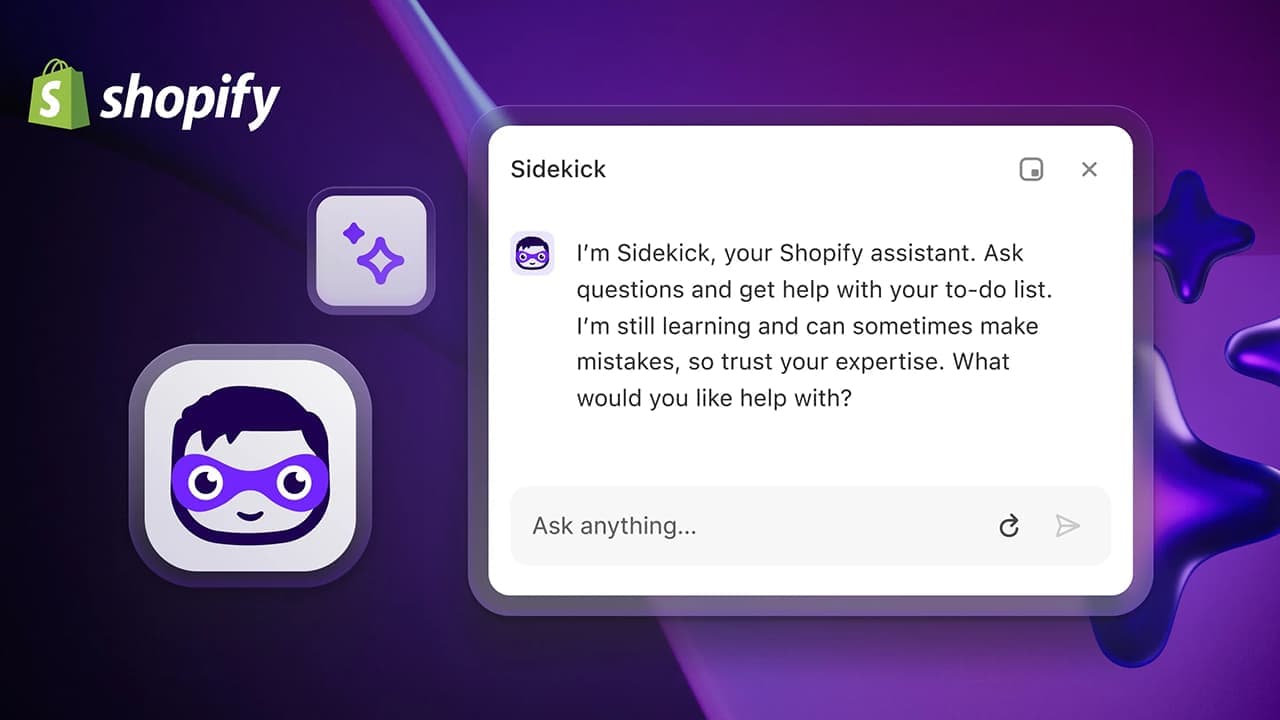
Shopify's AI Feature Roadmap: What's Native vs What Still Needs an App
Odera Joseph · 7 min
How Shopify's Managed Markets Program Changes International Support
Odera Joseph · 8 min

What Shopify store owners Should Watch For in Platform Roadmap Announcements
Odera Joseph · 7 min