10 Best Shopify Live Chat Apps for Small Stores in 2026
The price you see for a live chat app is almost never the price you pay; this guide breaks down the real costs and best options for small Shopify stores in 2026.

The list price advertised for a Shopify live chat app is a comforting, specific, and almost entirely fictional number. The actual cost is a moving target, a complex equation of base fees, per-agent licenses, conversation caps, and the most volatile variable of all: per-resolution AI charges. A tool that costs $60 one month can cost $600 the next, not because your business grew tenfold, but because a holiday sale doubled your support volume and triggered a cascade of overage fees. This creates a significant cash flow problem for a small operation, turning a period of success into a source of financial stress. Industry reports from organizations like the Subscription Economy Index have consistently shown that while subscription models are popular, billing complexity is a major driver of customer churn and dissatisfaction, especially in the small business sector. This pricing complexity isn't an accident; it's a business model designed to maximize revenue from a captive audience. For small stores, it is a particularly dangerous one. This guide is not another simple list of features. It is a breakdown of the pricing models that determine what you will actually pay for the best Shopify live chat apps for small stores in 2026, so you can choose a cost structure that scales with your revenue, not against it.
How Live Chat Billing Models Create Unpredictable Costs
Understanding the fundamental difference between live chat billing models is the single most important step a store owner can take before installing any new support tool. The choice you make here has a greater impact on your monthly operating expenses than any single feature, directly influencing your ability to scale your support team and adopt new technologies. Most apps in this space use a variation of three core models, often blending them in ways that obscure the total cost of ownership. The first, and most traditional, is the per-agent or per-seat model. You pay a monthly fee for each person on your team who needs to log in. This seems straightforward, but it penalizes growth and operational flexibility. Imagine adding a part-time helper for a busy season or giving a founder occasional access to review chat transcripts; these necessary actions can mean doubling or tripling your bill overnight. It forces you to think constantly about headcount and access permissions, not just about providing great service. This model is common with platforms like Zendesk and LiveChat, where the cost is directly tied to the number of active users, making it a potentially expensive option for a growing team that needs the flexibility to bring in temporary help or allow cross-departmental access without incurring significant fixed costs.
The second model, more common for Shopify-centric tools, is usage-based pricing, measured in tickets or conversations. A ticket is a single customer issue, from first contact to resolution. A platform like Gorgias structures its plans around a set number of monthly tickets; their Basic plan, for instance, includes 300 tickets for around $60 per month. The danger lies in the overages. Exceed your limit, and you pay per extra ticket, a cost that adds up alarmingly fast during a product launch or seasonal spike. The third model, the most recent source of billing shocks, is the per-resolution AI fee. This is an additional charge, layered on top of a seat or ticket plan, for every conversation an AI agent resolves without human intervention. Intercom famously charges $0.99 per AI resolution on top of its per-seat fees. Gorgias’s AI add-on is similar, charging around $0.90 per automated resolution. Worse, some platforms have been known to "double-bill," where an AI-resolved conversation consumes one of your plan's included tickets *and* incurs a separate AI resolution fee. For example, if you are over your ticket limit, a single automated "where is my order" response could cost you the $0.90 AI fee plus a ticket overage fee of around $0.40, totaling $1.30 for one simple, automated answer. This combination of models turns budgeting into guesswork and makes it impossible for a small store owner to predict their software costs with any certainty. A successful marketing campaign can become a financial liability, a painful paradox for any growing business.
The Starting Line: Free and Native Options
For a new store owner, the best place to begin is often with the tools that cost nothing, allowing you to learn customer behavior without financial pressure. The primary contender here is Shopify's own offering, Shopify Inbox. As a native application, its integration is seamless and requires zero technical setup. It is completely free and allows you to add a chat widget to your storefront, enabling real-time conversations with customers. In recent updates, Shopify has integrated its own AI capabilities, allowing Inbox to provide automated answers, draft replies for your team, and generate product recommendations, even personalizing them for customers logged in with Shop Pay. This makes it a surprisingly capable tool for a zero-dollar price tag. You can manage conversations, see what a customer has in their cart, and apply unique discount codes directly within the Shopify admin you already use every day. For a solopreneur or a very small team just starting to handle customer inquiries, Shopify Inbox is more than enough to get started. It provides the core functionality of live chat without the financial commitment or complexity of a third-party application, serving as the logical first step in building a support function.
The primary limitation of Shopify Inbox is its ceiling. It is designed for simplicity, which means it lacks the advanced automation, deep reporting, and multi-channel capabilities of more specialized platforms. As your support volume grows and customers begin contacting you via email, Instagram DMs, and Facebook comments, managing everything through separate tools with Inbox as just one piece can become chaotic and inefficient. Another excellent free option is Tawk.to. For years, Tawk.to has offered a compelling proposition: a completely free live chat application with no limits on the number of agents or chat volume. This makes it an incredibly attractive option for small businesses that need more user seats than a typical free plan allows. You can staff your entire team, including part-time help and other departments, without ever paying a subscription fee. The trade-off, as is often the case with free software, comes in the form of a less-deep integration with Shopify compared to paid competitors. While it functions perfectly as a chat widget, it may not automatically pull in the rich order history or customer data that tools like Gorgias or even Shopify Inbox can. An agent might have to ask for an order number and manually look it up in a separate browser tab, adding friction and time to every conversation. For stores where the primary need is simply to have a human available to answer questions in real-time, Tawk.to is a powerful and budget-proof solution.
Predictable but Limited: The Per-Agent Pricing Model
For store owners who prioritize predictable billing above all else, the per-agent pricing model offers a sense of stability, albeit with its own set of trade-offs. With this model, you pay a fixed monthly fee for each team member who uses the software, making your bill change only when you actively add or remove a user seat. This completely eliminates the anxiety of usage-based overages from ticket volume or AI resolutions, which can fluctuate wildly from month to month. A leading example in this category is LiveChat. Their plans are refreshingly straightforward, starting at around $19 per agent per month when billed annually. This simplicity is appealing because it makes financial forecasting exact. You know precisely what your bill will be at the end of the month, regardless of whether you have a hundred conversations or a thousand during a flash sale. This predictability is invaluable for small stores on a tight budget, allowing for precise cash flow management without the fear of a sudden, four-figure spike in software costs after a successful sales weekend. The focus shifts from managing usage metrics to managing your team's performance and efficiency, a much more controllable variable.
The inherent downside of the per-agent model is that it scales with headcount, not necessarily with revenue or efficiency. As your store grows, you might need to bring in more people to handle support, especially during peak seasons like the holidays. Each new team member, even a temporary one, represents a direct, fixed increase in your monthly software bill. This can create a disincentive to expand your support team, leading you to delay hiring even when customer experience and response times are suffering. Another popular app, Re:amaze, also uses a per-user pricing structure, starting at around $29 per user per month. While Re:amaze offers a more comprehensive feature set, including email and social media integration, the fundamental billing mechanic is the same. The model works well for businesses with a stable, small support team that works full-time in the application. However, for a growing Shopify store that might need to add seasonal help or has multiple people who only occasionally need to access the support platform, like a founder checking in or a marketing manager reviewing customer feedback, paying for a full, dedicated seat for each person can feel incredibly inefficient and costly. It forces a rigid, expensive structure on what is often a very fluid operational reality for a small business.
The High-Stakes World of Per-Ticket and Per-Resolution Billing
This is where the financial danger for small stores becomes most acute and where the most popular apps reside. The most powerful and heavily marketed helpdesks in the Shopify ecosystem, including Gorgias, Zendesk, and Intercom, all rely on complex, usage-based billing models that can lead to staggering and unexpected costs. Gorgias, a tool built specifically for Shopify, prices its plans based on a monthly allotment of "tickets." Their Basic plan costs around $60 per month for 300 tickets, while the Pro plan jumps to $360 for 2,000 tickets. The real cost, however, is hidden in two places: overage fees for exceeding your ticket limit, and a separate, additional charge for their AI Agent. If your store has a busy month with 600 tickets on the Basic plan, you will face an overage of 300 tickets. At a typical overage rate of around $0.40 per ticket, that's an extra $120. If an AI Agent handled 200 of those tickets, you would pay an additional 200 times ~$0.90, which is $180. Your $60 plan has now become a $360 bill ($60 + $120 + $180), a 500% increase, simply because your store was successful.
The situation with Zendesk and Intercom is no less complicated and often more expensive. Zendesk uses a per-agent model for its base subscription, with its popular Suite Team plan starting at $55 per agent per month. However, to unlock its full AI capabilities, you often need an "Advanced AI" add-on, which can cost an additional $50 per agent per month. On top of both of those fees, Zendesk can charge a per-resolution fee for automated responses, often reported to be between $1.50 and $2.00. For a small team of just three agents, the base cost is $165 per month. Adding the AI package brings the total to $315 per month ($165 + 3 * $50). If their AI then automates 500 common questions, that adds another $750 (500 * $1.50) in resolution fees. Your monthly bill balloons from a perceived $165 to $1,065. Intercom follows a similar pattern. While its per-seat pricing starts around $29 per agent, its powerful Fin AI is billed separately at $0.99 per resolution. For a growing store, where the goal is to automate as many common questions as possible, this is a direct tax on efficiency. Automating 1,000 "Where is my order?" requests would add nearly $1,000 to your bill, an amount completely separate from your seat licenses. These platforms are powerful, but their pricing models are fundamentally misaligned with the needs of a small store, punishing growth and creating a constant state of budget anxiety.
| App | Primary Billing Model | Typical "Hidden" Cost |
|---|---|---|
| Gorgias | Per Ticket | AI Resolution Fees (~$0.90) + Ticket Overages (~$0.40/ticket) |
| Zendesk | Per Agent/Seat | Mandatory AI Add-Ons (~$50/agent) + Per-Resolution Fees (~$1.50) |
| Intercom | Per Agent/Seat | Per-Resolution AI Fees ($0.99) |
| Tidio | Per Conversation | Separate AI Add-On (~$39) + Huge Price Jump to Higher Tiers |
| Arbyn | Flat Rate | None. $99 for unlimited conversations and AI actions. |
The Alternative: Flat-Rate Pricing for Predictable Growth
The antidote to the chaos of usage-based billing is a model that has been surprisingly rare in the customer support space: a simple, flat monthly rate. This approach decouples your support costs from your support volume entirely. It provides the ultimate predictability, allowing a store to pay one price regardless of whether they have a slow month or a record-breaking Black Friday that quadruples customer inquiries. This model fundamentally realigns the software provider with the store owner. Instead of profiting from overages and complexity, the provider's incentive is to build a tool so efficient and stable that it can handle unlimited volume for a single fixed cost, minimizing their own server load through better code, not through punitive pricing. This is the model that a new generation of tools is built upon, designed to eliminate the budget anxiety that plagues so many growing stores. It is a direct response to the market's deep frustration with pricing that punishes success and makes it impossible to invest in growth-focused marketing campaigns without fear of the resulting support software bill.
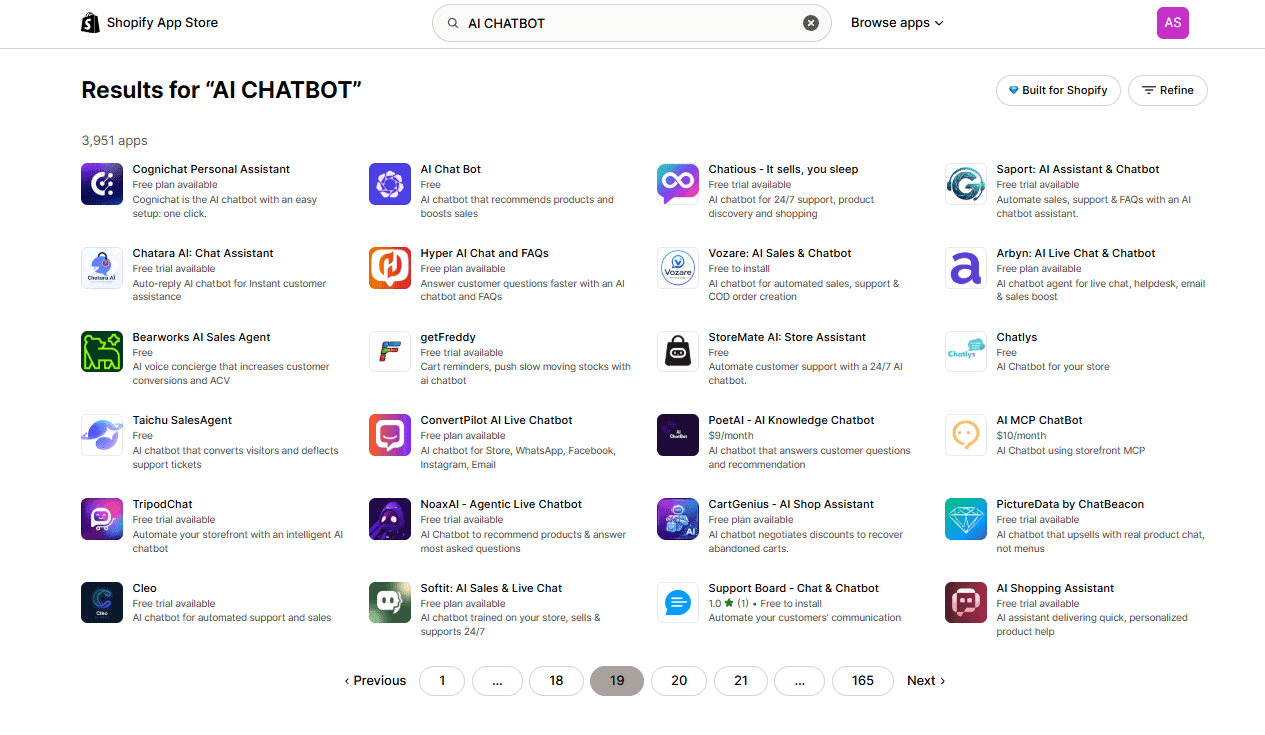
Arbyn: Support & Sales Agent was built on this principle of radical predictability. It offers two simple plans. The Arbyn Starter plan is permanently free and includes 150 AI-powered conversations per month, with the full feature set, allowing a new store to automate their support from day one without any cost. When a store's volume grows beyond that, the Arbyn Agent plan is a single, flat-rate subscription of $99 per month for unlimited conversations, unlimited AI usage, and unlimited team members. That price does not change if you have 200 conversations or 20,000. There are no per-ticket fees, no per-resolution charges, and no per-agent licenses. The core difference is not just the price, but the philosophy. Arbyn is designed to not just answer questions, but to take action. It integrates directly with Shopify to handle order status lookups, update shipping addresses, and, with store-owner approval for financial actions, process cancellations and refunds directly in the chat. This means the AI can authenticate a customer, check their order details against your store policies, and directly execute a shipping address change in the Shopify admin without creating a ticket for a human to handle later. This combination of a predictable, flat-rate price and the ability to perform real, revenue-impacting tasks makes it a compelling alternative for small stores tired of the complex and costly models of legacy helpdesks. You can install Arbyn from the Shopify App Store and see how a flat-rate model changes the support equation.
Choosing the right live chat app is less about comparing an endless list of features and more about selecting the right business partner for your growth journey. The app's pricing model is a direct reflection of its philosophy and a clear indicator of how it views its customers. Does it aim to grow with you by providing a stable, predictable platform, or does it aim to grow by charging you more for your own success through complicated, punitive fees? For a small store, where every dollar counts and every minute is precious, the stability of a flat-rate model provides a solid foundation for sustainable growth. It transforms customer support from a volatile and unpredictable cost center into a streamlined, automated, and budget-friendly operation. This financial stability empowers you to focus on bigger goals: improving your products, acquiring more customers, and building your brand, secure in the knowledge that your success will not be penalized. The best tool is not the one with the most features, but the one whose success is fundamentally aligned with your own.
Written by
For seven years I have led customer success and technical support inside high-growth SaaS and e-commerce companies. Customer Support Lead at DripShop.live, a live-commerce SaaS. Technical Support Specialist at Replo (Y...
View full profile