Why Shopify Stores Undercount Their Real Support Volume
Why Shopify stores undercount their real support volume: social DMs, reviews, and phone calls that never hit the helpdesk report.

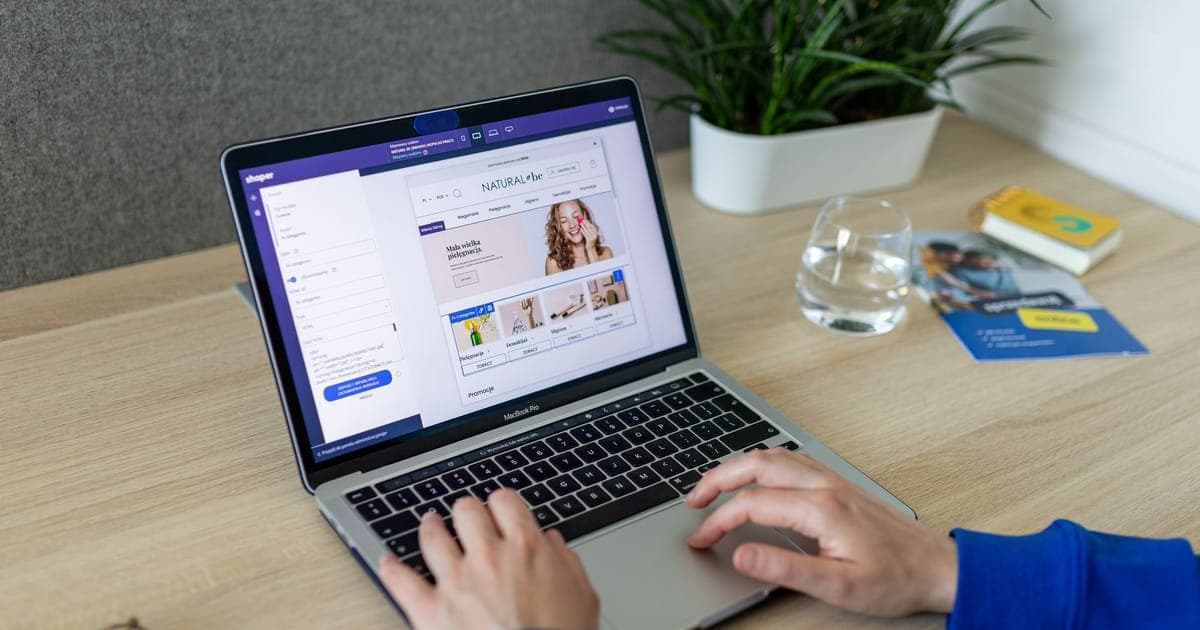
Shopify support ticket volume, measured the way most stores measure it, from whatever number their helpdesk tool reports, is almost always lower than the store's actual support volume. The gap isn't a rounding error. It's every conversation happening in a channel the helpdesk never sees: a comment under an Instagram post, a DM asking where an order is, a one-star review that's really a support request wearing a different hat, a phone call from a customer who gave up waiting on email.
Every store I've talked to underestimates their own support volume the same way: they count what's in their inbox and forget everything happening in their comments section.
The Channels That Never Make It Into the Ticket Count
A store's helpdesk software counts what passes through it: email, and whatever chat widget or ticketing form is connected. It does not, by default, count a comment thread under a product post, a DM sitting in an Instagram or Facebook inbox nobody's monitoring closely, a customer calling a phone number and leaving a voicemail, or a one-star review that describes an unresolved problem instead of contacting support directly. Every one of these is a real customer with a real, unresolved question or complaint. None of them show up in a "total tickets this month" report pulled from a store's primary support tool.
This matters beyond simple bookkeeping. A store calculating its cost-per-ticket, its automation ROI, or its actual support headcount needs is doing that math against an undercounted denominator, which means every downstream calculation, how many conversations justify a dedicated AI agent, what deflection rate would actually save, how many hours of staff time support consumes, inherits the same undercount. A store that thinks it handles 400 conversations a month, when it's actually closer to 600 once social and reviews are included, is underestimating its own support cost and its own automation opportunity by roughly a third.
Social Media Is Support Now, Not a Marketing Afterthought
The clearest, largest blind spot is social media, and the data on how much volume actually lives there is more specific than most stores assume. Roughly 39 percent of customers say social media is more convenient than other channels for reaching a business, according to ProProfs research cited in a 2026 guide to ecommerce social support. Customers on Instagram and Facebook expect a reply within a few hours, ideally under one, and the 2025 Sprout Social Index found 73 percent of social media users expect a response within 24 hours generally. Separately, a 2026 industry analysis found 68 percent of WhatsApp users consider it one of the most convenient ways to engage with a brand, which points to the same undercounting problem extending to messaging apps beyond the two most commonly monitored platforms. The consequence of missing that window isn't just a slow reply: multiple industry roundups put the number of customers less likely to buy from a brand that leaves a complaint publicly unanswered at 88 percent.
That last figure is worth sitting with, since it reframes what an unanswered DM or comment actually costs. A support ticket sitting unresolved in an email queue is invisible to everyone except the customer who sent it. A support question sitting unresolved under a public Instagram post is visible to every other potential customer who scrolls past it, which means the cost of an uncounted social ticket compounds in a way an uncounted email doesn't. According to the same research, roughly 30 to 40 percent of social support volume is straightforward, repeatable, and public-safe to answer directly in-channel: order status, shipping timelines, sizing questions, restock dates. The remainder, anything involving an order number, an address, or account details, needs to move to a private message rather than staying in public comments, which is its own operational discipline most stores handling social reactively haven't set up.
This has a direct connection to WISMO volume specifically, since "where is my order" questions don't stop being WISMO questions just because they arrive as an Instagram comment instead of an email. WISMO already accounts for 30 to 40 percent of ecommerce support tickets in a typical month, climbing past 50 percent at peak, according to Salesforce data cited in multiple 2026 support guides. A store measuring WISMO volume purely from its helpdesk is missing every WISMO question that arrived as a social comment or DM instead, which understates not just total volume but specifically the volume of the single most automatable, most clearly defined question category a store handles.
The Cross-Channel Expectation Gap Makes the Undercount Worse
There's a compounding problem sitting underneath the raw channel-counting issue: customers increasingly expect a consistent experience across whichever channel they pick, not a fragmented one where a store's left hand doesn't know what its right hand answered. Roughly 86 percent of consumers expect smooth communication with support agents across multiple channels, according to a 2026 customer service channels report. A store that undercounts its social and review volume isn't just missing a reporting line item, it's failing to meet an expectation an overwhelming majority of its own customers already hold, since a customer who DMs a question on Instagram and later emails about the same order expects the second interaction to reflect the first, not start from zero because the two channels were never connected in the first place.
This expectation gap explains why the undercounting problem isn't purely a measurement inconvenience. A customer whose Instagram DM went unanswered for two days, then emailed the same question and got a reply within the hour, has experienced genuinely inconsistent service, even though the store's email metrics look fine in isolation. The store's own dashboard shows a healthy email response time and has no visibility into the fact that the same customer already had a worse experience on a different channel first.
Reviews Are Support Tickets Wearing a Different Hat
A one, two, or three-star review describing a problem, a wrong size, a late shipment, a damaged item, is functionally a support ticket that arrived through the wrong door. The customer had a problem, chose not to contact support directly, and left a public review instead, which means the store's support team may never see it unless someone is specifically monitoring reviews as a support channel rather than purely a reputation channel. A store treating reviews purely as a marketing and social-proof concern, checking them for star rating trends rather than reading each negative one as an uncounted support interaction, is missing both the chance to resolve the underlying issue and the volume signal that issue represents.
This is a distinct failure mode from the social media gap above, since a review doesn't expect an immediate reply the way a DM does, but it still represents unresolved customer friction that a store's official ticket count has no visibility into. A store that pulls its negative reviews from the last 90 days and finds a cluster of the same complaint, a sizing issue, a specific product defect, a shipping carrier problem, has found real support volume and real product or operations signal that its primary support tool's reporting never surfaced.
The asymmetry here matters for how a store should prioritize monitoring effort. A customer who emails support with a problem is, by definition, giving the store a chance to fix it before forming a final opinion. A customer who skips support entirely and goes straight to a public review has often already decided the relationship isn't worth the effort of a support conversation, which means every review-as-support-ticket represents a customer the store has already come closer to losing than one who's still emailing. Treating review monitoring as equivalent in urgency to the primary support inbox, rather than a lower-priority afterthought checked weekly or monthly, closes a meaningful part of the undercounting gap and catches the customers most likely to already be at risk of churning.
A practical distinction worth making explicit: not every negative review is a support ticket in disguise. A review complaining about price, styling, or a feature the product was never meant to have isn't a resolvable support interaction, it's product feedback. The reviews worth counting as uncounted support volume are specifically the ones describing a problem that a support conversation could have addressed: a wrong item shipped, a size that ran differently than expected with a clear exchange path, a delivery that never arrived. Separating genuine support-shaped complaints from general product feedback is a five-minute triage step, not a complex classification exercise, and it keeps the resulting volume number honest rather than inflated by including feedback a support agent couldn't have resolved anyway.
Phone Calls: The Channel Stores Forget They Still Have
Phone support gets treated as legacy by many Shopify stores that have moved their primary support to chat and email, but the calls don't stop simply because a store stopped staffing the line. A missed call, an unanswered voicemail, or a customer who called and gave up are all real attempted support interactions that generate zero record in a ticketing system, unlike an email that at minimum sits in an inbox as evidence something was asked. A phone line that rolls to voicemail after hours, or isn't staffed at all, converts what would have been a countable ticket into an invisible one: the customer's problem doesn't disappear, it either resurfaces later through a different channel, often an angrier version of the same question, or the customer simply doesn't come back.
The specific reason phone remains worth tracking even for a store that has genuinely moved most support elsewhere is that phone tends to catch a particular category of interaction other channels don't: the customer who's frustrated enough that typing feels inadequate, the customer with a high-value order who wants a real-time answer, or the customer whose issue is complicated enough that a back-and forth text conversation would take longer than a five-minute call. A store with zero phone monitoring has zero visibility into how often this specific, higher-stakes category of interaction is happening, and whether it's being satisfied by a voicemail nobody calls back or genuinely resolved some other way. Even a basic count, missed calls per week from whatever number is listed on the site or packing slip, gives a store a rough sense of how large this blind spot actually is before deciding whether it's worth a dedicated solution or simply worth acknowledging as a small, accepted gap.
Why the Undercount Distorts CSAT and Resolution Metrics Too
The volume undercount has a quieter secondary effect worth naming: it distorts CSAT and resolution-rate metrics in the store's favor, not just the raw ticket count. A store measuring customer satisfaction purely from post-resolution surveys sent through its primary helpdesk is, by definition, only surveying the customers whose interactions made it into that system. Every customer who complained on social media and never got a reply, or who left a negative review instead of contacting support, is a dissatisfied interaction that never enters the CSAT calculation at all, which means the reported CSAT score reflects only the subset of customers whose experience was good enough to route through the store's official channel, or bad enough that they still bothered to use it. The customers who gave up entirely, on hold, in a DM, or in a comment thread, are invisible to the metric in a way that systematically inflates it.
This is worth stating plainly: a store's real customer satisfaction is very likely somewhat lower than its helpdesk-reported CSAT, precisely because the measurement excludes the channels where dissatisfaction is most likely to go unaddressed and unmeasured. A support team that takes its 90-plus percent CSAT score as evidence the support operation is working well should weigh that number against how much of its total customer interaction volume that score is actually sampling from, since a high score measured against an incomplete denominator is a less reassuring number than it first appears.
Why This Undercounting Distorts the Automation Decision Specifically
The cost-per-ticket and volume-threshold calculations that determine when a dedicated AI support tool starts paying for itself, covered in detail elsewhere on this blog, depend entirely on an accurate starting volume number. A store undercounting its real support volume by ignoring social, reviews, and phone is systematically underestimating both the cost it's currently absorbing across those uncounted channels, often handled inconsistently or not at all, and the scale of the opportunity a properly configured support tool actually represents. A store that believes it handles 400 monthly conversations, when the real number across every channel is closer to 600, is running its automation math against a number that's off by roughly 33 percent, which can be the difference between a tool clearing its cost easily and one that looks marginal on paper.
The distortion runs in both directions depending on which number a store anchors to. A store that only counts helpdesk volume when evaluating whether it's ready for dedicated automation may conclude it isn't there yet, when the real, full-channel volume already clears the threshold comfortably. Conversely, a store that's aware of its social and review volume but has no plan to actually route any of it through an automated agent may overestimate how much a new tool will help, if that tool only covers the same channels the store was already counting. Getting the actual number right, and then being precise about which channels a candidate tool actually covers versus which remain manual regardless, is what turns this from an abstract measurement exercise into a decision that holds up once the tool is live.
The fix isn't necessarily adding every channel to a single tool immediately. It's first knowing the real number, which requires a genuine 90-day audit across every channel a customer could plausibly use to reach the store, not just the ones with a formal ticketing system already attached.
How to Actually Find the Real Number
A real audit takes an afternoon, not a quarter. Pull the last 90 days from the primary helpdesk as the known baseline. Separately, count DMs and comments across Instagram and Facebook requiring any kind of response, whether or not anyone actually replied, most platforms' native inbox tools make this a straightforward manual count even without a dedicated social support tool installed. Pull negative reviews, one through three stars, from the same window and count how many describe an unresolved problem rather than a resolved one, filtering out pure product feedback as described above. Check phone logs or voicemail counts if a phone line exists at all, even one nobody actively staffs. Add all four together against the helpdesk baseline, and the gap between that combined number and what the helpdesk alone reported is the store's actual undercount.
For most stores that haven't run this audit before, the gap runs meaningfully larger than expected, driven overwhelmingly by social media and reviews rather than phone, which tends to be the smallest of the three uncounted categories for a typical Shopify store today. A store finding its real volume running 20 to 40 percent higher than its helpdesk-reported number should treat that as the actual baseline for any subsequent decision, whether that's evaluating a new support tool, calculating cost-per-ticket, or setting a CSAT target, rather than continuing to plan against the smaller, more comfortable number the helpdesk dashboard has been showing.
This audit is worth repeating periodically rather than treating as a one-time exercise, since the channel mix shifts as a store's customer base and marketing strategy evolve. A store that runs a major Instagram-led product launch should expect its social support volume, and the corresponding undercount if it's still measuring purely from its helpdesk, to shift meaningfully in the following weeks compared to a quieter month, which makes a single audit a snapshot rather than a permanent baseline.
Where This Points
Arbyn currently handles email and live chat, the two channels most stores already treat as core support, with revenue attribution and conversation history built in so a store can see its real volume and outcomes across those two channels clearly. It does not yet cover social DMs or reviews directly, which means the audit above still matters regardless of what support tool a store runs: knowing the true volume across every channel, not just the ones a given tool covers, is the starting point for any accurate decision about what to automate, staff, or simply monitor more closely.
The honest starting point for any Shopify store trying to get its support operation right isn't picking a tool. It's running the 90-day cross-channel count above and accepting whatever number comes out, even if it's meaningfully higher than what the helpdesk dashboard has been reporting all along. A store that skips this step and goes straight to evaluating support tools is making an automation decision, a hiring decision, or a budget decision against a number it already knows is incomplete, which is a worse starting position than simply doing the count first, however unwelcome the real total turns out to be.
Written by
For seven years I have led customer success and technical support inside high-growth SaaS and e-commerce companies. Customer Support Lead at DripShop.live, a live-commerce SaaS. Technical Support Specialist at Replo (Y...
View full profileKeep reading
View all posts
Seasonal Support Spikes on Shopify: What November and December Actually Cost
Odera Joseph · 6 min

Restocking Fees on Shopify: What Store Owners Actually Charge (and What Customers Tolerate)
Odera Joseph · 8 min
The Shopify Returns Policy Checklist Every Store Should Publish
Odera Joseph · 9 min