The Most Autonomous Shopify Support Actions (and Where Approval Still Matters)
The most autonomous AI support agent for Shopify isn't the one that answers the most questions, but the one that takes the most action.


It’s 8 AM on a Tuesday. Before you’ve even had a chance to finish your first coffee, the support inbox has already dictated the first critical hour of your day, a scenario familiar to anyone running a growing online store. There are three emails from overnight orders, each a seemingly minor request that represents a significant manual workload and a potential profit leak. One customer entered the wrong street name for their shipping address, a simple typo that could send a package into the void, resulting not just in a lost product but a frustrated customer and a public negative review. Another wants to cancel their order entirely, a time-sensitive request that requires a race against the clock before it hits the fulfillment network and becomes an expensive return. A third is asking for a refund on a product that arrived yesterday, initiating a multi-step financial process that pulls you away from everything else. For a small team, each manual resolution costs more than just money; it costs time that could have been spent on growth. The average support ticket in e-commerce can cost between between $2.70 and $5.60 to resolve when factoring in agent time, software licenses, and overhead.
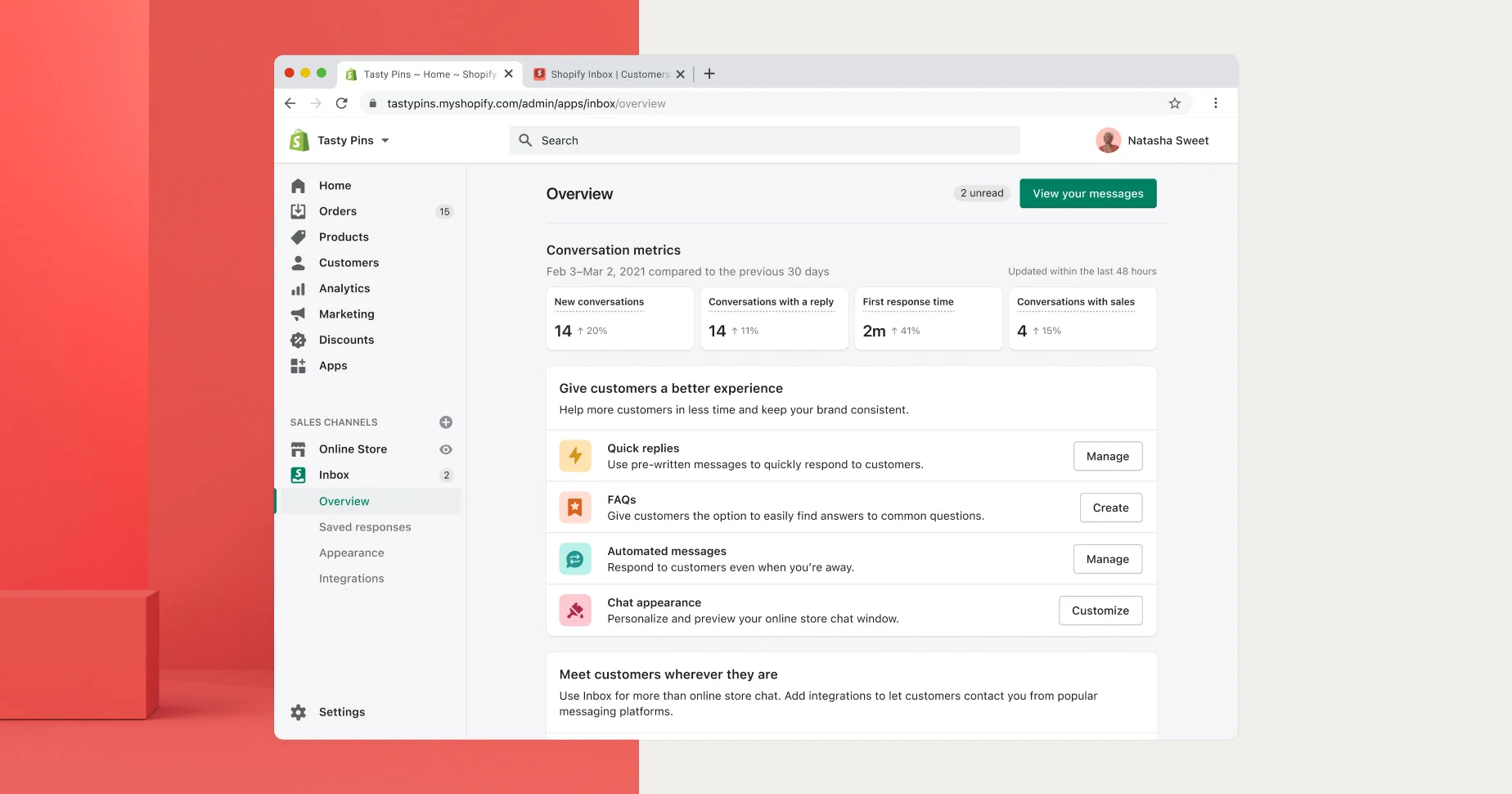
The requests themselves are simple, but the work is deceptively complex, a cascade of tedious administrative steps for every single ticket. Each one requires you to stop what you are doing, open a new browser tab, log into Shopify, search for the customer by name or order number, click into the specific order, find the relevant section, and manually perform a series of clicks to execute the change. Then, you must toggle back to your helpdesk, compose a reply confirming the action, and finally close the ticket. This context switching is a known productivity killer, with studies suggesting it can consume up to 40% of a person's productive time, the equivalent of losing two full days of a five-day work week. Research shows that after an interruption, it can take over 20 minutes to fully regain focus, a massive drain when you are toggling between your inbox, your Shopify admin, and your helpdesk during a busy sales period. The frustration isn't the customer service; it's the repetitive, time-consuming *action* that no traditional support tool can seem to handle for you. This is the ceiling for most AI support agents on Shopify, but it is no longer the limit of what is possible.
The Great Disconnect: When AI Answers But Can't Act
The evolution of AI in customer support has been rapid, but its depth has been frustratingly uneven for many store owners. For years, the primary function of a support "chatbot" was to be a slightly more interactive FAQ page, a first line of defense deflecting the most common and repetitive questions. Its main job was handling "Where Is My Order?" (WISMO) inquiries, which can account for as much as 75% of all support tickets for some businesses. This first wave of automation was valuable, certainly saving human agents from answering the same question a hundred times a day. As the underlying technology improved, these bots became more conversational, capable of understanding nuanced questions and providing detailed answers from a knowledge base. Yet, for most store owners, a fundamental gap remained. The AI was a knowledge worker, not an action-taker. It could tell a customer *how* to request a return, but it couldn't *start* the return. It could explain the cancellation policy, but it couldn't *cancel* the order. This creates a frustrating bottleneck many store owners know all too well: the resolution gap. The customer gets a fast initial response, but they don't get a fast resolution, which can actually increase their anxiety. Their request is simply captured and placed in a queue for a human to handle later, transforming the promise of AI into a simple ticket-sorting mechanism. The AI hasn't reduced the store owner's workload; it has merely organized it into a to-do list inside a helpdesk. This is the state of play for a significant portion of the market, where AI is an intelligent layer of insulation, not a true agent of action.
This disconnect is deeply baked into the business model of many popular helpdesk platforms, creating a hidden tax on inefficiency. Tools like Gorgias, Intercom, and Zendesk have built powerful platforms for managing customer conversations, but their AI pricing models often revolve around the concept of a "resolution." An automated interaction on Gorgias costs $1.50 once you pass the allowance bundled into your plan, on top of the base plan fee. Rates read on gorgias.com/pricing on 27 July 2026. Intercom Fin famously prices itself at $0.99 per resolution. Zendesk's model is more complex, and it is the one you cannot price: they charge for automated resolutions but publish no per-resolution rate, describing them only as tiered and priced on the value delivered. The critical question a store owner must ask is, what constitutes a "resolution" they are paying for? If the AI answers a WISMO question and the customer leaves, that is a clear win and a billable event. But if the AI tells a customer "I've passed your cancellation request to the team," and that is *also* counted as a resolution, the value proposition crumbles entirely. You are literally paying a fee for the AI to create manual work that you or your staff must then complete. Take a store with 2,000 tickets a month where AI resolves 40% of them, which is 800 automated interactions. On the Gorgias Pro plan, 190 of those are included and the remaining 610 cost $1.50 each, which is $915 on top of the $550 plan. The 2,000-ticket volume and the 40% rate are our assumptions; the rates are Gorgias'. If a quarter of those interactions are just escalations that require manual action, you have paid roughly $229 for a glorified to-do list. This model highlights the core issue: the AI is designed to close conversations, not necessarily to complete the underlying task the customer requested.
Drawing the Line: What 'Autonomous Action' Actually Means
To move past the resolution gap, we must be precise about what "autonomous action" means for a Shopify support agent. It is not about a rogue AI making unsupervised decisions with your business data. It is about empowering an AI to execute a confirmed, low-risk, and clearly-defined task without a human needing to manually complete the steps inside the Shopify admin. The most logical and impactful place to start is with logistical, non-financial changes to an order that has not yet been fulfilled. The single best example is the shipping address update. A customer realizes they typed "Street" instead of "Avenue" or their browser's autofill used their old address by mistake. The request is unambiguous. In a traditional workflow, this requires a human to read the email, open Shopify, find the order, click "Edit" on the shipping address, copy and paste the new information, and save, a process where manual data entry errors can occur at a rate of around 1%. While small, that's one in every hundred address changes going wrong, potentially leading to a lost package, reshipment costs, negative reviews, and the loss of a customer's lifetime value. A truly autonomous agent handles this end-to-end. It understands the request, asks the customer to confirm the full new address in a structured format to prevent ambiguity, validates it, and then uses the Shopify API, specifically, the permissions granted by the `write_orders` scope, to update the order record directly. The entire task is completed in seconds, at any time of day, without human intervention. This is the first, crucial step beyond simply answering questions; it is the AI performing a real, tangible task that directly impacts store operations.
This level of autonomy is now possible and being implemented by forward-thinking tools that are deeply integrated with Shopify's backend. Recent documentation from platforms like Gorgias shows that their AI agent can indeed be configured to handle actions like editing a shipping address or canceling an unfulfilled order directly within Shopify. This capability represents a significant and necessary shift from merely responding to requests to actively fulfilling them. However, it's just as important to be honest about where the line is currently drawn. The reason address changes are a prime candidate for full autonomy is that they are typically low-risk and non-financial. The same cannot be said for more complex actions like editing the items within an order. Modifying line items introduces a cascade of complexity involving inventory levels, payment recalculation, potential fraud checks, and downstream effects on fulfillment and reporting. An AI attempting to autonomously add a product, remove another, and adjust the payment would need a near-perfect understanding of the store’s specific inventory policies and bundling rules. For example, what if the edit removes an item that qualified the order for free shipping? The entire order total and payment status would need to be recalculated and potentially re-authorized. While the Shopify API has the technical capability to handle these mutations through a series of steps starting with `orderEditBegin` and ending with `orderEditCommit`, building a universally reliable AI agent that can perform them without risk of error is a challenge no one has fully solved yet. Therefore, the most capable AI agents are also the most honest, acknowledging that direct order editing is a frontier that still requires human oversight or is not supported at all.
The Money Button: Where Full Autonomy is a Bug, Not a Feature
When an action involves moving money, the calculus of autonomy changes completely and abruptly. For tasks like issuing refunds, canceling a paid order, applying a discount, or sending a gift card, full and unsupervised autonomy is not a desirable feature; it's a catastrophic financial liability. No responsible store owner wants an AI with the unlimited power to issue refunds on its own recognizance, essentially handing a blank check to an algorithm. The potential for fraud, customer abuse of policies, or simple AI misinterpretation of a complex request makes it a non-starter. With e-commerce return fraud costing retailers upwards of $100 billion a year, creating an automated system that can be easily exploited is a recipe for disaster. Imagine a fraudster discovering the precise phrase that tricks your AI into issuing a full refund without a return, a vulnerability that could be exploited at scale and costs businesses $4.61 for every $1 of fraud due to associated fees and costs. The goal of automation should be to eliminate tedious work, not to abdicate essential financial control. An AI that can be tricked into refunding every order is not an asset; it's a bug that could bankrupt your business. This is why the most thoughtfully designed AI support agents draw a hard, bright line between logistical autonomy and financial autonomy. They treat the "money button" with the respect it deserves, reframing the problem from "How can the AI do this on its own?" to "How can the AI do 99% of the work and let me make the final 1% decision with a single click?" This shift in perspective is the key to unlocking real, trustworthy automation for financial actions.
The superior model, and the only truly safe one, is that of approval-gated execution. In this workflow, the AI handles the entire front-end of the interaction, acting as a diligent financial assistant. It converses with the customer, understands their request for a refund, verifies the order details against your Shopify data, and confirms the correct refund amount based on your store's specific return policy, such as whether to include original shipping costs or if the item was final sale. It does all the necessary data gathering, policy checking, and preparation, which can take a human agent several minutes per ticket. But instead of executing the refund itself, it presents the complete, pre-vetted action, for example, "Approve Refund of $49.95 for Order #12345 to Jane Doe", to the store owner within their dashboard, a Slack message, or a mobile notification. The store owner sees the context and makes the final go/no-go decision with a single "Approve" button. This is where the magic happens. The moment the owner clicks approve, the AI takes over again. It's the AI, not the human, that then executes the `refundCreate` mutation via the Shopify API. It processes the refund, updates the order status in Shopify, and informs the customer that the refund has been processed and when they can expect to see the funds. The human's only job was to provide the critical point of financial authorization. They didn't have to navigate through Shopify menus, copy-paste order numbers, or manually type in refund amounts. The AI did all the labor; the human provided the judgment. This model delivers the best of both worlds: it dramatically reduces manual work while keeping the store owner in complete control of their cash flow.
The Most Autonomous AI Support Agent for Shopify is The One You Trust With Your Keys
In the end, the search for the "most autonomous AI support agent Shopify" is not a hunt for the longest feature list or the most futuristic claims. It is a search for trust. True autonomy is not about an AI that can answer any question, but one that can be trusted to take specific, valuable actions within your store's backend. It's about giving an application the keys to a very specific set of locks in your Shopify admin, just as you would an employee. You wouldn't give a new hire your personal bank account details on their first day. Similarly, the most advanced agents are those that understand the difference between a logistical task and a financial one, and treat them with the appropriate level of automated execution versus human-gated approval. This mirrors the real world of business operations: you trust a warehouse assistant to move boxes, but you require a manager's signature to approve a payout. This two-layer system, where some actions are fully autonomous and others are executed by the AI only after a human clicks "approve," is the current peak of useful, reliable support automation. It moves beyond the flawed model of paying per "resolution" and towards a model where the AI is a genuine operational partner that improves efficiency.
When you map this capability against the typical support queue, the difference becomes stark and immediately tangible in your daily workload. This is the practical litmus test for any AI tool you are considering: does it eliminate work or just re-categorize it? For most AI tools, nearly every request that requires changing an order results in escalation because their architecture is built around conversation, not operation. An escalation-based AI might improve first response time but can actually increase the total time-to-resolution by forcing a "double wait" on the customer, keeping the number of human touches at one, just delayed. A truly action-oriented agent, however, operates differently because it was designed from the ground up with deep Shopify API integration. It thinks in terms of tasks and outcomes, not just tickets and responses. Consider this breakdown of how different AI models handle common Shopify support tasks:
| Customer Request | Typical AI Response (escalation-based) | Action-Oriented AI Response (two-layer autonomy) |
|---|---|---|
| "I need to change my shipping address." | "I've created a ticket for our team to update your address." | Executes autonomously: "I've updated your shipping address. Please confirm the new address is correct." |
| "I need to cancel my order." | "I've passed your request to our support team for review." | Executes on approval: Prepares cancellation, awaits your 1-click approval, then cancels the order in Shopify and confirms with the customer. |
| "I'd like to get a refund for my last order." | "Please reply with your order number and reason, and our team will get back to you." | Executes on approval: Prepares the correct refund amount, awaits your approval, then processes the refund and notifies the customer. |
| "How do I start a return?" | "You can view our return policy here: [link]." | Executes on approval: "I can start that return for you. Once my manager approves it, you'll receive the shipping instructions." |
| "Can you add a product to my order?" | "Unfortunately, I cannot modify an existing order." | Acknowledges limitation: "I am not able to edit an order that has been placed, but I can help you place a new order." (Honesty) |
This is the philosophy behind Arbyn. We believe the purpose of an AI agent is to reduce your actual workload, not just organize it into a different view. Arbyn is built on this two-layer model of autonomy from its very foundation. It handles logistical tasks like address changes on its own, because that is a safe and efficient action that saves you time and prevents fulfillment errors. For anything involving money, cancellations, refunds, reshipments, discounts, Arbyn prepares the entire action, validates it against your policies, and waits for your one-click approval. The moment you grant it, Arbyn performs the task in Shopify. You are not escalated to; you are consulted at the point of decision. This approach, combined with a simple flat-rate pricing model that never charges you per resolution, fundamentally changes the value equation. You are no longer paying a hidden tax on escalations; you are investing in actions that directly contribute to your operational efficiency and bottom line. This focus on action aligns your incentives with your AI provider, ensuring the goal is always to reduce your workload, not increase a "resolution" count.
Ultimately, the future of AI in ecommerce support is not about fully replacing human judgment, especially where finances are concerned. It is about building intelligent tools that eliminate the thousands of clicks and hours of manual data entry that stand between a customer's request and its fulfillment. The goal is to build a more resilient and scalable business, one that can handle a Black Friday sales surge without needing to triple its support staff because automation is absorbing the predictable, high-volume requests. Companies that successfully implement automation can see productivity growth of 0.8 to 1.4 percent annually, a significant boost that compounds over time. The most advanced support agent is not one that claims to do everything on its own. It's the one that understands precisely where the line between autonomous action and human approval should be drawn, and then executes flawlessly on both sides of that line. This creates a system where the AI does the work, and you retain the control, the most efficient and trustworthy partnership for any growing Shopify store, allowing you to focus your limited time on strategy and growth, not on being the chief-clicker-of-buttons.
Written by
For seven years I have led customer success and technical support inside high-growth SaaS and e-commerce companies. Customer Support Lead at DripShop.live, a live-commerce SaaS. Technical Support Specialist at Replo (Y...
View full profile