The Shopify-Native Difference: Support That Acts Inside the Order, Not via a Connector
Most "integrated" support apps are just connectors that force your team to switch tabs; a true Shopify-native customer support app acts directly on orders, customers, and subscriptions inside the conversation itself.


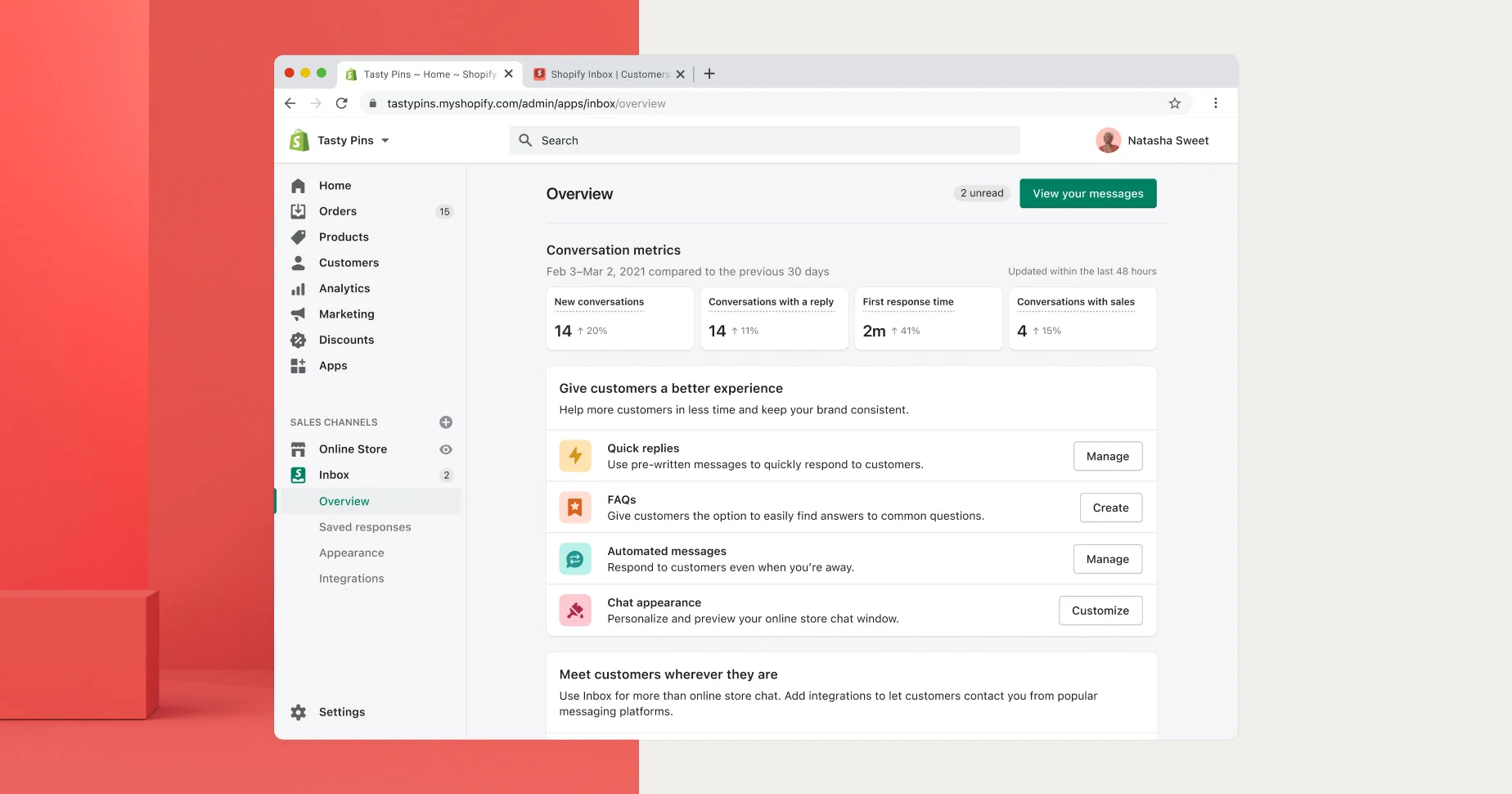
It’s 9 AM on a Tuesday, and a simple customer request comes in: “Hi, I just placed an order but used my old address. Can you update it to my new one?” In your support helpdesk, the agent sees the ticket, and the clock on their response time metric is already ticking. They also see a sidebar widget showing the customer’s recent order from Shopify. The integration is working, but only as a window, not a door. To actually fulfill the request, to change the shipping address, the agent has to open a new browser tab, log into the Shopify admin, navigate through Orders, find the specific order number, click into the customer profile, find the shipping address section, click ‘edit,’ change the address based on memory or by toggling back to the helpdesk tab, save, and then finally tab back to the helpdesk to type, “Done.” This entire sequence, a routine part of running a Shopify store for requests from address changes to discount code applications, reveals a deep misunderstanding in how most support software is designed. Your Gorgias, Zendesk, or Intercom might be *connected* to Shopify, but they don't truly operate *inside* it. That small gap, the constant context-switching between the helpdesk and the store admin, is more than a minor annoyance. It is a structural flaw that slows down your team, degrades the customer experience, and quietly costs your business thousands in lost productivity. A true Shopify-native customer support app closes that gap, acting on the order directly from the support conversation, not just displaying its data.
The Hidden Tax of the "Connected" Helpdesk
For years, the standard for a support application "integrating" with Shopify has been to act as a data pass-through. The helpdesk uses Shopify’s API to pull order information and display it in a sidebar next to the customer’s message. This was an improvement over having no information at all, but it created a new, subtle form of friction: the illusion of actionability. The agent can *see* the problem but cannot *solve* it in the same interface, creating a frustrating gap between insight and execution that contributes to agent burnout. Fulfilling even the most basic requests requires leaving the conversation, performing the task in the Shopify admin, and returning to confirm it. This constant toggling is known as context switching, and its cost is one of the most underestimated expenses in a support operation. Research shows that frequent task-switchers make 50% more errors and can lose over three hours of productive time every day just from refocusing. The seminal work of UC Irvine professor Gloria Mark found it can take over 23 minutes to fully regain focus after an interruption. While an agent’s jump to the Shopify admin is a micro-interruption, these add up, as workers toggle between apps up to 1,200 times daily, losing 9% of their annual work time in the process. This isn't just a theoretical cost; it translates into real dollars. One report, extrapolating from workforce studies, estimated that context switching costs the U.S. economy around $450 billion annually.
This "swivel chair" workflow, as it's known in the industry, directly impacts core support metrics. The term describes the physical or digital act of turning from one system to another to manually bridge an information gap, and it’s a hallmark of disconnected software that forces skilled employees into becoming human APIs. Average Handle Time (AHT), a measure of the total time an agent spends on an interaction, is artificially inflated by every trip to the Shopify admin. What should be a 30-second fix for an address change balloons into a multi-minute process, easily doubling the AHT for that ticket type from a best-in-class 3-4 minutes for simple retail inquiries to a sluggish 9. The core agent work might take 60 seconds, but the Shopify admin journey adds another 120 seconds of pure administrative navigation. This isn't the agent's fault; it's a limitation of the tool's architecture. Most helpdesks were built as general-purpose platforms for IT or SaaS and then adapted to e-commerce with a connector. They weren't designed with the specific, transactional needs of a Shopify store owner in mind. They read data, but they don't write it back in a way that feels native to the workflow. Some platforms have made progress; Gorgias, for instance, allows agents to perform several Shopify actions like refunds and cancellations from within its interface. Similarly, certain Zendesk integrations can process refunds and cancellations directly from the ticket. However, the fundamental model for many tools remains one of viewing data from a distance, forcing a workflow that is inherently disconnected and inefficient for any action not explicitly built into the connector, such as adding a new product to an existing order or applying a unique discount code post-purchase. This architecture creates a permanent ceiling on how quickly and effectively your team can operate.
First Contact Resolution and the Price of Delay
The problem with a disconnected support stack goes far beyond internal inefficiency. It directly harms the customer experience by undermining First Contact Resolution (FCR), one of the most critical metrics for customer satisfaction. FCR measures the percentage of inquiries resolved in a single interaction, without the customer needing to follow up. When an agent has the information and the authority to solve an issue immediately, the customer leaves satisfied. Research from organizations like COPC Inc. shows a direct correlation between high FCR and customer loyalty. Every time an agent has to say, “Let me check on that and get back to you,” or, “I’ve escalated your request to the team that handles order changes,” the chance of a successful FCR drops. This delay is a primary driver of customer churn; one study found that 67% of churn is attributable to issues not being solved in the first interaction. In fact, other studies show that 32% of customers will leave a brand they love after just one bad service experience. The customer, who sees their request as simple, now perceives the process as slow and bureaucratic, eroding their confidence in your brand's competence with each additional step and every hour of delay.
This is the functional difference between a tool that is merely connected and one that is truly native. A connected tool facilitates a relay race, where the ticket is a baton passed from the agent to someone with Shopify access and then back again, with customer trust dropping at every handoff. A native tool empowers the agent to be the finisher. Consider the billing models of major support platforms. Tools like Intercom Fin and Gorgias Automation charge per automated resolution, often around $0.99 or $1.50 per automated interaction past your plan's allowance respectively. Zendesk bills for AI resolutions too, but publishes no per-resolution rate anywhere, so the seat licenses and add-ons are the only part of that bill you can forecast. These models incentivize deflecting tickets, but they don't necessarily solve the underlying architectural problem for issues that require manual intervention. The definition of a "resolution" itself can be problematic, sometimes counting conversations where the customer simply stops replying in frustration as a success. If the AI can't perform the action and escalates to a human agent who *also* can't perform the action without leaving the tool, the system is fundamentally broken. The customer is forced to wait, your team’s time is wasted, and you are paying for a "resolution" that is merely a transfer of responsibility. A true resolution is a state change in Shopify, an undeniable outcome, not just a closed conversation.
What "Shopify-Native" Truly Means: Acting Inside the Order
A true Shopify-native customer support app redefines the concept of integration. It is not an external application that peers into Shopify through the keyhole of an API; it is an embedded part of the store’s operational fabric. The difference is philosophical and architectural. Instead of just pulling and displaying read-only data, a native app has the authenticated permissions to both read *and write* directly to Shopify’s core objects, Orders, Customers, Discounts, and more, all from within the support conversation thread. This is a profound shift. When a customer asks for a change, the agent (or the AI) doesn’t just see the order details. It interacts with the live, mutable order object itself. There is no data lag, no stale cache, and most importantly, no context switch to the Shopify admin. The support thread becomes the command center and single source of truth, where the entire history of an order's interactions, edits, and resolutions lives in one chronological view. Better still, every action taken is automatically logged in the Shopify order timeline, ensuring perfect auditability for fulfillment and finance teams without the agent needing to remember to add a manual note.
This capability rests on a deeper level of integration than a simple connector. It means the application is built as an embedded Shopify app from the ground up, inheriting its permissions and context directly from the logged-in user. When an action is taken, it's not a request sent to a different system; it's a direct mutation performed on the Shopify backend via an authenticated API call that respects the user's specific permissions. This is the critical distinction. Many platforms claim "Shopify integration," but what they offer is data synchronization. A native platform offers direct manipulation. This allows for a two-tiered system of action that is impossible with a standard connector. Simple, low-risk actions like updating a shipping address on an unfulfilled order can be performed autonomously by an AI agent without any human review. The customer asks for the change, the AI validates the address using Shopify's own validation services, and executes the change on the order in seconds. More sensitive, money-moving actions, issuing a refund, canceling an entire order, creating a unique discount code, or sending a gift card, are handled with a one-click approval workflow. The AI prepares the action, calculates the refund amount or generates the code, and presents it to the store owner as an interactive block: "Approve refund of $24.99? [Approve] [Deny]". The owner doesn't need to go to Shopify; they simply verify the action and the native app executes it. This combination of autonomy and control is the hallmark of a truly native architecture.
The Anatomy of a Native Action: From Request to Resolution
Let’s dissect two common scenarios to see the practical impact of a native workflow versus a connected one. First, the simple address change from our opening story. In a typical helpdesk, the agent sees the request and begins a painful, multi-step manual process: read the ticket, copy the order number, open a new tab, navigate to the Shopify login page, enter credentials, paste the order number, click into the order, scroll to the address, click 'Edit', copy and paste the new address from the helpdesk tab while darting their eyes back and forth to avoid typos, click 'Save', navigate back to the helpdesk, type a confirmation, and finally send. This sequence, even for a fast agent, can take 90-120 seconds and is dangerously prone to copy-paste errors, which occur in a significant percentage of all manual data entry fields. If an incomplete address is given, the agent has to manually ask for clarification, further delaying resolution. In a Shopify-native app, the AI agent reads the request, identifies the intent ("update shipping address"), and because this is a non-financial change on an unfulfilled order, it performs the action autonomously. It writes the new address directly to the order object via the API, automatically logging the change as a note on the Shopify order and confirming completion to the customer. The entire exchange can be over in under 30 seconds, with zero human intervention and zero context switching.
Now consider a more complex request: a partial refund for a damaged item. In a connected workflow, the agent receives the complaint and photo. They might see the order details in their sidebar, but they almost certainly cannot process a precise partial refund from there. They must escalate the ticket or send a note to the store owner. The owner then has to stop what they're doing, interrupting a marketing launch or product development, find the ticket or Slack message, open Shopify, locate the order, initiate a refund, select the specific item and quantity, manually enter the refund amount, and crucially, calculate and add the proportional tax, a step ripe for error. They then confirm restocking and finally notify the agent so they can close the loop with the customer. This high-friction process creates delays and frustrates everyone. In a native workflow, the AI or agent identifies the need for a refund. The app presents a "Process Refund" action directly in the conversation thread. Clicking it opens a modal pre-populated with the order's line items. The agent selects the damaged item and quantity, and clicks "Prepare Refund." The system tees up the exact API call required, including precise tax logic based on store settings, and presents it to the store owner as a one-click approval button inside that same conversation view. The owner reviews the action, "Approve refund of $24.99 for 1x T-Shirt", and clicks. The app executes the refund in Shopify and instantly confirms it to the customer. This is the Shopify-native difference: the tool does the work, gated by the owner's strategic approval, not escalated for the owner to do the work themselves.
Beyond Reactive Support: Driving Sales with Native Actions
The power of a true Shopify-native customer support app extends far beyond efficiently resolving problems. When an application has live, writable access to the core of your Shopify store, it can transition from a defensive cost center to a proactive revenue driver. Because it's not just seeing a static snapshot of past orders, but has real-time awareness of cart contents, customer browsing history, and lifetime value, it can take intelligent sales actions inside the support conversation. This transforms the role of the support channel. It’s no longer just about fixing what’s broken; it's about seizing opportunities. For example, a Forrester research study found that proactive chat can yield significant ROI over reactive chat, and other studies show that personalization can lift conversion rates by 5-25%. A native agent seeing a question about a specific product can also see past purchases and recommend a complementary item, turning a simple query into an upsell by functioning as a personal shopper. This level of personalized engagement is what modern customers expect, with 80% being more likely to buy from a company that offers such experiences.
Crucially, a native app can execute these sales-oriented actions directly. When offering a discount, it doesn't just give the customer a generic code to copy and paste, which often gets leaked to coupon sites and abused, eroding profit margins. This leakage can be devastating for brands, turning profitable sales into losses. Instead, a native app can generate a unique, single-use code via the Shopify API and apply it directly to their active cart, a seamless experience that reduces friction and increases the likelihood of purchase. If a customer is on the verge of abandoning a high-value cart, a proactive chat can trigger, offering assistance or a small incentive, a strategy shown to significantly increase conversion. For a loyal, high-LTV customer who had a poor experience, the resolution isn't just a refund; it's an instantly issued gift card, created programmatically via Shopify's Gift Card API and approved with one click by the store owner. This encourages a return visit, builds loyalty, and turns service recovery into a marketing opportunity. This is a fundamentally different approach than what's possible with a simple connector. Platforms that only read data are forever stuck in a reactive posture. They can answer questions about what has already happened. A platform that can write data can influence what happens next. This is the "Sales" part of the modern "Support & Sales Agent," turning every customer interaction into a potential opportunity to increase order value and build long-term loyalty.
When evaluating your support stack, the distinction between a "connected" app and a "native" one is the single most important factor to consider. The difference determines whether your support tool is simply another pane of glass to look through, or a command center from which your team can actually run your store's customer operations. Ask potential vendors not just if they integrate with Shopify, but *how*. Ask them to walk you through the exact clicks required to process a refund or change a shipping address. Do you stay in one interface, or do you end up back in the Shopify admin? Does the tool empower your team to act, or does it just create a more detailed to-do list?
In the past, the high cost of usage-based pricing from platforms like Gorgias, Intercom, and Zendesk forced store owners to limit their use of support automation. This model creates a perverse incentive, where managers might encourage manual workarounds to avoid a $1.50 automated-interaction fee, defeating the entire purpose of the software and leading to a "Frankenstein" stack of partially effective tools. A flat-rate model changes this calculus, but only if the tool itself is powerful enough to deliver true resolution. The future of e-commerce support isn't just about answering questions faster. It's about closing the loop between conversation and action, eliminating the swivel chair, and empowering your team with tools that work the way your business works. That is the Shopify-native difference, and for a growing store, it's everything. By choosing a tool that acts directly inside the order, you’re not just buying a better helpdesk. You’re investing in a more efficient team, a better experience for your customers, and a more profitable business. You can explore how a truly native architecture works at Arbyn, which was built on this exact principle of in-thread action.
Written by
For seven years I have led customer success and technical support inside high-growth SaaS and e-commerce companies. Customer Support Lead at DripShop.live, a live-commerce SaaS. Technical Support Specialist at Replo (Y...
View full profile