Shopify Bundle Suggestions in Chat
Most Shopify bundle apps introduce complexity with checkout functions and inventory nightmares; suggesting bundles in chat avoids this entirely.


The logic seems straightforward: package two or three products together, offer a slight discount, and watch your average order value climb. Yet for many Shopify store owners, the reality of product bundling is a frustrating cycle of broken checkouts, inaccurate inventory, and apps that create more problems than they solve. The core issue is a widespread misunderstanding of where a bundle recommendation is most effective. Store owners are conditioned to believe the answer lies in a complex app that manipulates the cart at the last possible second. The truth is simpler and far more powerful. The highest-leverage moment to create a bundle isn't with a checkout function; it's with a shopify bundle suggestions chat, a targeted, helpful conversation that happens long before the customer even thinks about paying.
This approach fundamentally reframes the goal from a technical cart manipulation to a human-centric sales conversation. Instead of forcing a pre-set package onto a customer through a static widget on a product page, a conversational suggestion can be tailored to the specific questions a customer is asking. It feels like expert advice, not an aggressive upsell. This distinction is critical. A checkout-level bundle created by an app often relies on Shopify's Functions or legacy scripts, which can conflict with other apps, break during theme updates, and cause massive headaches with fulfillment. A conversational recommendation, by contrast, is just text. It's a guided shopping experience that helps a customer add the right combination of individual products to their cart, sidestepping the entire infrastructure of fragile bundle SKUs and checkout-modifying code.
The Broken Promise of "Easy" Product Bundles
The appeal of product bundling is undeniable, with data showing it can increase average order value by 20-30% or more. This promise has fueled a massive ecosystem of Shopify apps, each offering a slightly different flavor of bundle creation: fixed kits, mix-and-match builders, frequently bought together widgets, and tiered volume discounts. The marketing materials for these apps paint a picture of effortless AOV growth. The operational reality, however, is often a minefield of technical debt and logistical nightmares that can leave store owners spending more time troubleshooting than selling. The core of the problem is that Shopify, by default, doesn't truly understand what a "bundle" is. It sees individual products with individual SKUs. Most bundling solutions are elaborate workarounds attempting to bridge this architectural gap, and the seams often show at the worst possible moments.
One of the most common and damaging failure points is inventory synchronization. When a customer buys a "Skincare Starter Kit" bundle, Shopify's native inventory system may only deduct stock for the single bundle SKU, not for the individual cleanser, toner, and moisturizer SKUs that comprise it. This immediately desynchronizes the actual component stock levels. The result is overselling. A customer can purchase the last individual cleanser while another customer simultaneously buys a bundle containing that same cleanser, leading to a backorder, an unhappy customer, and a frantic scramble in fulfillment. This problem compounds exponentially with every sales channel and every additional bundle an item is part of. For growing brands, this isn't a minor glitch; it's a critical operational failure that erodes customer trust and profit margins.
Beyond inventory, the user experience itself often suffers. Bundle apps that inject code directly into theme files can slow down page load times or break entirely when a store's theme is updated. Discounts fail to apply correctly at checkout, widgets don't appear on product pages, or the layout is confusing on mobile devices. These issues create friction and erode the customer's trust right at the point of conversion. A customer who sees a bundle price on the product page but a different, higher total in their cart is likely to abandon the purchase altogether. Even when the tech works, many app-based bundles present a rigid, take-it-or-leave-it offer that doesn't account for the customer's specific needs, leading to low conversion rates for the upsell itself. The dream of a simple AOV boost quickly devolves into a complex web of app conflicts, manual inventory reconciliation, and a disjointed customer journey.
Why Checkout Apps Are the Wrong Tool for Bundle Suggestions
The very architecture of modern Shopify checkouts makes app-based bundling a high-stakes, fragile endeavor. To manipulate the cart, to merge products into a single bundle line item or apply a complex discount, apps must use a powerful but restrictive tool called a Cart Transform Function. While these functions are the "correct" way to build modern checkout logic, they come with a severe limitation: a store can only have one active Cart Transform Function at a time. This "single function rule" creates an immediate conflict for any store owner who wants to use more than one app that touches the cart. If you have a bundle app from one developer and a warranty or gift-wrapping upsell app from another, they cannot coexist. They will overwrite each other, and only one will work, forcing store owners into a frustrating choice or a search for a single, monolithic app that does everything poorly.
This technical constraint is a symptom of a deeper strategic error. Attempting to build a bundle at the checkout is simply too late in the customer's journey. By the time a customer clicks "Checkout," their buying decision is largely complete. An offer at this stage often feels like an interruption or a last-ditch sales tactic rather than helpful advice. Checkout UI Extensions, which allow apps to add elements to the checkout page, are also limited. They are sandboxed for security and performance, and while they can be used for simple upsells like adding a related product, they are not designed for the complex logic of building a customizable bundle. They are a tool for minor additions, not for fundamentally reshaping the cart's contents based on a customer's needs. The entire model of waiting until the final step is flawed because it prioritizes the technical act of the transaction over the psychological act of the decision.
Furthermore, the workarounds that bundle apps employ create significant data fidelity problems. Some apps create a new "bundle" product listing for every combination. This clutters the product catalog and still relies on manual inventory management to prevent overselling. Other, more advanced apps use the Cart Transform Function to "expand" a bundle SKU into its component parts at checkout. While this is better for inventory, it can create a confusing experience for the customer, who sees a single item in their cart suddenly explode into multiple line items on the final order summary. It also creates headaches for bookkeeping, as some apps achieve the bundle discount by marking the individual components as 100% off, which dramatically inflates gross sales and discount figures, distorting financial reports. The core problem remains: these apps are fighting against Shopify's core architecture instead of working with it, and the store owner is caught in the crossfire.
The Conversion Power of a Pre-Cart Conversation
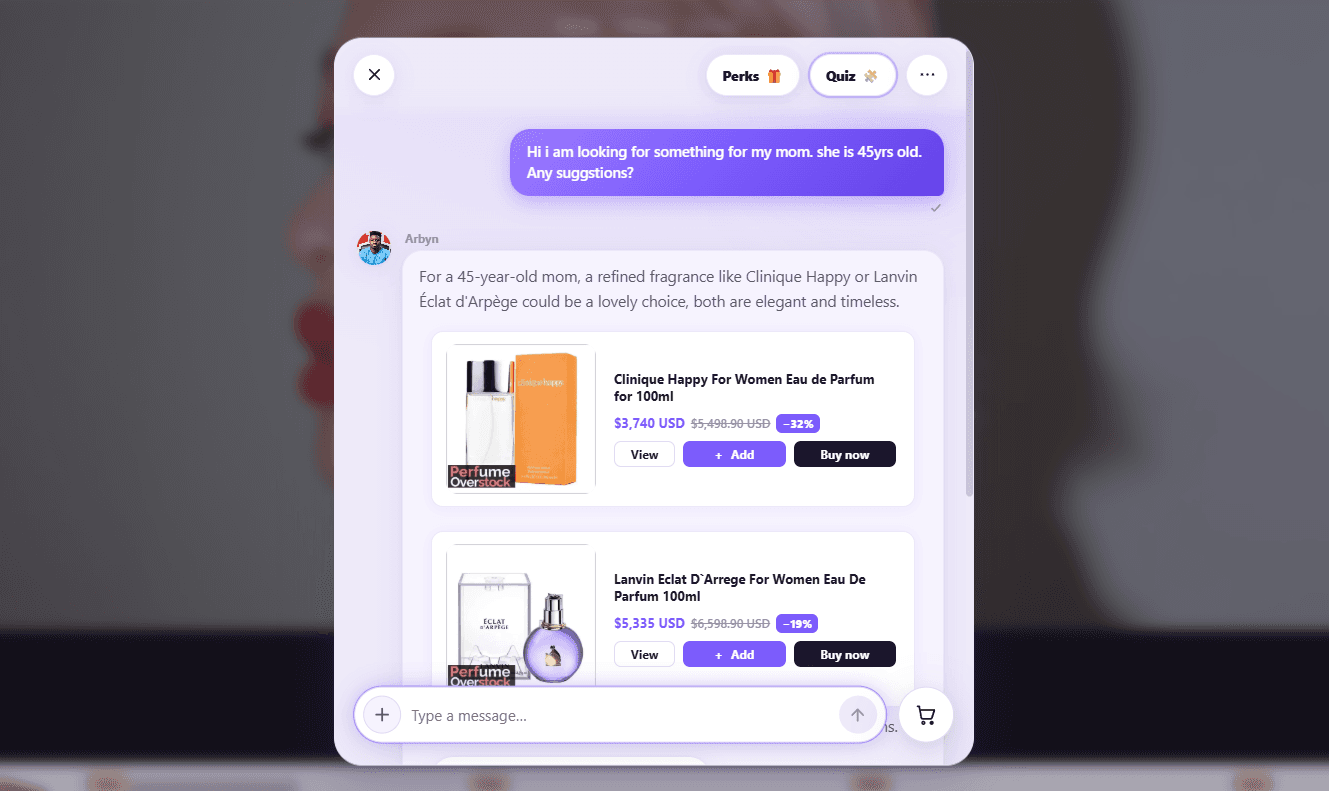
The alternative to this technical mess is to move the entire concept of bundling out of the checkout and into the conversation. Instead of a rigid, pre-defined kit, imagine a customer on a product page for a high-end camera. They're interested but have questions. A chat window opens, not with a generic "How can I help?" but with a context-aware prompt. An AI agent, or a human one, can engage them directly: "I see you're looking at the X100. It's a fantastic camera. Customers who buy it often pair it with the 50mm lens for portraits and an extra battery pack to get through a full day of shooting. Would you like to see how those look together?" This isn't an upsell; it's a consultation. It's helpful, personalized, and occurs at the peak of the customer's interest, before they've made a final decision.
This conversational approach is dramatically more effective than static pop-ups or checkout widgets. Data shows that shoppers who engage with AI-powered chat are significantly more likely to make a purchase, in some cases, converting at four times the rate of those who don't. The reason is psychological. A conversation is a two-way exchange. It allows the customer to ask follow-up questions ("Is that lens good for low light?"), voice concerns ("Is the battery hard to change?"), and receive tailored reassurance. This process builds trust and reduces the friction of uncertainty, which is a primary driver of cart abandonment. Unlike a static "Frequently Bought Together" widget, a conversation can adapt. It can pivot from suggesting a lens to suggesting a camera bag if the customer mentions they travel a lot. This adaptability makes the recommendation feel genuine and intelligent, tapping into the same dynamic that makes a great in-person retail assistant so valuable.
Moreover, the conversational method bypasses all the technical problems that plague bundle apps. There are no Cart Transform Functions to conflict, no special bundle SKUs to mismanage inventory, and no theme code to break. The output of a successful bundle conversation is simple: the customer adds three individual, standard products to their cart. The "bundle" exists only as a concept within the conversation. Any discount can be applied using a standard Shopify discount code, a mechanism that is robust and well-understood. This approach is clean, scalable, and operationally sound. It leverages the most powerful sales tool available, a helpful, expert dialogue, while avoiding the creation of technical debt that can cripple a growing store's operations. The focus shifts from trying to hack the checkout to genuinely helping the customer build a better cart.
A Framework for Shopify Bundle Suggestions in Chat
Implementing a strategy for shopify bundle suggestions in chat does not require a complex technical overhaul. It requires a shift in mindset, from passive product display to active, consultative selling. The framework is straightforward and can be executed by a human support team or, more scalably, by a capable AI sales agent. The first step is to identify logical product pairings. This should not be based on guesswork. Dive into your store's order data. Look for products that are frequently purchased together. These organic pairings are your starting point because they reflect genuine customer behavior. If customers consistently buy a specific shampoo and conditioner together, that's your first conversational bundle. Go beyond the obvious and look for non-intuitive pairings that solve a complete problem for the customer. For instance, a customer buying a new yoga mat might not think to add mat cleaning spray, but suggesting it solves a future problem and increases the order value.
Once you have identified your top 3-5 bundle opportunities, the next step is to craft the conversational scripts. This is where the art of selling comes in. The suggestion should never feel forced. It should be framed as helpful advice. Instead of "Do you want to add this for $10?" try "Most people find that adding our 'Complete Care Kit' with the cleaner and protective case keeps their new purchase looking great for years. The kit saves you about 15% compared to buying them separately." This script does several things: it uses social proof ("Most people find"), it frames the benefit ("keeps their new purchase looking great"), and it quantifies the value ("saves you about 15%"). Each script should be tied to a specific trigger. A person lingering on a product page for more than 60 seconds is a prime candidate for a proactive chat engagement. A customer who has just added a single item from a known pair to their cart is another perfect trigger point for a suggestion to "complete the set."
The third part of the framework is handling questions and delivering the sale. This is what makes a conversation superior to a static widget. When the customer asks, "Is the case bulky?" or "Does the cleaner have a strong smell?" your chat agent must be equipped to answer accurately. For human agents, this requires training. For an AI agent, it requires a deep understanding of your product catalog and a well-calibrated knowledge base. After answering questions, the final step is to make it easy for the customer to act. Don't just tell them about the products; provide direct links to add each recommended item to their cart. If a discount is part of the offer, the AI can even generate and apply a unique discount code directly to their checkout session. The entire flow is seamless, consultative, and removes every possible point of friction between the suggestion and the final purchase, transforming a simple product inquiry into a larger, more valuable order.
From Suggestion to Sale: Automating the In-Chat Bundle
Executing this conversational bundling strategy manually with a human team is effective but difficult to scale. A live agent can only handle a few conversations at once, and they cannot be available 24/7. This is where a modern AI support and sales agent becomes a force multiplier. An AI agent can run dozens, even hundreds, of these consultative bundling conversations simultaneously, at any time of day or night. It can be programmed with the exact triggers, scripts, and product knowledge needed to execute the framework flawlessly on every interaction. When a customer adds a dress to their cart at 2 AM, the AI can instantly and proactively engage them in chat: "That's a great choice. To complete the look, many customers add our matching clutch and earrings. Would you like me to show you?"
The key to making this automation work is the AI's ability to go beyond simple keyword matching. A truly effective AI sales agent needs to understand context and intent. It must be able to differentiate between a customer asking a support question about a past order and a new visitor showing purchase intent on a product page. It needs access to the product catalog in real-time to make accurate, relevant suggestions. For example, if a customer is looking at a specific pair of hiking boots, the AI should suggest the corresponding wool socks and waterproofing spray, not just random popular accessories. This level of intelligence ensures that the automated suggestions are just as personalized and helpful as those from a top-tier human sales associate, leading to higher conversion rates and a better customer experience.
Finally, the automation must close the loop by attributing revenue back to the conversation. A key failure of many marketing and support initiatives is the inability to prove ROI. A sophisticated AI agent can track which conversations lead to a purchase. When the AI suggests a three-product bundle and the customer proceeds to buy all three items, the system can tag that order and attribute the revenue directly to that chat interaction. This creates a powerful feedback loop for the store owner. You can see precisely which bundle suggestions are working, which scripts are most effective, and how much additional revenue is being generated by these automated, in-chat sales plays. This data transforms bundling from a hopeful strategy into a measurable, optimizable sales channel that operates without adding to your team's workload.
Choosing Your Approach: Bundle Apps vs. Conversational Sales
For a Shopify store owner looking to increase average order value, the path forward presents a clear choice between two fundamentally different philosophies. The first path is the traditional one, paved with third-party bundle apps from the Shopify App Store. This approach views bundling as a technical problem to be solved at the checkout, relying on complex code, specialized SKUs, and often-fragile cart manipulations. The second path is the conversational one. It treats bundling as a sales and service opportunity, using dialogue to guide customers toward a better purchase. This approach prioritizes the customer experience and operational simplicity over complex, last-minute checkout modifications.
To make the right decision for your store, it's crucial to understand the trade-offs. The app-based approach promises a certain degree of "set it and forget it" automation through static widgets, but this often comes at a high cost of technical fragility and operational complexity. The conversational approach requires more strategic setup in terms of crafting scripts and identifying triggers but offers far greater flexibility, personalization, and operational robustness. It avoids the most common pitfalls of app-based solutions, particularly inventory sync issues and checkout conflicts. A direct comparison reveals the stark differences in these two models.
| Aspect | Traditional Bundle Apps | Conversational Bundle Suggestions |
|---|---|---|
| Mechanism | Uses Cart Transform Functions, special SKUs, or discount codes. Modifies the cart at checkout. | Uses chat dialogue to recommend individual products. Customer adds standard products to the cart. |
| Primary Risk | Inventory desynchronization, app conflicts, theme breakage, slow page loads, and financial data distortion. | Poorly written scripts or irrelevant suggestions can feel intrusive if not properly targeted. |
| Flexibility | Low. Offers are typically rigid, pre-defined kits or "frequently bought together" widgets. | High. Can be adapted in real-time based on the customer's questions, needs, and context. |
| Customer Experience | Passive and often impersonal. Can feel like an aggressive, last-minute upsell. | Active and consultative. Feels like receiving expert advice from a helpful sales associate. |
| Operational Impact | High. Can create significant downstream work for inventory management, fulfillment, and accounting. | Low. Orders contain standard SKUs, integrating seamlessly with existing inventory and fulfillment workflows. |
Ultimately, the conversational approach is better aligned with the nature of modern ecommerce, where customers expect personalization and assistance. While a simple, static bundle app might be a starting point for a brand new store just testing the waters, any growing business will quickly encounter the operational limits and technical debt inherent in that model. A strategy built around shopify bundle suggestions in chat, especially when powered by a capable AI agent like Arbyn, is a more scalable, resilient, and customer-centric way to drive revenue. Instead of installing yet another app that risks breaking your checkout, you can leverage the chat channel you already have to create a powerful and profitable sales engine. It transforms your support channel into a revenue driver that works 24/7. To see how you can implement this without the technical overhead, you can add Arbyn to your store and start building your first conversational sales plays today.
The future of upselling and cross-selling on Shopify isn't another widget or checkout hack. It's a smarter conversation. By meeting customers where they are and offering genuinely helpful advice, you can not only increase your average order value but also build the kind of trust and loyalty that turns one-time buyers into lifelong fans. The technology to have these conversations at scale is no longer a far-off concept; it's a practical tool available to any store owner ready to move beyond the limitations of the past.
Written by
For seven years I have led customer success and technical support inside high-growth SaaS and e-commerce companies. Customer Support Lead at DripShop.live, a live-commerce SaaS. Technical Support Specialist at Replo (Y...
View full profileKeep reading
View all posts
The CRO Case for Selling Inside Support Instead of After Checkout: A Worked Example
Odera Joseph · 6 min
Is a Chat Widget Worth It for Shopify Conversion Rate?
Odera Joseph · 7 min
Return Visitor Retargeting Inside Chat: A Shopify CRO Tactic Most Stores Skip
Odera Joseph · 9 min