How to Train Arbyn on Your Return and Exchange Policy
A vague return policy creates manual support work; learn how to design a machine-readable policy that an AI agent can actually execute on Shopify.


The cost of a return isn't the refund. The real cost is the time your team spends deciphering your own policy, one ticket at a time. A single return can trigger a dozen emails: confirming eligibility, asking for photos, checking the purchase date, and clarifying whether "original condition" includes a box that was opened. Industry data suggests the fully loaded manual labor of processing a single return can cost anywhere from $10 to $45, a figure that includes all staff time spent on these exact conversations. This operational drag isn't a failure of your team; it's a failure of the document they're forced to interpret. From a store owner's perspective, this manual processing, which can consume many hours per week for a mid-sized brand, represents thousands in monthly labor costs spent on repetitive, low-value tasks. Most return policies are written for humans to argue over, not for software to execute. They are filled with subjective, ambiguous language, phrases like "at our discretion," "signs of use," or "reasonable timeframe", that guarantees a human must be in the loop for every single request, turning your support desk into a bottleneck.
Automating this process on Shopify requires more than just installing an app; it demands a fundamental shift in how you define your rules. To effectively train an AI on your return policy, the policy itself must be rewritten for a machine. This means translating vague business customs into a set of explicit, non-negotiable instructions that software can evaluate without asking for clarification. For example, a human-centric rule like "We accept returns on defective items" becomes a machine-readable instruction: "IF a customer reports an item as defective within 45 days of delivery AND provides a photo clearly showing the defect, THEN a prepaid return label is generated for approval." It involves deciding, in advance, what the rules are for every scenario, rather than making it up on a case-by-case basis. This isn't just about saving time on support tickets; it's about building a more resilient, scalable, and predictable operation. The process of making your policies machine-readable forces a level of clarity that benefits everyone, from the customer trying to understand their options to the warehouse team processing the inbound package. For store owners looking to leverage AI, the first step isn't about the technology, it's about the text.
The Hidden Cost of Ambiguity in Your Return Policy
Every store owner has a return policy. Most, however, are collections of well-intentioned but ultimately unenforceable guidelines. A typical policy for a Shopify store might state that returns are accepted "within 30 days" for items that are "unused and in original packaging." This sounds clear, but the ambiguity creates work and erodes margin. What if the customer messages on day 31 because shipping was delayed? What if the item is unused but the protective film was removed from a screen? What if they bought it from a "Final Sale" collection that wasn't clearly marked on the product page? Each of these edge cases defaults to a manual support conversation. The National Retail Federation (NRF) and Happy Returns released a report for 2025 projecting that returns would account for $849.9 billion in lost sales, with online purchases being returned at a rate of 19.3%. The labor to handle these returns is a significant part of that cost; one analysis found a single brand spent a significant amount of time per month on manual returns processing alone. That's time your team isn't spending on driving sales or solving complex customer issues that truly require a human touch.
This problem is rooted in language, and the financial impact is significant. Beyond the direct labor cost, which can run between $10 and $45 per return, there's the hidden cost of lost customer loyalty. After a poor return experience, 71% of consumers say they are less likely to shop with a retailer again. Phrases that seem reasonable to a human are computational dead ends for software and friction points for customers.
- "At our sole discretion...": This is the ultimate escape hatch, but for an AI, it's a system halt. For a store owner, it signals inconsistency, where one customer gets an exception and another doesn't, leading to accusations of unfairness and damaging brand trust. It means the actual rule exists only in a manager's head at that moment.
- "Item must be in resalable condition.": Who determines this, and when? Does the support agent decide based on a customer's low-resolution photo, only for the warehouse to reject it upon receipt? This creates a second, more painful customer service interaction where you have to retract the initial approval. An AI can't guess, and guessing creates operational chaos.
- "Signs of wear or use.": This is entirely subjective and a common source of disputes, especially in apparel where return rates can hit 40%. One person's "tried on for a minute" is another's "wore it out for a night," leaving behind a scent of perfume or a tiny makeup smudge. It's a rule that can only be enforced after the fact and often leads to costly chargebacks.
- "For a reasonable period.": This is legally vague and operationally useless. It invites customers to argue their specific case, guaranteeing a manual review that eats into the average $10-$45 processing cost for a single return. It turns your support team into policy debaters instead of problem solvers.
Designing a Return Policy for AI Execution
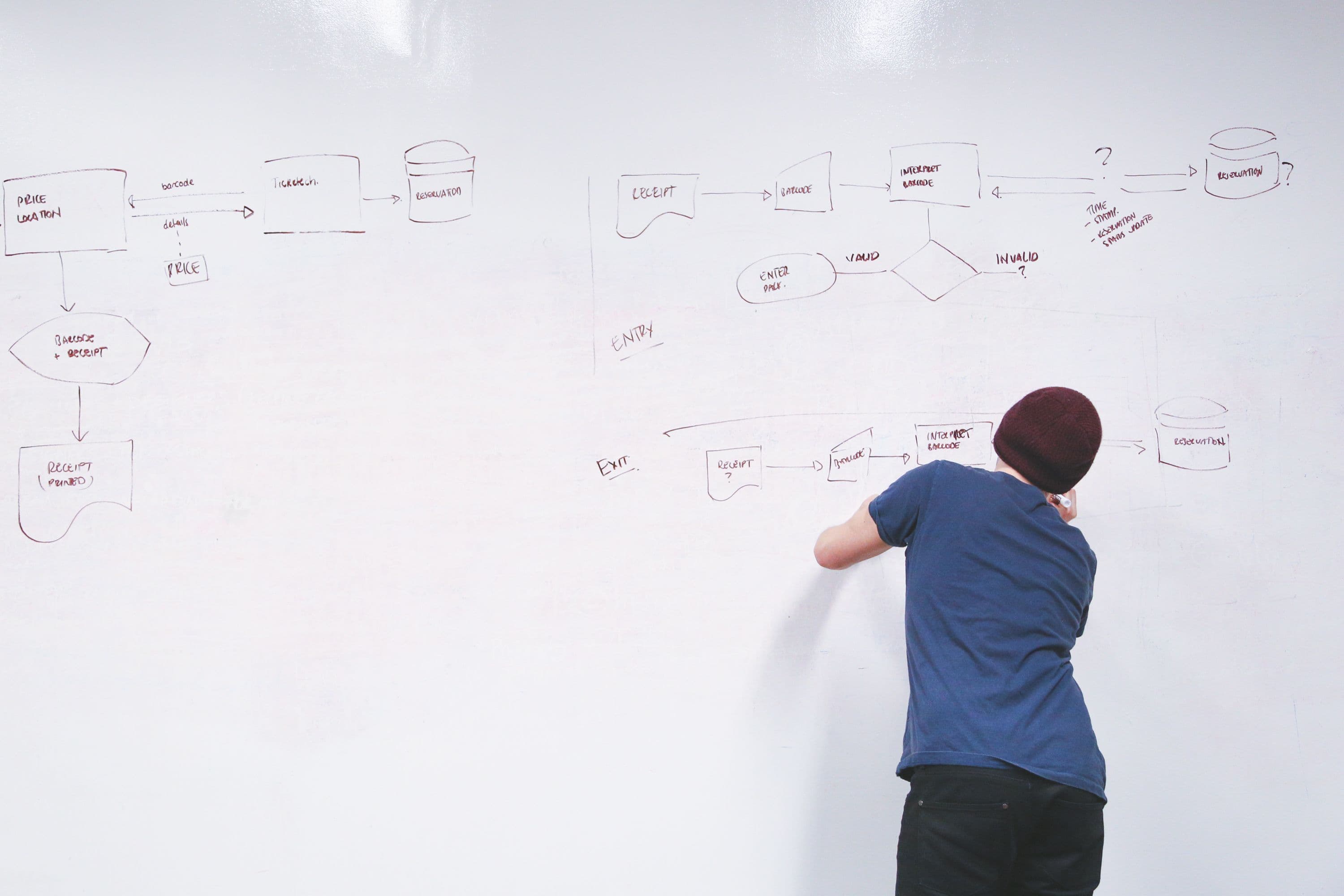
To automate returns, you need to think like a machine. An AI doesn't understand nuance, intent, or "the spirit of the policy." It understands conditional logic: IF this is true, THEN do that. Rewriting your policy for an AI means converting your business rules into a decision tree that the software can climb without human assistance. This isn't about creating a stricter policy; it's about creating a clearer one. A machine-readable policy has three core components: explicit conditions, binary states, and pre-defined outcomes. From a store owner's view, the goal is to systematically handle the 65-75% of standard returns automatically. This frees up your team to focus on the complex 20% that truly require their expertise, like high-value orders, potential fraud, or VIP customer issues. Anything that falls outside this defined structure is, by definition, an exception that needs to be escalated to a human.
Start by breaking your policy into a series of questions that have simple yes/no answers. This is the foundation for training an AI agent, turning abstract goals into a concrete, step-by-step validation process.
- The Time Window: Instead of "around 30 days," be precise. Is it 30 days from the purchase date or the delivery date? The Shopify API knows the delivery date, so using it is fairer to the customer, as it accounts for shipping delays. A store owner knows a Black Friday order might not arrive for 10 days; a policy based on order date is already a third over before the customer even opens the box. The rule becomes `IF (current_date - delivery_date) <= 30`, the request is within the window. Day 31 is a clear "no," which the AI can communicate politely and consistently.
- Product Eligibility: What items are explicitly excluded? Instead of a vague "some items may not be eligible," create a definitive list. Use Shopify tags to mark products or entire collections as `final-sale` or `non-returnable`. This check is instant and unambiguous for software. A store owner can empower the merchandising team to control this without ever touching the AI's settings; they simply add or remove a tag in Shopify to make an item eligible or not. The rule is `IF product_tags CONTAINS 'final-sale'`, the item is not eligible for return.
- Item Condition: This is the hardest part to automate pre-emptively, but you can still create clear rules. Instead of "unworn," frame it as a customer declaration that creates a data record. The AI can ask, "To confirm, the item is unworn with all original tags attached?" A "yes" from the customer is a logged data point that gates the initial approval. For higher-value items, this step could also trigger a request for a photo. The rule becomes `IF customer_confirms_condition == 'yes'`, proceed. This doesn't replace warehouse inspection, but it does filter out obvious cases and documents the customer's claim.
- The Outcome: What happens when a return is approved? Is it a refund to the original payment method, store credit, or an exchange? Your policy should map outcomes to reasons and conditions. For example: `IF return_reason == 'wrong_size' AND (current_date - delivery_date) <= 30`, offer an exchange first. `IF return_reason == 'defective' AND item_cost > $150`, require a photo for approval before offering a refund. These rules can be encoded directly into the AI's logic, creating predictable paths for every scenario.
The goal of AI in support isn't to replace humans, but to protect their time for the moments that matter. A well-defined policy lets the agent handle the repetitive 80%, so your team can bring their full expertise to the complex 20% where judgment and empathy make a real difference.
How to Train Arbyn on Your Return and Exchange Policy
Once you have a machine-readable policy, you can implement it within Arbyn. The process is not about teaching the AI English; it's about configuring its decision-making logic to match the rules you've just defined. Arbyn connects directly to your Shopify backend, allowing it to check order details, product tags, and even current inventory levels in real-time during a conversation. This deep integration is what separates a true workflow automation tool from a simple FAQ chatbot. Your job is to provide the guardrails and the desired outcomes through a settings interface, turning your written policy into a functioning, automated workflow. The key insight is that Arbyn's capabilities, particularly its ability to start a return request that you approve, are designed specifically for this kind of structured, rule-based process. It acts as the executor of your policy, not the creator of it.
The configuration process translates the "IF-THEN" logic from the previous section into the tool's settings, which is the core of the "training" process.
- Set Your Return Window: In Arbyn's settings, you'll define the exact number of days for your return period. A store owner's key task here is ensuring this number perfectly matches the public-facing policy on the website to prevent discrepancies. Arbyn will use the order's `delivery_date` from Shopify to automatically calculate if a customer's request is within this window. When a customer asks to start a return, Arbyn's first check is against this rule. If the order is outside the window, it can be programmed to politely inform the customer that the return period has passed, citing your policy directly and preventing a useless ticket.
- Define Final Sale Items: You will instruct Arbyn to recognize how you mark non-returnable items. The most effective method is using a dedicated Shopify product tag, like `final-sale` or `no-returns`. You configure Arbyn to check for this tag on the items in the customer's order. A smart store owner might use a less common tag like `arbyn-no-return` to avoid conflicts with other apps. If the tag is present, Arbyn knows to deny the return request and explain why, again preventing a support ticket from ever being created.
- Map Return Reasons to Outcomes: Arbyn allows you to create different paths based on the customer's reason for the return. For a "wrong size" or "wrong color" reason, you can configure Arbyn to first offer an exchange. It can check Shopify inventory for the correct size in real-time *before* making the offer, preventing the bad experience of promising an out-of-stock item. For a "defective item" reason, the flow can be configured to request a photo and, upon your approval, process a refund. This is where you directly train the AI on how to handle different scenarios with precision.
- Configure the Approval Step: For all money-related actions, refunds, exchanges, store credit, Arbyn operates with a crucial human-in-the-loop control. The AI gathers the information, validates it against your rules, and presents a complete return request for your approval in a simple dashboard. It doesn't issue a refund autonomously. It tees up the decision for you, with all the necessary information attached, order number, customer details, reason, and photo, so you can approve it with a single click. At that point, Arbyn executes the action in Shopify. This gives you full financial control while still automating 90% of the manual labor.
From Defensive Cost to Strategic Advantage: Exchanges and Store Credit
A well-automated return process does more than just save time; it creates opportunities to retain revenue. The worst possible outcome of a return request is a refund. It's a total loss of the sale and the customer acquisition cost. A smarter approach, and one that an AI agent can systematically promote, is to steer customers toward exchanges or store credit. Research shows that many customers, especially in apparel and footwear, are returning items because of fit or style issues, not because they no longer want to be your customer. Offering a seamless exchange process is one of an e-commerce brand's most effective tools for revenue recovery, as data indicates that U.S. stores convert about 17.1% of returns into exchanges. Yet, most stores make exchanges a difficult, multi-step process, requiring customers to email support and wait, that pushes them to take the easier path of a refund.
Automating this preference is a perfect task for an AI agent. You can configure Arbyn to treat an exchange as the default, most attractive option. When a customer selects "item doesn't fit" as their return reason, the AI's first response shouldn't be "Here is a return label." It should be, "I can help with that. Would you like to try a different size or color? I can get that shipped out to you." This simple conversational turn, offered consistently on every eligible return, can have a significant impact. You can even create incentives within the AI's logic, a strategy that over half of stores are now using. For example, some brands offer a small bonus, like an extra $5-$10 in credit, if the customer chooses an exchange or store credit over a refund, a tactic proven to increase uptake. The AI can automatically present this offer: "Choose an exchange and we'll cover shipping, or take store credit and get an extra 10%." This "exchange-first" logic can be a powerful lever for your bottom line.
Store credit is another vital tool in this strategy. For returns that aren't eligible for a full refund (e.g., late returns, items without original packaging, or final sale items you decide to make an exception for), offering store credit is an excellent compromise. It keeps the cash within your business and encourages the customer to find another product they'll love. An AI agent can manage this automatically. Based on your rules, Arbyn can determine when a request no longer qualifies for a cash refund but is eligible for store credit. It can then offer the credit to the customer as a resolution, turning a potential hard "no" into a "yes, and..." This satisfies the customer while protecting your revenue, which is critical when a bad return experience can cause 71% of shoppers to leave for good. By building these positive outcomes directly into your AI's conversational flows, you transform your return policy from a purely defensive cost center into a strategic tool for customer retention and revenue protection.
Your Policy is Now a Product
Treating your return policy as a static legal document is a legacy mindset. In an AI-driven commerce environment, your policies are dynamic, executable systems that directly impact your store's efficiency and profitability. The exercise of making your return rules machine-readable, of eliminating ambiguity and defining precise outcomes, does more than just enable automation. It forces a clarity of thought that strengthens your entire operation. A policy clear enough for an AI to execute is also a policy that is exceptionally clear to your customers, which is crucial given that 81% of consumers read the policy before buying. It's also a policy that is clear to your staff, empowering them to act consistently and confidently on the exceptions that the AI escalates, reducing their cognitive load and potential for burnout.
This transition marks a shift from reactive support to proactive operational design. Instead of handling return requests one by one as they arrive, you are designing a system that triages, validates, and often resolves them before they ever hit a human's queue. You are moving the decision-making from the high-stress moment of a customer complaint to the calm, strategic environment of a configuration screen. The initial effort to untangle years of ambiguous rules and subjective exceptions pays dividends indefinitely. Every standard return handled automatically is not just a saved cost, estimated at $10-$45 per item, but it's also recovered time your team can invest in growing the business. Furthermore, the structured data collected provides invaluable feedback to merchandising and design, highlighting products with high return rates due to sizing or quality issues.
As you move forward, view your policies through this new lens. When you consider a new rule or a change to your process, ask the critical question: "Can a machine execute this?" If the answer is no, refine it until it is. This is the fundamental discipline required to effectively leverage tools like Arbyn. The future of customer support on platforms like Shopify isn't about simply having an AI; it's about building a business with processes clean and logical enough for an AI to help run. The store owner who invests in this clarity will spend their time analyzing return *data* to improve the business, while the one who doesn't will remain stuck answering angry emails about return *status*. The clarity you create will become your most durable competitive advantage. When you're ready to put this into practice, you can install Arbyn from the Shopify App Store and begin translating your new, smarter policy into an automated workflow.
Written by
For seven years I have led customer success and technical support inside high-growth SaaS and e-commerce companies. Customer Support Lead at DripShop.live, a live-commerce SaaS. Technical Support Specialist at Replo (Y...
View full profile