How Many Shopify Apps Do You Actually Need for Support and Sales
The average Shopify store owner installs six apps, but the hidden costs in performance, complexity, and budget overruns often outweigh the benefits.

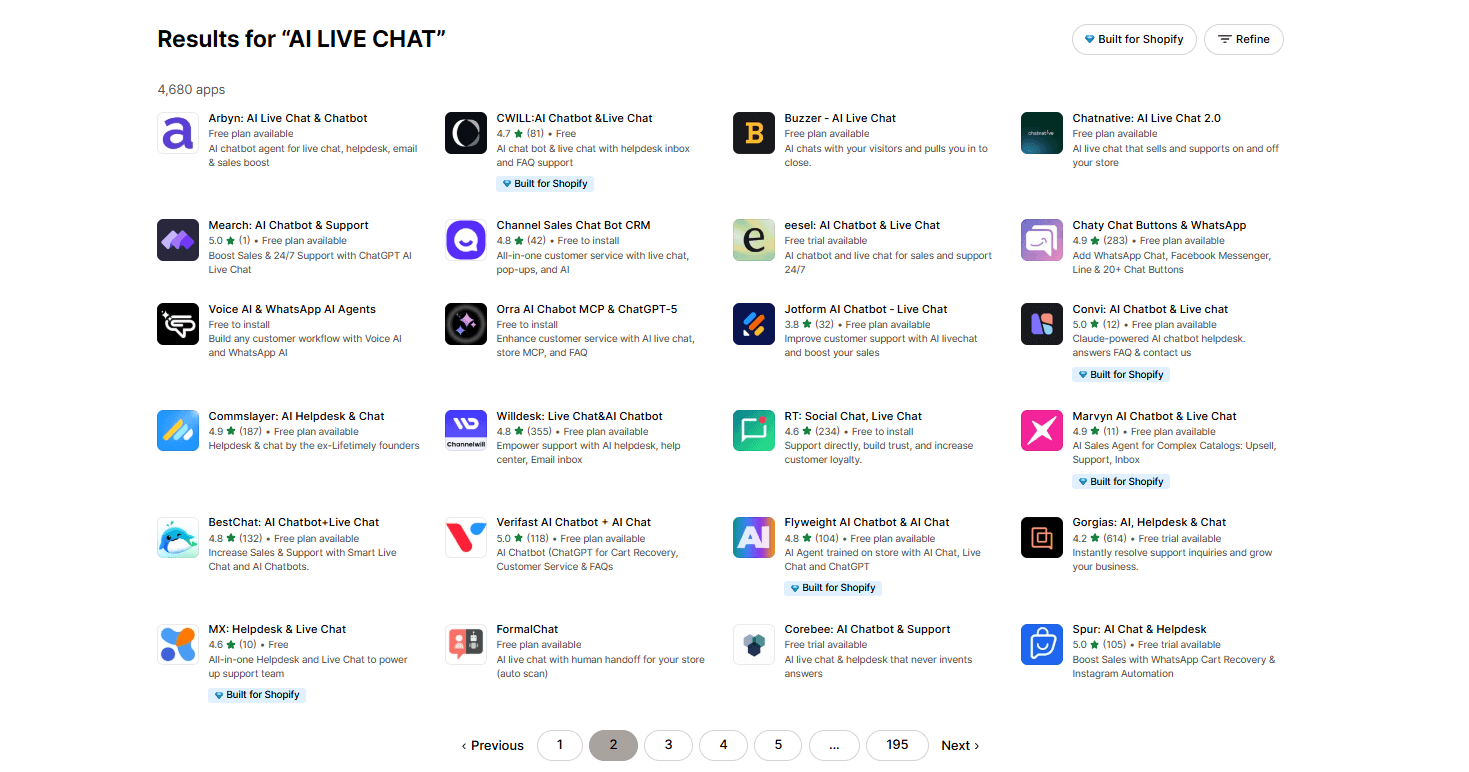
You open the monthly billing statement from Shopify, and the first number looks right. It’s the platform fee you agreed to. But then the list starts, an unforgiving inventory of micro-charges you approved months ago and promptly forgot. There is a line item for your live chat app, another for the helpdesk, and a third for the abandoned cart pop-up that promises to rescue lost sales. A fourth appears for the upsell tool that adds a banner to the cart page, followed by charges for a review aggregator, an SMS marketing platform, and a loyalty program. Each individual charge, perhaps for a small monthly fee, seems small enough to justify, a rounding error in the grand scheme of running a business. Yet together, they represent a significant, and often unpredictable, operating expense, a death-by-a-thousand-cuts for your profit margin. By the time you reach the bottom, the total is three, four, or even five times higher than the base platform cost, ballooning from a predictable subscription into a sprawling operational expense. While some stores spend a modest amount per month on apps, it's common for a growing business to spend hundreds or even thousands of dollars monthly. This experience is common, as approximately 87% of Shopify store owners rely on apps to run their business. The Shopify App Store offers a tool for every conceivable problem, and the impulse to click “install” is strong. But this accumulation of single-purpose tools creates a hidden tax on your business, paid not just in dollars but in site speed, operational complexity, and a fragmented customer experience.
The Hidden Cost of App Sprawl in Support and Sales
The average Shopify store owner uses around six apps, with many scaling stores using 15, 30, or even more. While the Shopify ecosystem is built on this flexibility, an unaudited app stack is one of the most common sources of technical debt and margin erosion for growing brands. This technical debt, where short-term fixes like quickly installing a new app create long-term problems, is a silent killer of profitability. The most obvious cost is the direct subscription fees, which can easily climb into hundreds or thousands of dollars per month. But the true cost of app sprawl extends far beyond the monthly invoice. It manifests in three areas that are harder to quantify but have a much larger impact on your bottom line: performance degradation, operational complexity, and a disjointed customer journey. Each app you install typically adds its own JavaScript and CSS files that must be loaded by a customer's browser, increasing the number of server requests and the overall page weight. An individual app might only add 50 to 150 kilobytes of code, but with fifteen apps, your store could be forcing visitors to download over a megabyte of extra scripts on every single page. This directly impacts site speed, and the correlation between speed and revenue is well-documented. One analysis found a site that loads in one second can have a 2.5 times higher ecommerce conversion rate than a site that loads in five seconds. More recent data from Shopify's own analyses shows that for every 100 milliseconds a store is slower to load, conversion rates tend to drop by about 3.5%.
Beyond the technical performance hit, there is a significant operational cost. Each new app is another dashboard to learn, another set of reports to check, and another system for your team to manage. Your support team might live in a helpdesk application, but to process a return or apply a discount, they have to log into the Shopify admin. To see if a customer was offered an upsell, they might need to check a third app. This "swivel chair" effect, where employees constantly toggle between systems, burns time and increases the likelihood of human error. For example, a simple request to change a shipping address can require an agent to look up the order in Shopify, check a separate shipping app to see if a label was printed, and then manually update both systems. Research published in the Harvard Business Review found that the average worker switches between apps and websites nearly 1,200 times a day, costing significant time just in reorientation. According to the American Psychological Association, this task switching can consume up to 40% of a person's productive time, a loss of productivity that can cost the US economy an estimated $450 billion annually. Data becomes siloed, preventing a unified view of the customer. Marketing may not know what a customer asked support, and support has no context on the sales promotions a customer has seen. This fragmentation isn't just an internal headache; it leaks out and affects the customer experience directly. When a customer has to repeat their issue to multiple agents or across different channels because the context is lost, their trust in your brand erodes. According to a PwC survey, 32% of consumers will stop doing business with a company after just one bad service experience, making a cohesive journey essential for retention.
Deconstructing the "Standard" Support and Sales App Stack
For years, the conventional wisdom for building a Shopify store involved assembling a "best-of-breed" stack of individual applications. Store owners are guided to find a separate, specialized tool for each distinct job required to support and sell to customers. This approach leads to a patchwork of apps, each solving one piece of the puzzle. A typical stack often includes a dedicated live chat app like Tidio, with plans based on monthly fees, for real-time storefront conversations. Then, a separate helpdesk or ticketing system like Gorgias or Zendesk is added to manage and organize email support, creating a formal record of inquiries. To empower customers to find their own answers and reduce ticket volume, a knowledge base app like HelpCenter is layered on. On the sales side, the fragmentation continues. A suite of upsell and cross-sell apps, such as ReConvert which has plans based on a monthly fee plus a percentage of upsell revenue, introduces pop-ups, in-cart recommendations, and post-purchase offers to increase average order value. To this, a store might add an SMS marketing platform like Postscript, where growth plans come with a monthly subscription plus message fees, and a review and loyalty platform like Yotpo, which offers premium features for a significant monthly cost. This modular approach, while logical on the surface, is the primary driver of the app sprawl that ultimately slows down stores and complicates operations. Each tool operates in its own silo, with its own data, its own user interface, and its own billing structure. The live chat app has no knowledge of the email thread happening in the helpdesk. The upsell app that offered a 10% discount has no way to inform the support agent who is currently handling a complaint from that same customer about shipping costs. This lack of shared context forces manual workarounds and creates disjointed customer interactions. An agent trying to help a customer has an incomplete picture, forcing them to piece together the story from multiple disconnected systems. This inefficiency is a direct result of building a tech stack based on discrete functions rather than on the holistic customer journey.
Why Consolidation Fails: The Problem with Traditional "All-in-One" Platforms
The logical reaction to app sprawl is to seek consolidation. Many store owners, tired of managing a dozen subscriptions and fragmented dashboards, turn to large, established platforms that promise an "all-in-one" solution for customer communication. Platforms like Zendesk, Intercom, and Gorgias market themselves as the central hub for all customer interactions, combining email, chat, social media, and sometimes more into a single inbox. While this approach can solve the problem of having multiple disconnected inboxes, it often introduces a new, more insidious issue: unpredictable, usage-based pricing models that punish growth. These platforms frequently anchor their pricing not on a flat monthly fee, but on variables like the number of tickets, contacts, or, most recently, "AI-powered resolutions." This billing model looks attractive at low volumes but can become prohibitively expensive as your business scales. A store handling a few hundred conversations a month might find the cost reasonable, but as volume grows during a successful sales period or holiday season, the bill can skyrocket without warning. For example, many platforms now charge a fee for every conversation their AI successfully resolves. Platforms like Intercom price their AI agent with a per-resolution fee. This means a store that automates thousands of conversations in a month could face a significant additional charge, on top of their base subscription and seat costs. Gorgias has a similar model, where using their AI agent can involve a double charge: one for the helpdesk ticket itself and another automation fee for the AI resolution. Zendesk's model can involve a per-agent monthly fee for their AI add-on, plus a reported per-resolution cost. This structure fundamentally misaligns the platform's interests with the store owner's. You are incentivized to resolve issues efficiently, but the platform is incentivized to maximize the number of billable events. This creates budget uncertainty and can make store owners hesitant to fully utilize the automation tools they are paying for, fearing an unexpectedly large bill at the end of the month. The promise of a single platform is appealing, but when that platform's business model is built on metered usage, you have not solved the cost problem, you have simply centralized it into a less predictable form.
A Better Framework: The Single-Thread Customer Conversation
The fundamental flaw in a fragmented app stack is that it organizes technology around business functions rather than around the customer. A customer does not see themselves as a "support ticket," then a "sales opportunity," then an "abandoned cart." They see themselves as one person having one continuous conversation with your brand, like a single, ongoing text message thread with a friend. A better approach is to build your technology stack around this reality: the single-thread customer conversation. This framework reframes the goal from "closing a ticket" or "capturing a lead" to managing a single, coherent dialogue that can fluidly move between support and sales within the same interaction. The same chat window where a customer asks, "Where is my order?" is the perfect place to say, "While I look that up, I see you've looked at our new leather jackets. The brown one would go perfectly with the boots from your last order." This is only possible with a tool that has both the context of the customer's history and the capability to perform both service and sales actions. This unified approach transforms the economics and experience of customer interaction. For the customer, it provides a seamless, consistent experience. They have one point of contact, and the context of their issue or interest is never lost, regardless of whether they first messaged you on email yesterday or are using live chat right now. They never have to repeat themselves, a frustration that causes a significant portion of customers to switch to a competitor after a poor experience. For the store owner and their team, the benefits are even greater. It eliminates the "swivel chair" problem entirely. One dashboard provides the complete history and context. One tool allows an agent to answer a question, process a return, and recommend a new product. This consolidation dramatically simplifies operations, reduces training overhead, and eliminates the data silos that plague fragmented systems. Most importantly, it changes the financial model. Instead of paying for multiple apps with different billing structures, you pay for one platform. This makes costs predictable and manageable, turning support from a cost center into a potential revenue driver. Research from Bain & Company has consistently shown that increasing customer retention by just 5% can increase profits by 25% to 95%, underscoring the financial power of a superior, loyalty-building customer experience.
How to Audit Your Support and Sales App Stack
Reclaiming your store from app bloat requires a systematic audit. It’s a process of taking inventory, identifying redundancies, and making data-driven decisions about which tools are actually contributing to your bottom line. The goal isn't necessarily to have the fewest apps possible, but to have a lean, efficient stack where every tool serves a clear purpose without creating unnecessary costs in performance or complexity. Start by creating a master list in a simple spreadsheet. Go to the "Apps" section of your Shopify admin and list every single installed app. For each one, document columns like its primary function (e.g., live chat, email pop-ups, product reviews), its monthly subscription cost, and any usage-based fees you've incurred over the last few months. This initial step often reveals forgotten apps still running or subscriptions that no longer serve a purpose. Next, analyze the overlaps and the gaps. Group the apps by the job they perform. You might find you have one app for exit-intent pop-ups and another for abandoned cart emails, both trying to solve the same problem of cart abandonment. Conversely, identify the manual processes your team is still performing. Are they copying and pasting discount codes from Shopify into your helpdesk? That's a gap your technology isn't filling, and a prime example of the context switching that can consume up to 40% of productive time. This is the moment to quantify the true cost. Sum the fixed monthly subscriptions. Then, dig into the variable costs. Look at your invoices from platforms like Gorgias or Intercom and identify the line items for ticket overages or AI resolution fees. These are the unpredictable costs that make budgeting so difficult. Finally, assess the performance impact. Use a tool like Google PageSpeed Insights to analyze your store's load time. In the report, look for the 'Reduce the impact of third-party code' section, which will highlight the specific scripts from your apps that are causing delays. While it can be difficult to isolate the impact of a single app without uninstalling it, performance analysis tools can often highlight which third-party scripts are contributing most to delays. A Shopify analysis found that stores with faster load times consistently see higher conversion rates, making performance a critical financial metric. With this complete picture, subscription costs, variable fees, operational gaps, and performance drag, you can make an informed decision. Is that upsell pop-up app really generating enough margin to justify its subscription fee and its impact on your site's load time? Could a single, consolidated platform replace three or four of your current apps, simplifying your operations and providing a more predictable monthly bill?
The endless cycle of installing, managing, and paying for a dozen different apps is a choice, not a necessity. The belief that you need a separate tool for every individual task, one for chat, one for email, one for upsells, is a legacy of a fragmented software market. This outdated approach leads to bloated expenses that can easily exceed a thousand dollars per month, a slower website that actively drives away customers, and a disjointed experience for the very people you're trying to serve. Studies consistently show that even a one-second delay in load time can slash conversion rates, with some data showing sites loading in one second have a 2.5 times higher conversion rate than those loading in five. This is especially critical when nearly 70% of consumers state that page speed affects their willingness to buy from an online retailer. Furthermore, a single bad service interaction is enough to make a significant percentage of your customers leave for good. A consolidated tool, built around the single-thread customer conversation, offers a more efficient and cost-effective path. It is not a theoretical model, but a practical solution to the chaos. By combining support and sales into one platform with a predictable, flat-rate pricing model, you can eliminate the surprise bills and operational chaos of a fragmented app stack. Arbyn provides this unified solution. It integrates email and live chat into a single agent that can answer customer questions, take action in your Shopify store like applying a discount without leaving the conversation, and drive sales within the same interaction. Instead of paying per ticket or per resolution, you can start with a free plan for up to 150 conversations a month or choose the unlimited plan for a flat $99/month. To consolidate your stack and simplify your costs, you can install Arbyn from the Shopify App Store and see what a unified approach can do for your business.
Written by
For seven years I have led customer success and technical support inside high-growth SaaS and e-commerce companies. Customer Support Lead at DripShop.live, a live-commerce SaaS. Technical Support Specialist at Replo (Y...
View full profileKeep reading
View all posts
What to Ask a Shopify Support App Vendor Before You Sign Up
Odera Joseph · 8 min
Shopify Helpdesk Apps Ranked by Real Monthly Cost at 1,000 Conversations
Odera Joseph · 8 min
Shopify App Store Reviews: How to Read Between the Lines on Support Tools
Odera Joseph · 8 min