Glossary: Skip, Pause, Swap and 8 Other Subscription-Commerce Terms for Shopify
The subscription commerce model runs on a specific vocabulary; this glossary defines the 11 terms every Shopify store owner must know, from MRR and churn to dunning and anchor dates.


The language of subscription commerce is precise, and the distance between the right word and the almost-right word can be the difference between a predictable revenue engine and a leaky bucket. For a Shopify store owner, a casual grasp of terms like "churn" or "MRR" isn't enough. These are not just industry jargon; they are the core concepts that define the health, trajectory, and operational reality of a recurring revenue business. Misunderstanding the nuance between a customer "skipping" a delivery versus "pausing" a subscription, for example, leads to flawed retention strategies and miscalculated inventory. This subscription commerce glossary for Shopify is not an academic exercise. It is an operational guide to the eleven most critical terms you will encounter, framed for the store owner who needs to make decisions based on what the numbers actually mean, not just what they say.
The Core Customer Actions: Skip, Pause, and Swap
At the heart of any modern subscription experience is flexibility. Customers today expect to manage their recurring orders with the same ease as a one-time purchase. The triad of "skip," "pause," and "swap" represents the most fundamental controls you can offer, and mastering their implementation is the first step toward reducing voluntary churn. While they sound similar, they serve distinct customer needs and have vastly different implications for your cash flow and inventory forecasting. Treating them as interchangeable is a common and costly mistake. A customer who wants to skip a single shipment due to travel doesn't want to cancel their entire relationship with your brand, but a clumsy user interface that only offers a "cancel" button often forces their hand. Providing these granular controls signals that you respect the customer's circumstances, building trust that pays dividends in lifetime value.
A "skip" is the most straightforward of the three actions. It allows a subscriber to bypass a single upcoming order without affecting the overall cadence of their subscription. If a customer receives a coffee delivery on the 15th of every month and goes on vacation, they can skip their July 15th order, and the schedule will automatically resume as normal on August 15th. This is a powerful retention tool for products where a customer might temporarily have a surplus, like vitamins or cleaning supplies. From an operational standpoint, processing a "skip" requires your system to correctly identify and hold one specific order instance while keeping the parent subscription active. The key is that the customer's intent is temporary and specific. They are not questioning the value of the subscription itself, merely the timing of one delivery. Failing to offer a simple skip function is a direct path to higher churn, as it forces a customer with a short-term problem to make a long-term decision about their subscription.
A "pause" is a level up in commitment from a skip. Here, the subscriber elects to stop all upcoming deliveries for a defined or indefinite period. This is common when a customer's circumstances change more significantly, perhaps they're moving, facing a temporary budget constraint, or simply want to take a break from the product. Unlike a skip, which targets a single order, a pause freezes the entire subscription until the customer actively resumes it or a pre-set time elapses. For store owners, offering a "pause" is vastly preferable to a cancellation. Instead of losing a customer permanently, you are preserving the relationship, and data suggests that subscribers who pause their service often return. The critical component of a successful pause feature is clarity. The customer must understand how to resume their subscription and what, if anything, will happen automatically. For example, will the subscription resume after 3 months by default, or must they manually restart it? This is also a crucial data collection point; asking *why* a customer is pausing can provide invaluable feedback about your product, pricing, or shipping frequency.
Finally, "swap" functionality allows a subscriber to change the product within their next order without altering their subscription structure. A customer subscribed to vanilla protein powder might want to try the chocolate flavor for a month, or someone receiving a specific skincare product might want to substitute it with a different one from your catalog. This is arguably the most powerful engagement tool of the three. It transforms a static, repetitive order into a dynamic, personalized experience. It encourages product discovery, increases the customer's investment in your ecosystem, and directly combats product fatigue, a major driver of churn in subscription box models. From a technical perspective, enabling swaps requires a more sophisticated integration between your subscription app and Shopify's product and inventory systems. You need rules to govern which products can be swapped for which others, how to handle price differences, and how to reflect these changes in your fulfillment workflow. The payoff, however, is a subscriber who feels a sense of control and variety, making them far less likely to look elsewhere.
Financial Metrics That Define Success: MRR, Churn, and ARPU
If skip, pause, and swap are the language of the customer, then Monthly Recurring Revenue (MRR), Churn Rate, and Average Revenue Per User (ARPU) are the language of the business. These three metrics are the vital signs of any subscription company. They tell you not just how much money you are making, but how predictably and sustainably you are making it. Understanding them in depth is non-negotiable for anyone serious about building a recurring revenue stream on Shopify. They are interconnected; a change in one will inevitably ripple through the others. For instance, a rising churn rate will erode your MRR, while a successful strategy to increase ARPU can offset the impact of some churn. Many store owners make the mistake of focusing only on top-line revenue, but in a subscription model, the stability and trajectory of recurring revenue are far more important indicators of long-term health.
Monthly Recurring Revenue (MRR) is the predictable revenue a business can expect to receive every month from its active subscriptions. It is the cornerstone of subscription finance. To calculate it, you multiply your total number of active subscribers by the average revenue per user (ARPU). For example, 1,000 customers paying an average of $30 per month yields an MRR of $30,000. It is critical to understand what MRR is *not*. It does not include one-time purchases, setup fees, or any other non-recurring income. Its purpose is to measure the consistent, predictable flow of revenue that you can count on. Tracking MRR over time reveals the true growth trajectory of your business. A rising MRR indicates a healthy, growing subscriber base, while a flat or declining MRR signals a problem, even if your total sales (including one-time buys) are up. Deeper analysis involves breaking MRR down into components: New MRR (from new customers), Expansion MRR (from existing customers upgrading or buying more), and Churned MRR (revenue lost from cancellations or downgrades).
Churn Rate is the metric that quantifies customer attrition. It measures the percentage of subscribers who cancel their service during a specific period. The basic formula is the number of customers lost in a period divided by the number of customers at the start of that period, multiplied by 100. If you start a month with 500 subscribers and lose 25, your monthly customer churn rate is 5%. While some churn is inevitable, a high rate is a critical warning sign that your product, service, or customer experience is failing. A crucial distinction exists between Customer Churn and Revenue Churn. Customer Churn tracks the number of lost accounts, while Revenue Churn tracks the amount of MRR lost. If you lose ten subscribers from your basic $10/month plan, your revenue churn is $100. If you lose ten subscribers from your premium $100/month plan, your revenue churn is $1,000. Losing high-value customers has a disproportionately negative impact, which is why tracking revenue churn is often more insightful for understanding the financial health of the business. According to industry benchmarks, an average monthly churn rate for DTC subscriptions is between 6.5% and 8.5%, with categories like food and beverage seeing rates as high as 12-18%.
Average Revenue Per User (ARPU), sometimes called Average Revenue Per Account (ARPA), measures the average revenue generated from each active subscriber over a specific time frame. You calculate it by dividing your total recurring revenue for a period by the number of active users in that same period. This metric provides a clear view of a subscription's monetary value on a per-customer basis. For example, if your MRR is $10,000 and you have 250 subscribers, your monthly ARPU is $40. Tracking ARPU is essential for understanding customer value and making strategic decisions about pricing and product tiers. An increasing ARPU is a sign of a healthy business, indicating that you are either successfully upselling existing customers to higher-priced plans or that your new customer acquisition is skewed towards more valuable tiers. It provides a necessary layer of context to your MRR. An MRR that is growing solely due to new, low-ARPU customers might not be as healthy as an MRR that is growing due to a rising ARPU among a stable customer base. It forces you to ask not just "Are we growing?" but "How valuable is that growth?"
The Active Subscriber Count is the total number of customers with a paid, active subscription at a given point in time. This seems simple, but the definition is crucial. It should only include paying customers. Users on a free plan or those who have paused their subscription should be excluded when calculating core financial metrics like MRR and ARPU. This number is the denominator for many key subscription metrics and the direct driver of your top-line recurring revenue. Growing this number is a primary goal for any subscription business. However, focusing solely on the top-line number can be misleading. A store owner must also track the *quality* of these subscribers. Are they on high-value or low-value plans? How long do they typically stay subscribed? A business with 1,000 subscribers who churn after two months is in a much weaker position than a business with 500 subscribers who stay for two years. This is why active subscriber count must always be analyzed in conjunction with churn and lifetime value.
The Mechanics of Retention: Dunning and Reactivation
While acquiring new subscribers feels like the engine of growth, retaining them is what keeps the vehicle from running out of fuel. Two of the most critical, yet often overlooked, operational processes in subscription commerce are dunning management and reactivation. These are not glamorous, front-end features, but they are the bedrock of a stable recurring revenue stream. Dunning deals with the silent killer of subscriptions: involuntary churn caused by failed payments. Reactivation, on the other hand, is the art and science of winning back customers who have already cancelled. Neglecting these back-end processes is like spending a fortune to fill a bathtub with the drain wide open. A small improvement in your dunning success rate or your reactivation rate can have a massive, compounding impact on your MRR and customer lifetime value over time, often at a fraction of the cost of acquiring a new customer.
Dunning is the process of communicating with customers to collect payments that have failed. In a subscription business, this is almost always an automated process designed to handle failed recurring billing. Payments can fail for many reasons: an expired credit card, insufficient funds, or a bank's fraud detection system flagging a legitimate transaction. This is not voluntary churn where a customer actively decides to leave; it's involuntary churn, where a technical issue threatens the customer relationship. Effective dunning management is crucial because this type of churn is often preventable. A simple email notifying the customer of the failure and providing an easy way to update their payment information can save the subscription. More sophisticated systems, often called "Smart Dunning," will automatically retry the payment at intelligent intervals (for instance, a few days later, when a temporary funds issue might be resolved) before ever notifying the customer, resolving the issue without any friction. Given that involuntary churn can account for 20-40% of all subscriber loss, a robust dunning strategy is not optional; it is a core revenue-saving function.
Reactivation Rate measures the percentage of previously churned subscribers who return to become paying customers again within a specific timeframe. The formula is the number of reactivated customers in a period divided by the total number of churned customers from a prior period, multiplied by 100. For instance, if 1,000 customers cancelled in the first quarter and 100 of them resubscribed in the second quarter, your reactivation rate is 10%. This metric is a direct reflection of your brand's long-term appeal and the effectiveness of your "win-back" campaigns. A high reactivation rate suggests that customers who left still see value in your product and can be persuaded to return, perhaps by a new feature, a special offer, or a change in their own circumstances. However, it's important to be realistic; some data suggests that reactivation rates can be quite low, with only about 5% of customers on an annual plan returning within a year of cancelling. This underscores the importance of preventing churn in the first place, but it also highlights that reactivating a past customer is a valuable, and often cheaper, source of revenue than acquiring a brand-new one.
Billing Logic and Customization: Anchor Dates and Build-a-Box
Beyond the core metrics and customer actions lies a layer of operational logic that defines the subscriber experience and your own internal efficiency. Two concepts that exemplify this are anchor date billing and the build-a-box model. These are not just settings in your subscription app; they are strategic choices that dictate how and when you bill customers, and how much control you give them over their orders. An anchor date simplifies your logistics and creates predictable cash flow by aligning all your subscribers to a single billing schedule. A build-a-box model, conversely, introduces complexity in exchange for a deeply personalized customer experience that can dramatically increase average order value and loyalty. Understanding the trade-offs of each is crucial for designing a subscription program that works for both your customers and your operations team.
An Anchor Date (or Billing Cycle Anchor) is a fixed date that synchronizes the billing cycle for all subscribers, regardless of when they initially signed up. For example, you can set your anchor date to be the 1st of every month. A customer who subscribes on June 10th would be billed a prorated amount for the remainder of June, and then their full recurring billing would begin on July 1st, continuing on the 1st of every month thereafter. This approach is incredibly useful for businesses that need to manage inventory and fulfillment in predictable batches, such as meal kit companies or curated subscription boxes. By ensuring all orders are processed and shipped around the same time, you can streamline your entire supply chain. It also simplifies financial forecasting, as you know your main recurring revenue will consistently arrive on a specific day of the month. The alternative, and often the default, is "anniversary" billing, where each customer is charged on the anniversary of their own sign-up date. While simpler to set up initially, anniversary billing can lead to a constant, rolling stream of orders that can be more challenging to manage operationally.
The Build-a-Box model is an advanced subscription type that allows customers to create their own personalized box of products on a recurring basis. Instead of receiving a pre-selected, curated box, the subscriber hand-picks items from a catalog of eligible products. This model has become immensely popular as it combines the convenience of a subscription with the power of personalization. A coffee company might allow a customer to choose three different bags of beans for their monthly box, or a beauty brand could let a subscriber select five products tailored to their skin type. For store owners, the benefits are significant. It typically leads to a higher average order value, as customers are creating their own bundles. It also increases customer engagement and reduces churn because the experience is tailored and less likely to lead to product fatigue. Implementing a build-a-box model on Shopify requires a capable subscription app that can handle the complex logic of item selection, bundling rules (e.g., "choose any 5 items"), and inventory syncing, but the rewards in terms of customer loyalty and lifetime value can be substantial.
Understanding these terms is the first step. The next is implementing a system that can act on them. When a customer sends an email saying, "I have too much coffee right now, can you hold off for a bit?" they are not using the specific jargon of "skip" or "pause." They are expressing an intent. The challenge for Shopify store owners is translating that natural language into a specific backend action. This is where tools built for the nuance of commerce conversations become critical. An AI agent like Arbyn, for example, is designed to understand the intent behind a customer's request and correctly map it to the right action in Shopify, whether that's skipping the next order, pausing the subscription for three months, or initiating a product swap. This bridges the gap between how customers talk and how your store operates, turning complex vocabulary into a seamless customer experience.
Mastering the subscription model is a journey from understanding its language to executing its logic flawlessly. Each term in this glossary represents a lever you can pull to improve retention, increase lifetime value, and build a more predictable, resilient business. By focusing on providing flexibility to your customers and meticulously tracking the metrics that define your health, you can turn a simple Shopify store into a powerful recurring revenue engine. If you are ready to automate the execution of these concepts directly within your customer conversations, you can install Arbyn from the Shopify App Store and see how it handles these requests for you.
Written by
For seven years I have led customer success and technical support inside high-growth SaaS and e-commerce companies. Customer Support Lead at DripShop.live, a live-commerce SaaS. Technical Support Specialist at Replo (Y...
View full profileKeep reading
View all posts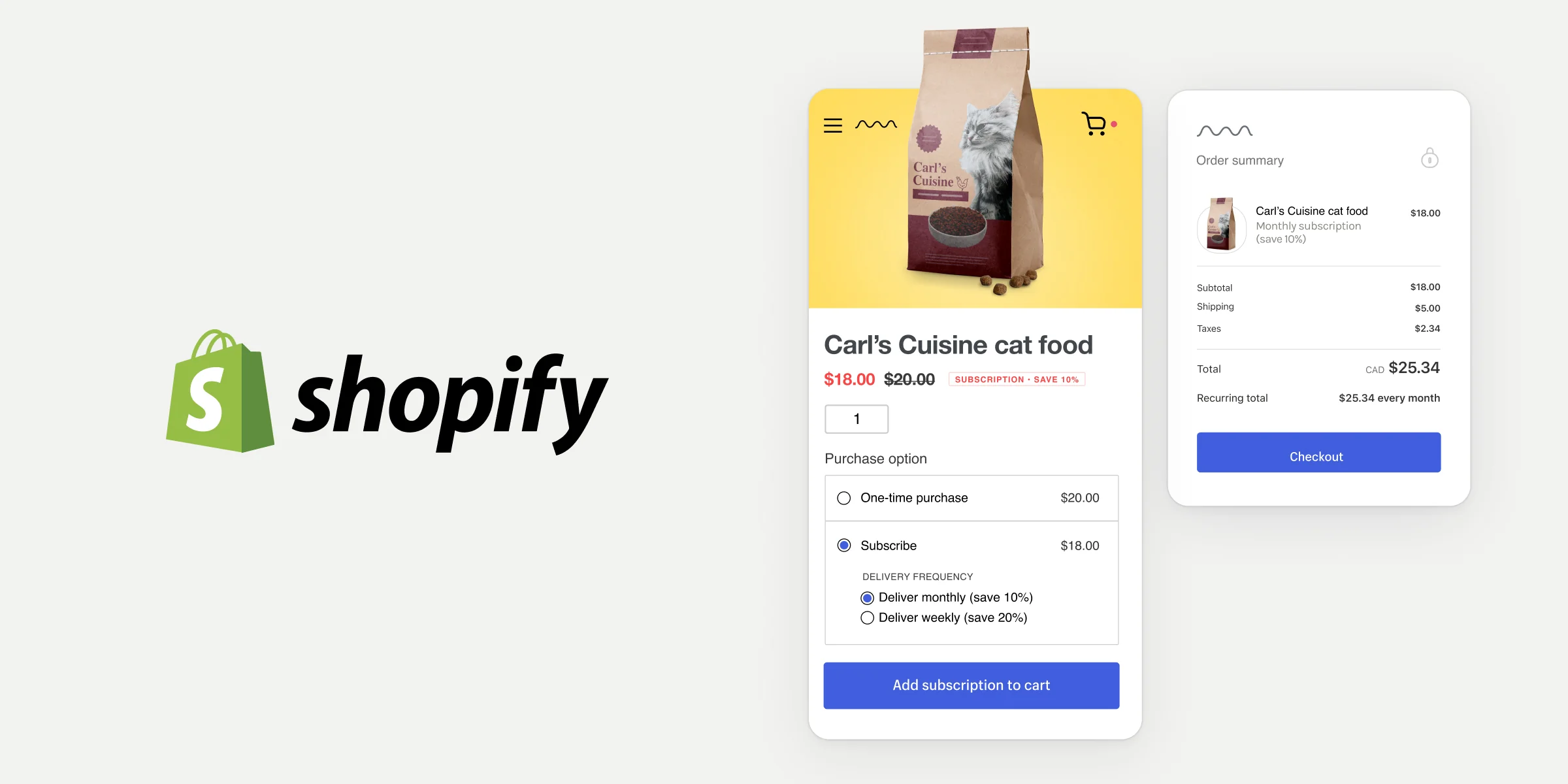
The Subscription Churn Conversation: What to Say Before a Customer Clicks Cancel
Odera Joseph · 8 min
The Real Shopify AOV Benchmark by Industry, and Where Chat-Based Selling Fits
Odera Joseph · 8 min

What Customers Actually Ask When They Want to Skip a Subscription Shipment
Odera Joseph · 8 min