Best AI Customer Service Apps for Shopify in 2026: How to Compare Them
A criteria-led guide to comparing the best AI customer service apps for Shopify, focusing on the hidden costs of per-resolution pricing and the case for a flat-rate alternative.

You check the bill and it doesn’t make sense. The sticker price for your new AI support app was one number, but the invoice that just landed in your inbox is nearly double, a painful surprise after a record-breaking sales month. You scroll through the line items, a base fee, sure, but then a cascade of overages and a long list of charges you don’t recognize, each one a tiny fraction of a dollar for things like “AI resolutions” or “automated interactions,” all adding up to a significant and unexpected cost. For many Shopify store owners, from those selling artisanal coffee to high-fashion apparel, this is the moment they discover the expensive reality of modern AI pricing. Finding the best AI customer service apps for Shopify has become less about comparing features and more about understanding the opaque, usage-based billing models that now dominate the industry. The promise was simple and alluring: automate support, cut operational costs, and free up your team for higher-value work. The reality is often a new, unpredictable expense that scales directly with the very customer engagement it was meant to streamline, turning your success into your software provider's payday.
Beyond the Sticker Price: Why AI Support Costs Are So Unpredictable
The core challenge in choosing an AI support tool in 2026 isn’t the technology itself, which has become remarkably capable across the board, but the complex pricing models meticulously designed to monetize it. The industry-wide shift from predictable per-seat licenses to variable, usage-based billing has left many store owners with monthly bills that are impossible to forecast, creating significant budget anxiety. The problem lies in a few key mechanics that are rarely highlighted on a pricing page. The most common model is "per-resolution" or "per-outcome" billing, where you are charged a fee every time the AI successfully handles a customer conversation without human help. This sounds fair in principle, you only pay for what works. But in practice, it creates a direct conflict of interest: the better your AI performs, and the more customers it helps, the higher your bill climbs. A wildly successful Black Friday weekend can now lead not just to record sales, but to a record support bill in December, purely from the volume of automated resolution fees.
This primary charge is often compounded by a second, and sometimes third, layer of costs that create a billing labyrinth. Many leading platforms, like Gorgias, charge the per-resolution fee on top of a per-ticket fee, a practice some store owners call "double-dipping." This means a single automated conversation can hit your bill twice: once as an automated-interaction fee, which on Gorgias is $1.50 past the allowance the plan includes, and again as a billable ticket deducted from your monthly plan allowance. Once you exceed that allowance, you begin paying overage charges for each additional ticket, creating a third layer of expense on a single interaction. For platforms like Zendesk, the model is even more complex, stacking a per-agent seat cost, a mandatory Advanced AI add-on to unlock automation, costing $50 per agent per month, and a separate charge for each automated resolution. Zendesk names that meter but publishes no per-resolution rate anywhere; their own AI agents page says only that resolutions are sorted into tiers and "priced based on the value delivered by each resolution" on top of that. Read on zendesk.com/service/ai-agents/ on 27 July 2026.
This experience is staggeringly common, a shared frustration in online communities of brand store owners. Store owners frequently report that their actual monthly spend is significantly higher than what they initially expected based on the advertised price, and in high-volume months, it can be even higher. The advertised base prices for these tools, that friendly-looking $60 or $100 per month, become almost meaningless as conversation volume grows and the usage-based mechanics take over. A plan that starts at a seemingly reasonable $60 per month can quickly balloon to over $400 once a few hundred AI resolutions and some ticket overages are factored in. This isn't a bait-and-switch in the classic sense; it's the fundamental design of the model itself. It is engineered to scale the software provider's revenue directly with your support volume, meaning the platform’s financial success is intrinsically tied to your customers needing help. For a growing Shopify store, where support volume is a natural and healthy consequence of success, this model creates an artificial ceiling on profitability, forcing you to pay progressively more for the efficiency you were promised in the first place.
The Three Questions to Ask Before Choosing Your AI App
Navigating this treacherous landscape requires moving past glossy feature checklists and asking more fundamental questions about how a tool operates and, more importantly, how it bills. The best AI customer service app for your Shopify store isn't necessarily the one with the longest feature list or the most polished user interface, but the one whose operational and financial model aligns with your business goals. Before committing to a platform that will become deeply embedded in your operations, every store owner should have clear, unequivocal answers to three critical questions. These questions are designed to cut through the marketing language and expose the true cost and capability of a tool, ensuring you select a partner for growth, not just a utility that taxes it. The answers will reveal whether an app is truly designed to solve your problems or to monetize them, a crucial distinction in a market crowded with complex and often misleading pricing structures that benefit the provider more than the user.
First, how exactly does the platform bill for AI usage? This is the single most critical question. You need to demand specifics and refuse to accept vague answers. Know if you're paying a flat monthly fee, a per-seat license, a per-ticket fee, a per-resolution fee, or a confusing combination of these. Ask for a worked example for your specific monthly conversation volume, including any AI add-on fees, ticket overages, and other hidden charges. If a salesperson cannot or will not give you a clear, all-in cost estimate in writing, that ambiguity is a major red flag. Second, can the AI actually take action in Shopify, or can it only answer questions? There is a massive operational difference between an AI that can tell a customer their order status and one that can actually process a return, apply a discount, or change a shipping address. Many AI tools are simply conversational layers; they can chat, but they cannot 'do'. An app with deep Shopify integration can resolve issues end-to-end, saving significant time. An app without it simply deflects the query to a human agent, who then has to perform the action anyway, minimizing the true efficiency gain. Finally, is the tool built specifically for Shopify, or is it a general-purpose platform with a Shopify connector? A generic tool like Zendesk can be powerful but often requires significant, costly configuration to understand ecommerce-specific contexts like order numbers, returns, and exchanges. A Shopify-native tool is designed from the ground up to understand the data and workflows of a Shopify store, which often leads to more accurate resolutions and a much faster, simpler setup process.
Comparing the Leaders: A Look at Per-Resolution & Usage-Based Models
The market for AI support tools is dominated by a few key players who have largely standardized on usage-based pricing, making their models essential to understand. Gorgias, a popular choice for Shopify-native helpdesks, prices its service based on billable tickets, with a $40/month Starter tier for 50 tickets, a $90/month Basic tier including 300 tickets, and an Advanced tier at $1,430/month for 5,000 tickets. Those are Gorgias' monthly list prices, read on gorgias.com/pricing on 27 July 2026; annual billing lowers Basic to $77 and Advanced to $1,227 a month. The critical detail that often gets lost is that its powerful AI capabilities are a separate, stacked cost. Every Gorgias plan bundles a small allowance of automated interactions, and past it Gorgias charges $1.50 for each one. The allowances are 30 on Starter and Basic, 190 on Pro and 530 on Advanced. Rates read on gorgias.com/pricing on 27 July 2026. Furthermore, each of these AI-resolved conversations also counts as one billable ticket against your plan's monthly allowance. This "double-billing" mechanic means a store automating 500 conversations a month could face $450 in AI fees alone, on top of their base plan cost and any potential overage fees if they exceed their ticket limit. This structure makes Gorgias incredibly powerful for its deep Shopify integration but a potentially very expensive partner as a store's support volume grows and scales.
Intercom, another major player in the space, has centered its entire AI strategy around its branded agent, Fin. Its pricing model is more direct than some but no less costly, and it is clearly aimed at the premium end of the market. Intercom charges a per-seat fee for its base platform, with plans that can range from $29 to over $139 per agent per month, depending on the feature tier. On top of that, Fin is billed at a flat $0.99 per resolution, a simple and predictable multiplier of your support volume. However, a "resolution" is often counted not only when a customer explicitly confirms their issue is solved but also when they simply abandon the chat, a broad definition that can lead to unexpected charges for incomplete interactions. For a small store with two agents on the Advanced plan handling 500 AI-resolved conversations a month, the total cost could easily be around $665 per month ($170 for seats + $495 for Fin resolutions), a figure far removed from the simple per-seat price advertised on the homepage. The cost scales linearly and without a cap; at 2,000 resolutions, the Fin-related fees alone would approach $2,000 per month, making Intercom a premium choice for teams who value its polished interface but are willing to absorb high, volume-based AI costs.
Then there is Zendesk, an enterprise-grade giant that has adapted its sprawling platform for the AI era with a similarly complex, multi-layered pricing model that reflects its corporate focus. Zendesk’s pricing begins with a per-agent seat license for its popular Suite plans, which can run from $55 to $115 per agent per month for its most common tiers. To unlock the more capable, action-oriented AI features, most teams must purchase the Advanced AI add-on for an additional $50 per agent per month. Finally, AI resolutions are billed on top, with rates reported by customers and analysts to be around $1.50 per resolution. A small team of five agents on the Suite Team plan automating just 200 conversations could see a monthly bill over $800, combining their seat licenses ($275), the mandatory AI add-on ($250), and the resolution fees ($300). For larger teams or during busy periods, the costs can rapidly escalate into thousands per month. Zendesk's power for large, multi-departmental organizations is undeniable, but its pricing structure clearly targets large enterprises with dedicated budgets, making it a heavy and prohibitively expensive choice for the vast majority of Shopify store owners.
| Tool | Primary Billing Model | Estimated Cost (500 AI Resolutions/mo) | Key Consideration |
|---|---|---|---|
| Gorgias | Ticket tiers + $0.40/$0.36 ticket overage + $1.50 per automated interaction past allowance | ~$510+ ($60 Base Plan + $450 AI Fees) | AI resolutions are double-billed against the ticket allowance. |
| Intercom Fin | Seats + Per-Resolution Fee ($0.99) | ~$665+ (2 Seats on Advanced + $495 AI Fees) | Costs scale linearly with AI resolutions, with no upper cap. |
| Zendesk AI | Seats + AI Add-on + Per-Resolution Fee (~$1.50) | ~$1,275+ (5 Seats on Team + AI Add-on + AI Fees) | Multiple cost layers make it the most complex and expensive option. |
Exploring Alternative Models: Tiered Conversations and Per-Visitor Pricing
While per-resolution fees dominate the high end of the market, a number of other players have adopted different models in an effort to attract store owners wary of such unpredictable billing. Tidio, for example, offers a more approachable entry point with plans based on total conversation volume and features, rather than resolutions. Its plans start with a free tier and move to a "Starter" plan for around $29/month, which includes 100 live chat conversations. However, its AI chatbot, Lyro, is treated as a separate, paid add-on that comes with its own usage meter. The Lyro add-on starts at $39 per month for just 50 AI conversations, and this cost is stacked on top of the base plan fee. A store on the "Growth" plan ($59/month) needing 200 AI conversations would pay an additional estimated $78 for Lyro, bringing their total monthly cost to nearly $140. This structure, while more predictable than per-resolution fees, still requires careful management of two separate usage meters and can become costly as AI usage grows. Furthermore, Tidio also sells its Lyro AI in prepaid conversation packs that are priced separately from the plan itself, so the AI line and the conversation line move independently and you have to add both to know your bill. Their Premium tier starts at $300 a month, read on tidio.com/pricing on 27 July 2026.
Another alternative approach is seen with tools like Rep AI, which ties its pricing to a store's overall traffic rather than support tickets or resolutions. This model is designed to align the tool's cost with the store's potential revenue, charging based on the number of monthly site visitors. While the exact pricing isn't public, for a store with up to 50,000 monthly sessions, the cost for its Standard plan is $239 per month. This presents a different kind of trade-off for the store owner. On one hand, the cost is delinked from support volume, so a spike in customer inquiries during a sale won't directly inflate your bill. On the other hand, your bill is now tied directly to marketing success; a viral campaign that drives a surge in traffic could significantly increase your support software bill, even if those new visitors don't convert to buyers or contact the support team. This model offers a degree of predictability but anchors the cost to a metric that is only indirectly related to the support workload, which may not be a suitable fit for all business models, especially those with high traffic but low conversion.
The Shopify-Native Difference: When Your AI Can Act on Orders
Beyond the complexities of pricing, the most significant functional differentiator among AI support tools is their ability to perform actions directly within Shopify. Many chatbots and AI assistants are functionally just information retrievers, acting as a conversational search bar for your store's data. They can access a knowledge base or your Shopify store data to answer "Where is my order?" (WISMO), explain your return policy, or confirm product details. While useful for deflecting simple, repetitive questions, this capability only addresses a fraction of the support workload. The customer must still be escalated to a human agent for any task that requires an actual change to be made, such as processing a refund, canceling an order, updating a shipping address, or applying a unique discount code. This severe limitation means the AI acts more like a sophisticated, interactive FAQ page than a true agent, creating a hard ceiling on its efficiency and leaving the most time-consuming work squarely on the plates of your human team.
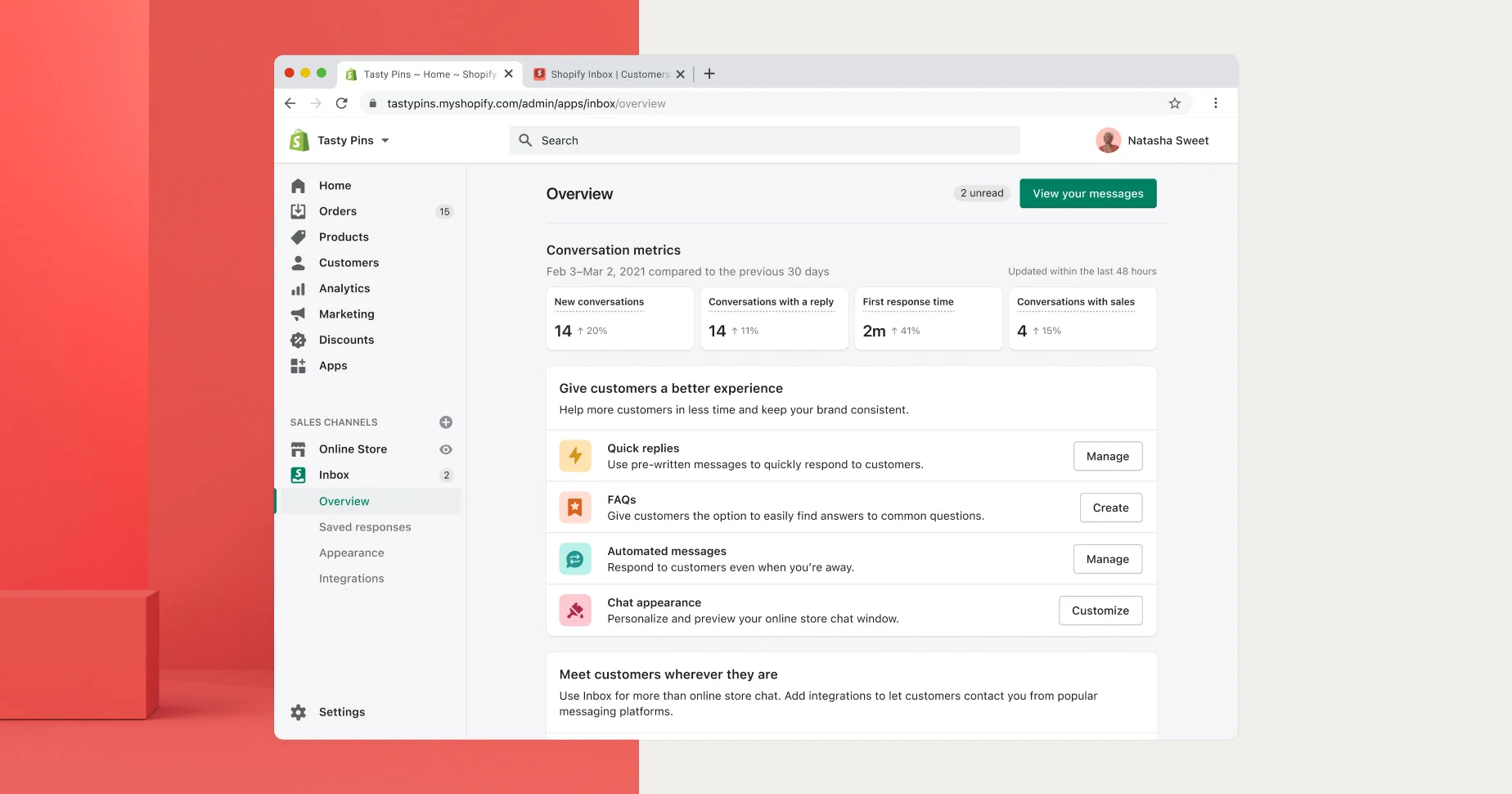
In stark contrast, a truly Shopify-native AI with deep, authorized integration can execute these actions, representing a fundamental leap in capability from answering questions to solving problems. When a customer asks to cancel an order they placed two hours ago, this type of AI can check the fulfillment status in Shopify in real-time, confirm the order is still unfulfilled and eligible for cancellation, and then trigger the cancellation and refund process directly within your store's backend. This is the critical difference between deflecting a query and resolving an issue. Some platforms like Gorgias have built a strong reputation on these deep integrations, allowing their automation rules and AI to manage a range of order actions. This capability transforms the AI from a simple deflection tool into a genuine operational asset. It resolves the customer's issue from start to finish, often without any human intervention needed at all. For a busy Shopify store, this level of end-to-end automation is where the true return on investment is found, as it frees up human agents to focus on complex, high-value interactions like pre-sales consultations, handling genuinely distressed customers, or managing VIP relationships.
However, this powerful functionality must be scrutinized with care, as not all "actions" are created equal. Store owners must ask vendors to define exactly which actions an AI can perform autonomously versus which ones simply create a ticket or require human approval. A tool might claim on its marketing site that it "handles returns," but in practice, this could mean it simply sends the customer a link to a returns portal, leaving the customer and agent to manage the rest. A more deeply integrated tool will actually initiate the return merchandise authorization (RMA) process within Shopify. This distinction is critical for setting realistic expectations about how much manual work will actually be removed. The ideal solution combines the ability to take action with smart, configurable guardrails. This allows the AI to handle routine, low-risk tasks on its own while flagging sensitive actions, like issuing a large refund or canceling a high-value order, for a one-click approval from the store owner. This hybrid approach delivers the powerful efficiency of automation without sacrificing the control and oversight necessary when dealing with actions that directly impact revenue and inventory.
The average eCommerce support ticket costs between $2.70 and $5.60, while self-service interactions cost under $2 per resolution.
The Case for Flat-Rate AI: Predictable Costs for Growing Stores
The rampant complexity and sheer unpredictability of usage-based billing have created a clear and urgent need for a simpler, more transparent alternative in the market. A flat-rate pricing model, where a single monthly fee provides unlimited access to AI capabilities, directly addresses the core problem of bill shock and budget volatility that plagues growing brands. This straightforward approach offers growing Shopify stores a predictable operational expense that does not penalize them for their own success. When your support software bill is the exact same whether you handle 500 conversations or 5,000, you can focus on scaling your business without the constant worry of a corresponding explosion in support costs. This model fundamentally realigns the relationship between the store owner and the software provider, turning the tool back into a fixed cost for efficiency rather than a variable tax on customer engagement.
This is the philosophy behind Arbyn, a philosophy born from the frustrations of dealing with these exact issues. Built as a Shopify-native support and sales agent, Arbyn was designed from the ground up to provide a powerful, actionable AI without the punitive and confusing billing models of its competitors. The pricing is structured to be radically simple and accessible. The Arbyn Starter plan is permanently free, offering up to 150 AI-led conversations per month with the full feature set included, not a stripped-down version. This allows new and small stores to automate their support from day one at absolutely no cost. For stores that outgrow the free plan, the Arbyn Agent plan costs a flat _**$99 per month for unlimited conversations**_. There are no per-resolution fees, no ticket allotments, no overage charges, no add-on fees, and no hidden costs. The price is the price, regardless of how many customers your AI successfully helps.
Crucially, Arbyn combines this predictable pricing with the deep, Shopify-native ability to take action directly in your store. It handles customer conversations across both email and live chat, instantly answering common questions about order status, shipping policies, and product specifications. More importantly, it can execute changes to orders, turning conversation into resolution. For money-moving actions like issuing a refund, canceling an order, or sending a unique discount code, Arbyn intelligently tees up the action for the store owner's one-click approval, providing a crucial layer of financial control and human oversight. Once approved, Arbyn performs the action in Shopify and confirms it with the customer, closing the loop. For lower-risk tasks like updating a shipping address before fulfillment, it can act autonomously. This makes it more than just a chatbot; it's an agent that works for you, inside your store. For Shopify store owners tired of deciphering complex invoices and looking for the best AI customer service app that supports their growth instead of taxing it, this combination of actionable AI and simple, flat-rate pricing offers a clear, sustainable path forward.
Ultimately, choosing the right AI support tool in 2026 is an exercise in commercial diligence far more than technical comparison. It requires looking past the polished marketing claims and focusing intensely on the underlying business model of the software you are considering bringing into your operations. A tool that charges for every resolution may seem fair at first glance, but it can quickly become an unsustainable and volatile expense for a growing brand, creating a direct conflict of interest between you and your vendor. The future of support automation for most Shopify stores will undoubtedly lie with platforms that prioritize predictable costs and deep, actionable integration with the Shopify platform. This allows you to scale your customer conversations with confidence, knowing your costs will remain firmly under control and your AI partner is aligned with your success.
Written by
For seven years I have led customer success and technical support inside high-growth SaaS and e-commerce companies. Customer Support Lead at DripShop.live, a live-commerce SaaS. Technical Support Specialist at Replo (Y...
View full profile