Arbyn vs Gorgias for Shopify Support: Flat Pricing vs Per-Ticket
For Shopify store owners weighing support tools, the choice between Arbyn's flat-rate predictability and Gorgias's per-ticket power is a critical one that directly impacts margin and operational sanity.

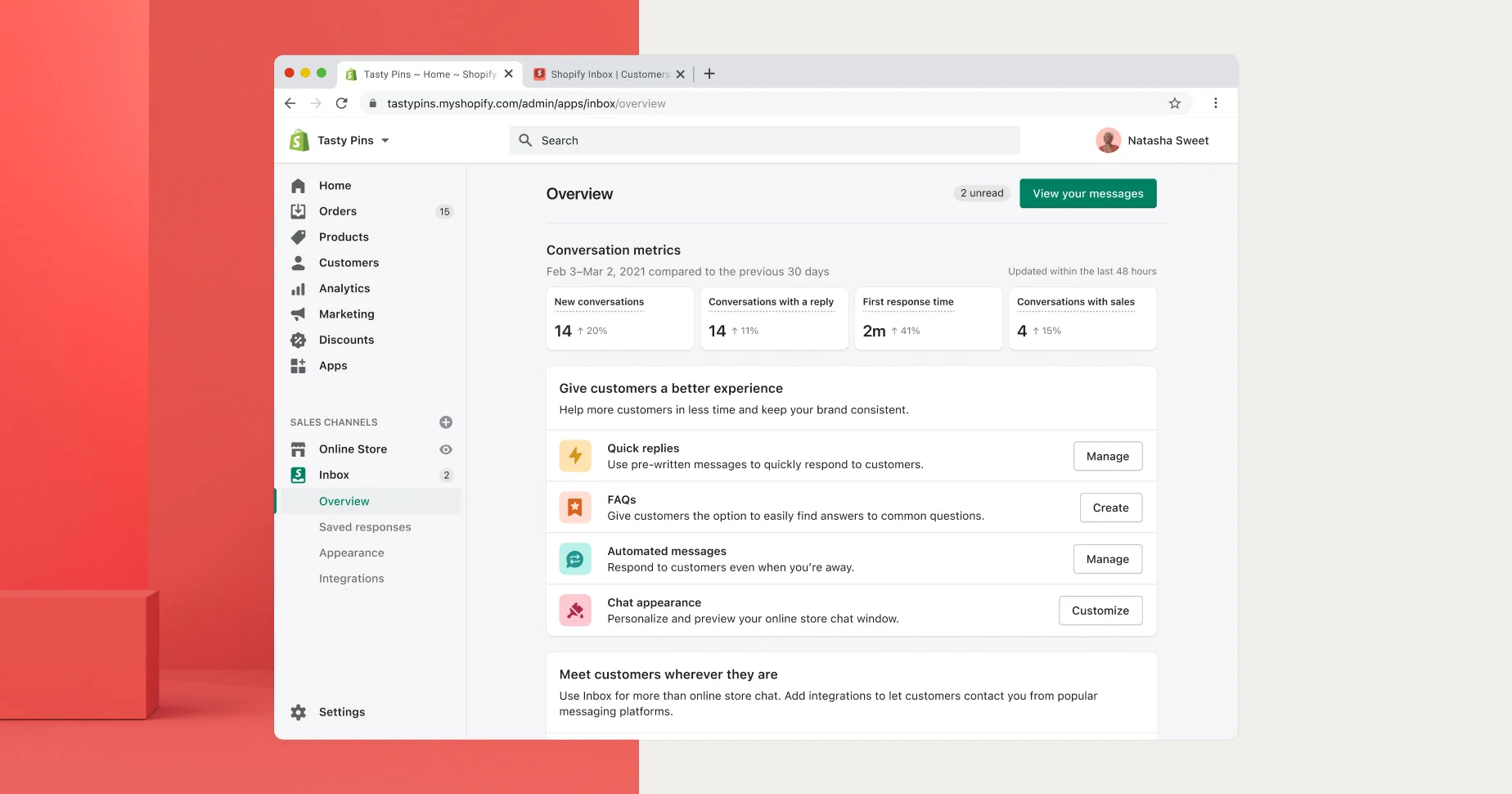
You recognize the Monday morning. The weekend sale was a success, but the support queue is a wall of inquiries, a digital testament to your growing brand. Where is my order? Can I change my address? Do you have this in blue? This flood of over 500 new tickets is a clear sign of growth, but it comes with a creeping dread that has nothing to do with customer satisfaction. As you scan the list of new tickets, a familiar, unwelcome ritual begins: you open the billing dashboard for your helpdesk, bracing for impact. The number you see is not the one you budgeted for. It has climbed again, a quiet tax on your own success, driven by overage fees and per-resolution charges you never fully modeled. This moment of invoice shock is a common rite of passage for store owners, and it defines the central conflict in the Gorgias vs Arbyn debate. It’s not just a feature comparison; it’s a fundamental disagreement over how you should pay for customer support: predictably, or as a variable cost that penalizes growth.
The Predictable Problem with Per-Ticket and Per-Resolution Pricing
The billing model of a traditional helpdesk like Gorgias appears simple at first glance, designed to scale with your business. Plans are tiered by the number of tickets you handle each month. On Gorgias's own pricing page, read on 27 July 2026, Starter is $40 a month for 50 tickets and 30 automated interactions, and Basic is $90 a month, or $77 a month billed annually, for 300 tickets and 30 automated interactions. That seems reasonable for a small but growing store finding its footing. The problem is not the base price, it is the layered mechanics underneath it. The model has three meters running at once: the base ticket allowance, a per-ticket overage fee once you pass it, and a separate fee for every conversation the AI agent resolves. Gorgias lists those overages on the same page: $0.40 per extra ticket on Starter and Basic, $0.36 on the higher tiers, and $1.50 per automated interaction past your included allowance on every plan. So one busy month can bill you twice for the same conversation, once as a ticket and again as an automated interaction. This is the core of the financial friction many store owners experience as their support volume grows, turning a tool meant to create efficiency into a source of budget anxiety.
During a high-volume period like Black Friday, this layered pricing can lead to staggering invoice surprises. Gorgias's Pro plan is $550 a month, or $471 a month billed annually, and it includes 2,000 tickets and 190 automated interactions. Those are their published rates. The volumes below are ours, so treat them as an illustration rather than a quote. Say November pushes you to 2,800 tickets and the AI handles 30% of them. The 800 tickets over your allowance bill at $0.36 each, which is $288. The 840 automated interactions bill 190 as included and 650 at $1.50 each, which is $975. Your $550 plan invoices at $1,813. Nothing went wrong that month. You just had a good one. This variable cost structure turns your support tool from a fixed operational expense into a volatile liability. The more customers you talk to, and the more you lean on the automation you bought to handle them, the more you pay. It creates a perverse incentive to limit customer conversations, the very interactions that build loyalty and can increase profits by 25% to 95%.
This pricing philosophy extends beyond just tickets and AI resolutions, creating a complex web of potential charges that can feel like a minefield for an operations manager. Additional channels are sold as metered add-ons, each one another line on the invoice. Gorgias does not publish a flat figure for those add-ons on its pricing page, so we will not invent one. What matters is the shape: they are metered, which means they move with your volume the same way everything else does. Managing every channel in one place is a genuinely good proposition. It is just not a forecastable one. The core issue is predictability. When your support bill fluctuates based on how many customers need help, a number that can double during a flash sale, you cannot budget effectively. You are forced to choose between absorbing unknown costs or risking a degraded customer experience by trying to suppress ticket volume, a dangerous choice when 89% of consumers are more likely to make another purchase after a positive service experience.
Gorgias: The Power and Price of an Omnichannel Helpdesk
To be clear, there is a reason Gorgias is a leader in the Shopify ecosystem, trusted by over 16,000 brands and powering many of the top Shopify brands. Its power lies in its breadth. It is a true omnichannel command center, designed to unify customer conversations from virtually every conceivable touchpoint into a single, manageable inbox. For a support team, this is a massive operational advantage. An agent can see a customer's initial live chat, their follow-up email, their public Facebook comment, and their private Instagram DM all stitched together in one chronological thread. This eliminates the need to switch between different platforms, providing a holistic view of the customer's journey and context that is essential for high-quality support. Gorgias consolidates not just text-based channels but also offers paid add-ons for voice and SMS support, allowing phone calls and text messages to be managed as tickets within the same interface, ensuring no customer interaction is lost.
This channel consolidation is Gorgias's core strength and primary value proposition. It integrates deeply with standard channels like email and on-site chat, but its real power emerges with its social media integrations, covering Facebook, Instagram, and even TikTok ad comments. Imagine a customer comments "Do you ship to Canada?" on a Facebook ad. That comment can automatically become a ticket, be routed to the right agent, and answered directly from the helpdesk, with the reply appearing on the original post. This prevents customer inquiries from falling through the cracks and ensures a consistent brand voice across all public and private interactions, which is critical when a fast response can give you a competitive edge. For brands where community engagement and social commerce are major drivers of revenue, this capability is not a luxury; it is a necessity. The platform is built around the concept that every inbound message, regardless of its origin, is a ticket to be managed, a philosophy that appeals to teams needing total visibility and control over their brand's public perception.
However, this power comes with a complexity and cost that is not a fit for every store. Arbyn covers support email and on-site live chat. It does not cover phone calls, and it does not cover Instagram DMs. Gorgias casts a much wider net, and if that is where your customers actually reach you, Gorgias is the right answer. Better to know that now than after the install. The trade-off is paying for that capability at every level. The per-ticket model, combined with add-on costs for channels like voice and SMS, means the price tag is aligned with this enterprise-grade breadth. The decision for a store owner is not simply about features, but about value. Are you paying for a powerful, multi-channel suite when your actual needs are concentrated on the core e-commerce channels of email and chat? For many, the answer is yes, and they are paying a premium for capabilities they underutilize, a classic value mismatch in the software world.
The Alternative: Why Flat-Rate Support Exists
The frustration with variable, usage-based billing is not unique to customer support; it is a tension that exists across the software industry as vendors move away from predictable seat-based models. The alternative model, and the one that defines the Arbyn vs Gorgias philosophical divide, is flat-rate pricing. The principle is simple: pay one predictable price for unlimited access to the service, similar to choosing Netflix over a pay-per-movie service. This model shifts the risk of usage spikes from the customer to the software provider. It transforms a volatile operational cost into a fixed, budgetable line item, a major benefit for financial forecasting. For a Shopify store owner, this means a successful marketing campaign or a seasonal sales rush does not carry the hidden penalty of an inflated support bill. You pay the same price whether you handle 80 conversations or 8,000. This predictability is, for many businesses, the most important feature of all, allowing them to reinvest potential overage fees back into growth.
This shift towards predictable pricing reflects a broader maturation in the SaaS market, mirroring moves seen in industries like telecommunications and cloud storage. Early models often focused on consumption metrics like data, API calls, or, in this case, support tickets. As technology becomes more efficient, and vendors seek to balance flexibility with stability, many are adopting hybrid models that combine a predictable subscription with usage-based elements. A pure flat-rate model is a confident statement from the provider; it signals that their own internal costs are managed well enough that they can offer an all-inclusive service without metering every interaction. It aligns the provider's success with the customer's growth, rather than profiting from the customer's problems or increased traffic. When a tool doesn't charge per ticket, it encourages store owners to engage more with their customers, not less, fostering better relationships and increasing customer lifetime value.
Arbyn was built on this premise, designed from the ground up as an answer to the invoice shock created by per-ticket platforms. The entire product and business model is a direct response to the market's need for cost control and predictability. By offering a completely free tier for up to 150 conversations and a single flat-rate plan for unlimited conversations at $99 per month, it removes billing from the operational equation. The focus returns to the quality and speed of the support interaction itself. This model is particularly compelling for the core ICP: Shopify store owners who are either founder-led or have small, lean teams. For these businesses, margin is everything, and unpredictable costs are a significant threat to profitability. The peace of mind that comes from knowing exactly what your support software will cost each month, regardless of your success, is a powerful driver for adoption and a clear point of differentiation in a crowded market.
Arbyn vs Gorgias: A Head-to-Head Capability Showdown
When you place Arbyn and Gorgias side-by-side, the distinctions in philosophy and function become sharp. The most significant difference is the billing model, which dictates the entire user experience. Gorgias employs a multi-tiered, usage-based system where costs rise with ticket volume, overages, and separate AI fees. Arbyn, conversely, offers a permanently free starter plan and a single, flat-rate unlimited plan for a fixed monthly price. This is not just a pricing detail; it is the central strategic choice a store owner makes. It is the difference between entering a building with a low admission fee but a tollbooth in every room, versus paying a single, clear price at the front door. The answer determines whether your support budget is a moving target or a stable line item you can confidently build a financial model around.
The second major point of comparison is channel support, which highlights their different design priorities. Gorgias is a comprehensive omnichannel platform, integrating email, live chat, SMS, voice, and social media channels like Facebook and Instagram into one helpdesk. This is its greatest strength, particularly for larger brands with a distributed customer presence that requires a unified view. Arbyn, in contrast, is intentionally focused on the highest-volume Shopify channels: email and on-site live chat. This is a deliberate trade-off. By concentrating on the essential channels where the majority of e-commerce support happens, Arbyn can deliver a more streamlined experience and a radically simpler pricing model. It operates on the Pareto principle that for most stores, a large majority of support volume flows through email and chat. For store owners whose support volume is 90% email and chat, paying the Gorgias premium for omnichannel capabilities they do not need is a significant unnecessary expense.
The most critical functional difference for a Shopify store owner, however, may be the depth of Shopify-native actions. While both tools can look up order information, Arbyn is designed to take action directly within the conversation. With a store owner's one-click approval, Arbyn can process cancellations, issue refunds to the original payment method, create unique discount codes, send new gift cards, and even reship orders. For example, when a customer requests a cancellation for order #54321, the agent is presented with a "Cancel & Refund" button directly in the conversation. One click, a final confirmation, and the order is canceled in Shopify, the payment is refunded, and the customer is notified, all without leaving the helpdesk. This goes beyond simply answering questions like "Where is my order?"; it resolves the underlying issue completely. Gorgias has powerful integrations, but the workflow for these money-moving actions is often less direct, sometimes requiring agents to open Shopify in a new tab. Arbyn's ability to act on the order, combined with its flat-rate pricing, creates a compelling package for stores that prioritize both cost control and operational efficiency directly within the Shopify ecosystem.
Feature | Arbyn | Gorgias |
|---|---|---|
Pricing Model | $0/mo for 150 convos; $99/mo for unlimited | Tiered by ticket volume ($40 to $1,430/mo, per gorgias.com/pricing, 27 Jul 2026) plus overages. |
AI Fees | Included, no extra cost | Separate $1.50 per automated interaction past your allowance, on top of ticket cost. |
Channels | Email, Live Chat | Email, Live Chat, Phone, SMS, Facebook, Instagram. |
Shopify Order Actions | Yes (Refund, Cancel, Discount, etc. with 1-click approval) | Yes, with deep Shopify integration. |
Free Tier | Yes, permanently free for 150 conversations/month | No, lowest plan is $40/mo for 50 tickets. |
Best For | Shopify stores focused on cost control, predictability, and email/chat efficiency | Larger brands needing a true omnichannel solution for support across all channels |
Calculating Your True Cost: When to Choose Each Platform
The choice between Arbyn and Gorgias is ultimately a calculation of value based on your store's specific needs. There is no single right answer, but there is a right answer for you. The decision matrix is clear: it hinges on your support volume, your channel complexity, and your tolerance for variable costs. If your business requires a true omnichannel presence, with significant and valuable customer interaction happening on phone, SMS, and social media DMs, then Gorgias is the more appropriate and powerful tool. For a large fashion brand managing influencer campaigns on Instagram and a VIP phone line, a ticket that starts as a DM and ends in a phone call is a common occurrence. Its ability to unify these disparate channels is its core value proposition, and for a large team managing complex, multi-channel conversations, the price can be justified by the operational efficiency it provides. The investment in Gorgias is an investment in a broad, comprehensive support infrastructure designed for maximum visibility across every customer touchpoint.
However, if your support operations are, like most Shopify stores, centered on email and live chat, the calculation shifts dramatically in favor of Arbyn. Take the Gorgias Pro plan again. Their published rates: $550/month, 2,000 tickets and 190 automated interactions included, $0.36 per extra ticket, $1.50 per extra automated interaction. Our assumed volumes: a holiday spike to 2,800 tickets with 30% of them, 840, resolved by automation. That is $550 base, plus $288 for the 800 overage tickets, plus $975 for the 650 automated interactions past the allowance. The invoice lands at $1,813. With Arbyn, that same month costs a flat $99. The $1,714 difference goes back to your bottom line, and it goes back every month you have a good one. For stores handling thousands of conversations, the savings become even more substantial. The Arbyn Agent plan is unlimited, meaning your bill remains $99 whether you handle 500 tickets or 5,000, decoupling support volume from cost completely.
The advertised base prices are usually meaningless once ticket volume grows.
The decision also comes down to your growth stage and operational philosophy. For a new store owner just starting out, the Arbyn Starter plan is the ideal entry point. It provides a full-featured AI support and sales agent for up to 150 conversations a month at zero cost, allowing you to establish high-quality, instant support from day one without any financial commitment. This is crucial for building customer loyalty when every interaction counts and acquiring a new customer can be up to 5 to 25 times more expensive than retaining an existing one. As your store grows and you surpass the 150-conversation limit, the upgrade path is simple and predictable: a single step to the $99 unlimited plan. This journey, from free to a predictable flat rate, is designed to support a store's growth, not penalize it. It provides a clear, transparent path to scale your support operations without scaling your costs. Visit Arbyn to see the model in action.
Ultimately, the choice is strategic. Choosing Gorgias is a bet that the value of its extensive channel integrations will outweigh its variable and often unpredictable cost structure. It is a choice for teams who need to manage complexity across many channels and are willing to pay for that capability, a premium for a sprawling, powerful suite. Choosing Arbyn is a bet that cost predictability and deep efficiency within the core Shopify channels of email and chat are more critical to your profitability and peace of mind. It’s a choice for profitability, for simplicity, and for the belief that your tools should not become more expensive the more successful you become. For the vast majority of Shopify store owners, whose primary goal is to deliver fast, effective support while maintaining firm control over their expenses, the math points decisively toward the flat-rate model. It is a decision to invest in growth without fear of the invoice that follows.
Written by
For seven years I have led customer success and technical support inside high-growth SaaS and e-commerce companies. Customer Support Lead at DripShop.live, a live-commerce SaaS. Technical Support Specialist at Replo (Y...
View full profile