Handling Sizing and Returns for a Fashion Shopify Store With AI Support
For fashion stores, sizing and returns are not just support tasks; they are the entire business, and handling them inside the customer conversation is the key to protecting margin.

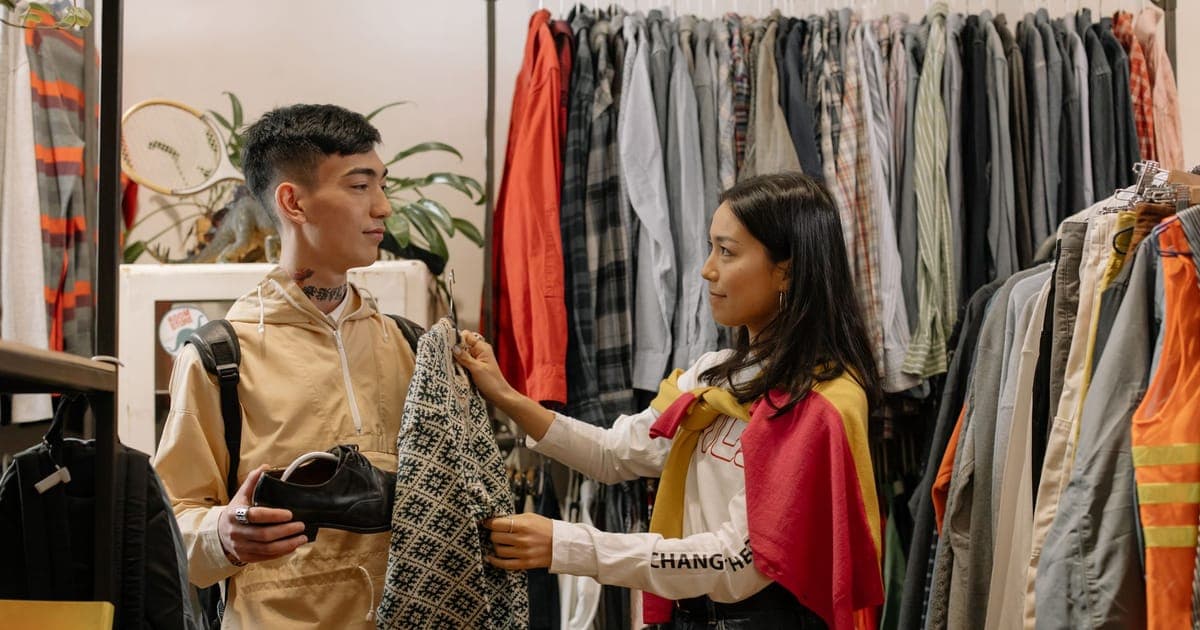
It’s Tuesday morning. A customer who bought your viral high-waisted flare jeans last week just opened a live chat on your Shopify store. They love the style, but the fit is wrong, specifically too loose in the waist but perfect everywhere else. At the same time, another potential customer is looking at that same product page, asking your support team how the 32-inch inseam compares to the "boyfriend" style they bought last season, which they found to be an inch too short after the first wash. These two conversations, repeated hundreds of times a month, represent the most significant operational drag on any fashion brand. For a store doing even a modest $1 million in annual revenue, which might sell around 12,500 items at an $80 average price, this can easily translate to over five hundred such inquiries every month. This figure is split almost evenly between pre-purchase sizing questions and post-purchase return requests. Sizing questions and return requests are not an edge case for apparel; they are the core of the business. How your store handles these two high-frequency tasks determines not just your support costs but your repeat purchase rate, your inventory accuracy, and ultimately, your profitability. A modern customer support app for a fashion Shopify store cannot simply be a generic ticketing system; it must be built to resolve these specific, recurring challenges directly within the conversation, turning a cost center into a loyalty driver.
The financial stakes are higher than many store owners realize. The average return rate for online apparel consistently hovers between 20% and 40%, a figure that dwarfs nearly every other ecommerce category and has shown little sign of decreasing. This isn’t a sign of a bad product; it’s a structural reality of selling items that require a perfect fit without a fitting room. Customers routinely "bracket", buying multiple sizes of the same item with the full intention of returning the ones that don't fit, a behavior admitted by over half of Gen Z shoppers. This practice, combined with natural sizing inconsistencies between products and batches, creates a constant stream of support interactions. Research consistently shows that issues related to size and fit are the single largest driver of returns, accounting for over 50% of apparel returns. Each of those returns initiates a costly reverse logistics process, with the total cost to process a single return estimated to be between $10 and as much as $40, depending on the item and process. That cost includes the inbound shipping label, the warehouse labor for inspection and quality control, steaming or pressing the garment, replacing damaged packaging, and potential markdowns on items that are no longer first quality. The expense starts much earlier, with the support conversation required to initiate it, which can add $3 to $12 in labor costs before the item even begins its journey back to the warehouse, easily erasing the entire profit on a mid-priced item.
This is where the limitations of traditional helpdesks become painfully clear. Most support platforms are designed to be channel-agnostic, treating a sizing question from a fashion store the same way they treat a software bug report. They provide a text box for your agent to type an answer and a button to close the ticket, but they lack the context and the direct Shopify integration needed to do anything meaningful. Your agent can’t see the customer's order history without opening another browser tab. They can't initiate a return process from within the chat window. They can’t see that the customer is a high-value repeat buyer who should be handled with extra care. This forces your team into a swivel-chair workflow, toggling between the helpdesk, the Shopify admin, a separate returns management app like Loop or Returnly, and maybe even a spreadsheet, all while the customer waits. That wait time is critical; customer satisfaction with live chat is highest with near-instant responses and plummets when wait times exceed even a minute. The inefficiency isn't just frustrating for your team, leading to high rates of agent burnout and costly errors; it's a poor experience for your customer and a direct drain on your resources.
The Twin Levers of Fashion Support: Sizing and Returns
For any online apparel brand, the customer support queue is dominated by two fundamental questions: "Will this fit me?" and "This doesn't fit, how do I send it back?" These are not just tickets to be closed; they are critical moments in the customer lifecycle that directly influence conversion, cost, and loyalty. Sizing uncertainty is a primary cause of cart abandonment in fashion, with hesitation over fit contributing to high cart abandonment rates. Shoppers hesitate, they second-guess the size chart, they read conflicting reviews, and often, they decide the risk of a poor fit isn't worth the hassle of a potential return. The support interactions that happen before a purchase, answering detailed questions about fabric stretch, body measurements, or how a garment compares to a past purchase, are therefore not support costs, but sales activities. Each question answered confidently and accurately is a direct intervention to save a sale. When a customer feels understood and guided toward the right size, their confidence to purchase increases significantly, which not only secures the initial order but also prevents a costly downstream return.
On the post-purchase side, the return process is the single most sensitive interaction a fashion brand can have with its customer. The apparel category sees the highest return rates in all of ecommerce, with some estimates placing it as high as 40% for certain items like dresses and tailored goods. While many store owners focus on the shipping and restocking costs, the true cost of a return begins with the customer service labor required to manage the request. Each return can cost between $10 and $40 to process when all is said and done, a figure that can easily erase the entire profit margin on an item. The traditional method involves emailing back and forth, directing the customer to a static policy page, and manually creating return labels. This is slow, error-prone, and frustrating for a customer who just wants a different size and is left wondering if their request was even received. A clunky returns process doesn't just cost you time; it damages brand perception and future sales. Crucially, a recent study by Narvar shows that 96% of consumers will buy from a store again if the return process is easy, making it one of the most powerful levers for customer retention.
These two jobs, pre-purchase sizing guidance and post-purchase return initiation, are deeply intertwined. A better job done on the first reduces the frequency of the second. By providing clear, accessible, and personalized sizing advice through live chat or detailed FAQs, brands can help customers make better initial choices, leading to a direct reduction in fit-related returns. This is not about eliminating returns entirely, which is an unrealistic goal in fashion. Instead, it's about managing the flow and gleaning intelligence from it. It's about using data from return reasons, for example, if a specific blouse is consistently returned for being "too small in the shoulders", to update the product description with a simple note: "This style features a tailored fit; we recommend sizing up for broader shoulders." A store owner might even use this data to flag a quality control issue with their manufacturer, creating a quarterly report showing that a specific SKU's return rate jumped 15% after a factory change. Viewing these two functions as separate is a strategic error; they are two sides of the same coin, and the right technology addresses them as a single, continuous customer conversation that feeds back into the business.
Why Traditional Helpdesks Fail the Fashion Test
Most generic customer support platforms, including well-known names like Zendesk, were built with a one-size-fits-all philosophy. They provide a centralized inbox for managing emails, chats, and social media messages, which is a necessary first step. However, for a fashion Shopify store, this is where their utility often ends. These platforms operate as a layer on top of your store, but they aren't truly integrated into its core functions. An agent using a traditional helpdesk can talk *about* an order, but they can't *act* on it without leaving the platform. When a customer asks to start a return for a dress that was too small, the agent's workflow is a ten-step, manual, and disjointed process. They must authenticate the customer, open the Shopify admin in a new tab, search for the order, pivot to a third-party returns portal to generate a label, and finally paste the link back into the chat. This multi-step, multi-screen process is inherently slow and fraught with potential for human error. With top-performing teams aiming for live chat responses in under 40 seconds, this manual workflow makes hitting that target nearly impossible, leading to customer frustration and lower agent productivity.
This structural disconnect is even more pronounced when dealing with pre-purchase sizing questions. A customer might ask, "I'm usually a size 8 in your brand, but the reviews say this new jacket runs small. What do you recommend?" A helpful answer requires context: What has this customer bought before? What size did they keep? What items did they return and for what reason? A generic helpdesk has none of this information readily available. It sees the incoming chat as a disembodied question from an anonymous visitor. To provide a truly useful recommendation, the agent must ask for the customer's email, look them up in Shopify, examine their order history, and then try to make an educated guess. This turns a quick chat into a lengthy interrogation. Worse, it fails to recognize the potential value of the customer; the system has no way of knowing this isn't an anonymous visitor but a VIP with a $3,000 lifetime value who has made ten prior purchases. It's a frustrating experience that fails the customer and wastes the agent's time, missing a crucial opportunity to strengthen a valuable relationship and provide white-glove service.
Furthermore, the pricing models of many legacy helpdesks are poorly aligned with the realities of a fashion business. Platforms like Gorgias and Intercom often use pricing models based on ticket volume or AI-powered resolutions. For a fashion brand, where a high volume of low-complexity sizing and return questions is the norm, this can lead to unpredictable and rapidly escalating costs. You are essentially penalized for the fundamental nature of your business. Every time a customer asks "what size am I?" or "how do I start a return?", it can count as a "billable ticket" or trigger a per-resolution fee, which can be around $0.99 for every conversation the AI handles. As a store owner, this creates a perverse incentive to discourage customers from contacting support by making the chat widget harder to find. This is the opposite of what a growing brand should be doing. A fashion store needs a customer support app that embraces this high-touch reality, with a predictable cost structure that doesn't punish you for scaling through busy seasons like Black Friday and Cyber Monday.
The AI-Assisted Workflow: Sizing and Returns in Conversation
The solution to the fashion support bottleneck isn't just about better agents; it's about better tools that empower those agents, or in many cases, handle the request entirely. A modern customer support app for a fashion Shopify store leverages AI and deep Shopify integration to resolve the two most common issues, sizing and returns, directly within the chat or email conversation. This represents a fundamental shift from the traditional model of simply recording and relaying information. Instead of an agent acting as a human bridge between different systems, the AI agent has direct access to the necessary context and the ability to initiate actions within Shopify. This is the difference between a system of record that logs problems and a system of action that actively solves them. It creates a faster, more accurate, and vastly more efficient workflow that benefits both the store owner and the end customer. This ultimately turns support from a reactive chore that drains resources into a proactive advantage that builds loyalty and saves sales.
Imagine the pre-purchase sizing question again. An AI-powered agent, properly integrated with Shopify, can immediately recognize a returning customer by their login or email. When the customer asks if a new jacket "runs small," the AI doesn't just see the question; it sees the customer's entire purchase history. It knows they bought a medium-sized sweater last fall and kept it, but returned a medium-sized blouse in the spring because the fit was too tight across the shoulders. Armed with this context and structured product attribute data, its response can be far more personalized and useful: "I see you've purchased both medium sweaters and blouses from us before. This jacket has a similar shoulder measurement to the sweater you kept, but it's more tailored through the body like the blouse. Based on that, and the fact that 90% of customers who bought this jacket did not return it for size, going with the large might give you a more comfortable fit." This level of contextual, data-driven advice moves beyond generic size charts and helps solve the fit problem before the item is ever shipped, directly impacting conversion rates and reducing the likelihood of a return.
The post-purchase return process sees an even more dramatic improvement. When a customer messages, "I need to return the jeans from order #54321," an AI agent can handle the entire initial phase of the request automatically and instantly, 24/7. It instantly verifies the order number against the customer's profile, confirms the item is within the return window as defined by your store's policy, and asks for the reason. "Was it a size, style, or quality issue?" If the customer says the size was wrong, the AI can immediately check your live Shopify inventory for the next size up or down and offer an exchange as the first option, a critical revenue-saving maneuver. If the customer still prefers a return, the AI can initiate the process directly. This is where the claim "starts the return" becomes critical. With the right permissions, the AI can generate a return request in the Shopify admin that the store owner simply needs to approve with a single click. The system then automatically sends the return instructions and shipping label to the customer. The entire manual, back-and-forth process is condensed into a 30-second automated conversation, freeing up human agents to handle complex, high-value escalations.
Grounding Support in Real Shopify Actions
The real distinction between a generic chatbot and a true AI support agent for Shopify lies in the ability to take action. Answering questions is only half the job, the informational part. For a fashion store, the highest-leverage tasks are transactional and involve interacting directly with order and return data via Shopify's APIs. An effective AI doesn't just tell a customer your return policy; it helps them execute it by checking their order's eligibility in real-time. It doesn't just point them to a size chart; it uses their past purchase data to give them a personalized recommendation. This capability is built on deep, native integration with the Shopify platform, allowing the AI to read order history, check inventory levels, and write new information, such as initiating a return request. This moves the support function from a passive, informational role to an active, operational one, turning conversations into conversions and resolutions right inside the chat window.
Consider the two most frequent and time-consuming conversations in fashion support. The first is the simple "Where is my order?" (WISMO) ticket. An AI agent can resolve this instantly and automatically by looking up the order status in Shopify and providing the customer with the real-time tracking number and a direct link, without any human intervention. The second, and more complex, is the return request. The ability for an AI to handle the initial steps, verifying the order, asking the reason, and creating the return authorization for your approval, transforms the economics of your support operation. It automates the repetitive, predictable parts of the process, which make up a large portion of the workload for many apparel stores. This allows your human support staff, whether that’s you or a small team, to focus their time on the exceptions: handling a damaged item complaint, assisting a VIP customer with a complex request, or turning a potential product complaint into a positive experience that builds immense loyalty. You want your best people talking to your most valuable customers, not copy-pasting tracking links all day.
This is precisely where a platform like Arbyn is designed to operate. It connects to your Shopify store's backend to handle these exact tasks with both automation and precision. When a sizing question comes in, it can draw on order history to provide a smarter answer grounded in that specific customer's experience with your brand. When a return request is made, Arbyn can start that process right in the chat, pre-validating the order against your store policies and creating the request that awaits your final, one-click approval in your dashboard. It resolves the highest-frequency support jobs for fashion stores by grounding the conversation in real Shopify actions. This isn't about replacing human oversight, particularly for money-moving actions like final approval on refunds. It's about automating the 90% of the workflow that is pure administrative repetition, freeing you to apply your human judgment where it matters most. By handling the high volume of sizing and return initiation tasks, it allows you to run a more responsive, efficient, and ultimately more profitable support operation on a flat, predictable monthly cost, rather than being penalized for every customer interaction. You can install it and see how it works directly from the Arbyn homepage.
The way you handle a simple sizing question or a frustrating return speaks volumes about your brand. Getting it right builds trust and encourages repeat business. In fact, a study by Narvar found that 96% of shoppers who had an easy return experience would buy from that retailer again. Getting it wrong creates friction, negative reviews, and sends customers directly to your competitors, as other studies show nearly 84% of consumers will not shop with a brand again after a single bad returns experience. By using AI to handle the most common, repetitive tasks with speed and accuracy, you can deliver a consistently better experience at scale. You provide instant answers on sizing, offer effortless return initiations, and ensure that every customer interaction, whether with an AI or a human, is fast, helpful, and effective. This is how you turn the two biggest challenges in fashion ecommerce into a durable competitive advantage and a powerful engine for customer loyalty.
Written by
For seven years I have led customer success and technical support inside high-growth SaaS and e-commerce companies. Customer Support Lead at DripShop.live, a live-commerce SaaS. Technical Support Specialist at Replo (Y...
View full profileKeep reading
View all posts
Seasonal Support Spikes on Shopify: What November and December Actually Cost
Odera Joseph · 6 min

Restocking Fees on Shopify: What Store Owners Actually Charge (and What Customers Tolerate)
Odera Joseph · 8 min

The Shopify Returns Policy Checklist Every Store Should Publish
Odera Joseph · 9 min