A Store Owner's Checklist Before Turning On Arbyn's Live Chat Widget
Turning on a live chat widget is more than flipping a switch; this checklist covers the strategic, operational, and technical steps to take before you go live.


Adding a live chat widget to an online store is often framed as a simple toggle, a one-click installation that instantly boosts sales. The reality is that launching live chat is not an IT task; it is a product launch. Done well, it becomes a powerful engine for conversion and customer loyalty, with studies showing that customers who engage with chat are 2.8 times more likely to complete a purchase. Done poorly, it becomes a source of intense customer frustration, lasting brand damage, and significant operational drag that exhausts your team. The difference is not in the widget itself but in the detailed preparation that happens weeks before it ever appears on your storefront. An unprepared chat launch promises instant answers but delivers five-minute waits, confused agents, and unhelpful responses, which is demonstrably worse than offering no chat at all and quietly losing the sale. This checklist is for store owners who understand that technology is only as good as the strategy behind it. It is a methodical walk-through of the operational, strategic, and technical decisions you must make before the first customer ever types "Hi" into that little box, ensuring you launch a revenue-driver instead of a cost-center.
Define the Mission: Is Your Chat for Service, Sales, or Both?
Before any code is touched or any app is installed, the first decision is the most fundamental: what is this channel's primary job? A live chat widget can serve two distinct masters, support and sales, and while they can coexist, attempting to do both without a clear hierarchy of purpose leads to confused agents, muddled conversations, and a disjointed customer experience. The configuration for a sales-focused chat is fundamentally different from one built for service. A sales chat is proactive, designed to intercept hesitation with helpful advice and guide a customer toward a confident purchase. It triggers on product pages to answer sizing questions, in the cart to clarify shipping costs, and on exit intent to prevent abandonment, armed with deep product knowledge and promotional offers. A service chat, by contrast, is more reactive, optimized for speed and accuracy in resolving post-purchase issues like order status, returns, and product problems, often by integrating directly with your fulfillment systems. Trying to be everything to everyone at once results in a tool that excels at nothing and frustrates everyone.
Start by analyzing your store's most significant point of friction, which is where you are losing the most money or spending the most support hours. Are you losing customers at checkout? With average cart abandonment rates hovering around 70%, this is a massive source of lost revenue for most stores. In this case, a sales-focused chat that proactively offers shipping information or a help link on the cart page could be the priority. Conversely, are your email inboxes overflowing with "Where is my order?" (WISMO) requests? Since WISMO can account for 30-60% of all support tickets, a service-focused AI chat that can instantly look up order statuses would provide immense and immediate operational leverage. This initial decision dictates everything that follows. For a sales-oriented approach, your team or AI needs deep product knowledge, an understanding of bundles and upsells, and the authority to offer targeted discounts; your key metrics will be chat-influenced conversion rates and average order value. For a service-oriented approach, the priorities are first-contact resolution (FCR) and customer satisfaction (CSAT), and the primary tools are a robust knowledge base and integration with your order management system. Many stores will ultimately want a hybrid, but starting with a single, clear priority ensures you solve one problem extremely well before expanding the scope of the project.
A hybrid model is not only feasible but is often the ideal state, though it requires deliberate and thoughtful design from the outset. This often involves using an AI-powered front end to triage the customer's initial query, acting as a digital receptionist. A question containing keywords like "shipping," "size," "compatible," or "compare" might immediately route to a sales flow, staffed by product experts or an AI trained on product data. Meanwhile, a question with words like "return," "broken," "late," or "wrong item" routes directly to a support flow that can access order history. This segmentation ensures the customer gets the right kind of help immediately, without frustrating transfers. It also dictates the widget's behavior; a proactive message on a product page should sound like a helpful store associate ("Questions about sizing?"), while the post-purchase experience should be reassuring and efficient ("Need to start a return?"). The critical error is to launch a generic widget with a generic "How can I help?" greeting everywhere. This forces the customer to do the work of explaining their context and intent, adding friction at the very moment the tool was meant to remove it.
Calibrate the Voice: Who Is Answering Your Customers?
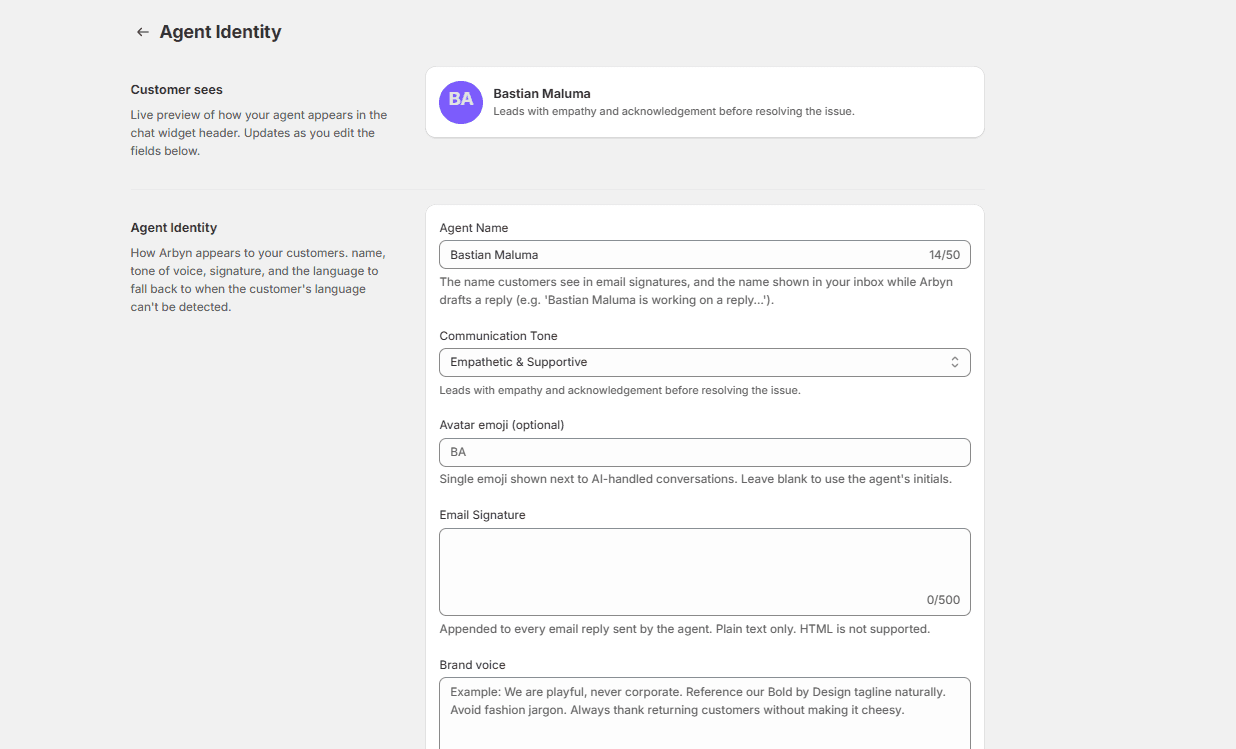
Once you know the chat's mission, you must decide on its personality, because every single reply is a reflection of your brand. A brand's voice is not a trivial marketing concept; it is the absolute foundation of a consistent and trustworthy customer experience that makes people feel they are talking to a cohesive company, not a random person. Whether your responses are written by a founder, a support agent, or an AI, they must all sound like they come from the same place. A customer service voice is the overall style of your company, while the tone is the attitude conveyed in a specific interaction. For example, your brand voice might be "friendly and expert," but the tone should adapt to be more empathetic and apologetic if a customer is frustrated about a late shipment. The first step is to define this voice with a simple, one-page style guide. Is your brand casual and witty, or is it professional and formal? Do you use emojis and exclamation points, or do you stick to formal punctuation? Do you use technical jargon or simple, everyday language? These rules ensure that a customer has the same brand experience whether they are reading your product description, an email newsletter, or a chat message.
This guide becomes the single source of truth for both your human agents and the AI's calibration, ensuring lock-step consistency. For human teams, it provides clear guardrails for how to interact with customers, removing guesswork and improving confidence. It should include concrete examples of what to say and what to avoid in common situations. For instance, instead of a robotic "Your request has been received," the guide might suggest a more human, "Got it. I'm looking up your order details right now and will have an update in just a moment." For an AI agent, this guide informs its core personality and ongoing training. High-quality AI chat tools can be calibrated on your past support emails, help center articles, or a provided style guide to adopt your specific voice and tone from day one. This critical step prevents the jarring experience of a warm, personal brand website that gives way to a cold, generic chatbot, a disconnect that instantly erodes trust. Consistency builds that trust, and a well-defined voice is the bedrock of that consistency across every single communication channel.
The process of defining your voice also forces you to prepare your core content, which is the fuel for both your team and your AI. Before you even think about launching, compile a list of the top 10-20 most frequently asked questions your store receives. These typically revolve around shipping policies, return procedures, order tracking, and product-specific queries like sizing, materials, or compatibility. Write out perfect, on-brand, comprehensive answers for each one. These pre-written responses, often called canned responses or macros, are not meant to make your team robotic or impersonal. They are meant to ensure that the most common questions are answered quickly, accurately, and with a consistent voice. An agent can then personalize the template with the customer's name and specific context, delivering a fast and personal response. For an AI, these perfected answers form the core of its knowledge base, ensuring it resolves common issues correctly and instantly without needing to guess or escalate unnecessarily. Without this preparatory content work, your team and your AI are just improvising, leading to inconsistent answers, longer resolution times, and a chaotic customer experience.
Set the Rules of Engagement: Guardrails, Escalations, and Availability
A live chat widget that says "We're online" when nobody is available is a broken promise that instantly damages brand trust. One of the most critical parts of a pre-launch checklist is defining the operational rules: when the chat is live, what happens when it is not, and how conversations move from an AI to a human. First, establish your hours of operation. If your team is only available from 9 a.m. to 5 p.m., the chat widget must reflect that reality. During offline hours, it should either disappear entirely or switch to an offline mode that collects the customer's question and email address, clearly stating when they can expect a response (e.g., "We'll get back to you within 12 hours."). An even better solution, given that 74% of customers now expect 24/7 service, is to use an AI that can handle common questions around the clock. This ensures late-night shoppers get instant answers to queries about shipping or returns, with the promise of a human follow-up for more complex issues the next business day, meeting modern expectations without requiring a 24-hour human staff.
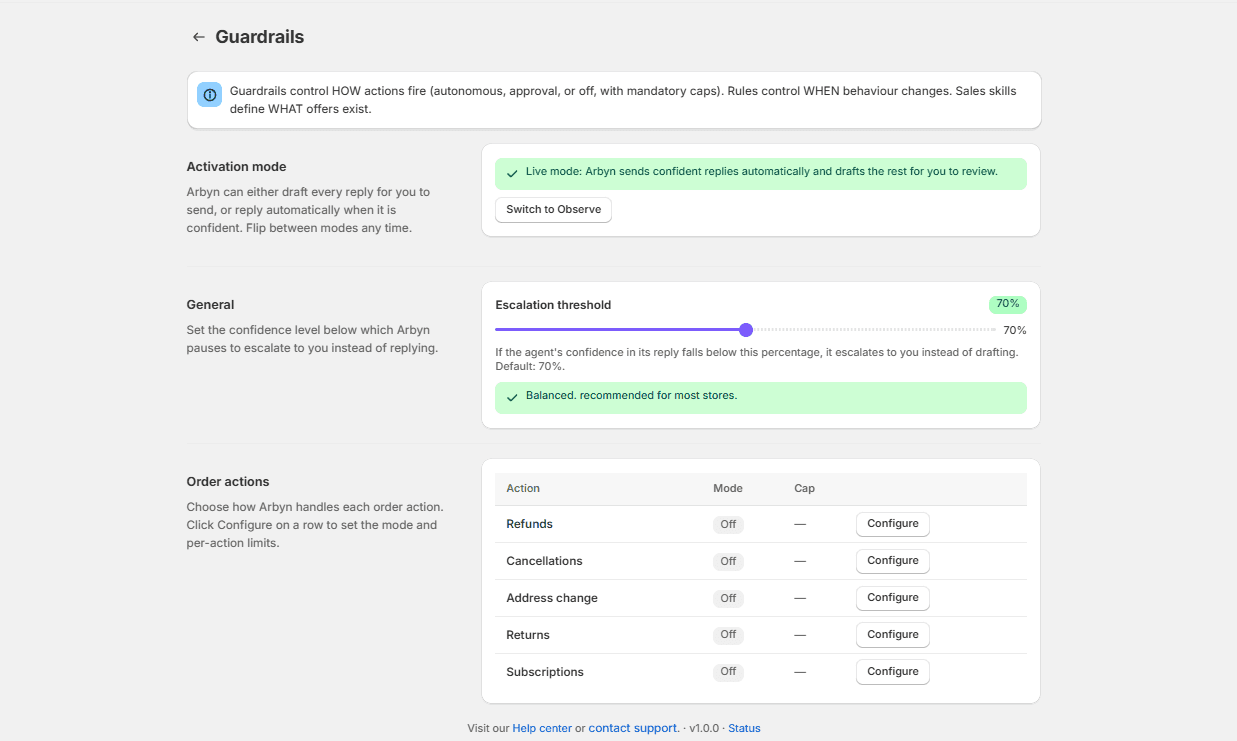
The second and equally important rule to define is the escalation path from automation to a person. No AI can, or should, handle every single conversation. You must determine precisely which issues require a human touch and build a workflow for that handover. These triggers typically include highly emotional situations with upset customers (often detectable through sentiment analysis), complex or multi-part technical problems, high-value pre-sales opportunities, or any direct request to speak with a person. The process must be absolutely seamless for the customer. The AI should recognize the trigger, inform the user it is finding a human expert, and then smoothly hand the conversation, along with its full transcript and context, to a live agent. This prevents the cardinal sin of support: forcing the customer to repeat themselves. The escalation protocol should be drilled into your human team so they know exactly which conversations take priority and how to take over from the AI without missing a single beat. This human-in-the-loop system combines the incredible efficiency of automation with the irreplaceable judgment and empathy of a person.
This framework of rules also extends to the specific actions an agent can take within your store's backend. With modern chat applications, an AI agent can do more than just talk; it can take direct action within Shopify, such as updating a shipping address, checking inventory, or initiating a return process. However, actions that involve money, like processing a refund, canceling an order, or issuing a unique discount code, carry inherent financial risk and require careful oversight. A crucial pre-launch step is to configure the approval guardrails for these sensitive actions. For example, you might allow the AI to autonomously update a customer's shipping address for an unfulfilled order, but require a one-click approval from a store owner before a refund of over $50 is actually issued. This gives you final control over financial decisions without creating a bottleneck for your team or the customer. The AI does all the upfront work of verifying the order and preparing the refund, and you simply give the final go-ahead from your phone or dashboard. Setting these rules thoughtfully provides the perfect balance of powerful automation and strategic human control, empowering the AI to resolve issues quickly while protecting your bottom line.
Prepare Your Knowledge and Your Team
Even the most advanced AI is only as smart as the information it can access, and your human team can't be everywhere at once. Launching a live chat widget without a comprehensive, up-to-date knowledge base is like hiring a new employee and giving them no training or documentation. This internal resource, often a detailed FAQ or a series of articles in a help center, is the single source of truth behind your entire support operation. It must contain clear, detailed, and unambiguous answers to every question a customer might ask, from the simple ("What are your shipping options?") to the complex ("How do I care for this hand-dyed, vegetable-tanned leather?"). This knowledge base serves two critical audiences: it is the primary source of truth for your AI agent to provide instant, accurate answers, and it is the go-to reference for your human team during training and for handling escalated chats. Before you go live, your team should be able to answer the top 20 most common questions without hesitation, using the knowledge base as their guide and foundation.
The process of building this knowledge base is an invaluable exercise in itself, forcing you to codify your policies and product details in a clear, customer-friendly way that often reveals internal inconsistencies. Review your past emails, support tickets, and social media comments to identify recurring themes and points of confusion. What questions come up over and over again? Those are the first candidates for your new knowledge base. For each question, write a perfect, on-brand answer. Include links to relevant pages on your site, like the full return policy or detailed sizing charts. This work pays dividends far beyond live chat; this content can be repurposed for your public FAQ page, which not only allows customers to self-serve but can also improve your site's SEO. A well-structured knowledge base with clear question-and-answer pairs can help search engines understand your content, improving your visibility in AI-powered search results and People Also Ask boxes.
With the knowledge base in place as your single source of truth, the focus shifts to rigorous team training. Your human agents are the safety net, the escalation point for your most valuable customers, and the voice of your brand in the most critical moments. They need to be experts in three distinct areas: product knowledge, policy knowledge, and platform knowledge. They must understand your products inside and out to handle nuanced sales-related queries. They must know your support policies (returns, exchanges, warranties) cold to avoid giving incorrect information. And they must be proficient with the chat software itself, knowing how to take over a chat from the AI, leave internal notes for a colleague, transfer a conversation to another team member, and use canned responses effectively to maintain speed and accuracy. Role-playing common and difficult scenarios is an extremely effective training method. Have agents practice handling an angry customer whose package is lost, a detailed pre-sale technical question about material sourcing, and a request for a refund that falls just outside the policy window. This preparation ensures that when a complex chat is escalated, your team is ready to step in with confidence and competence, providing a seamless and impressive experience for the customer.
Design the Front-End Experience and Proactive Strategy
The visual presentation and behavior of the chat widget itself have a significant and often underestimated impact on its effectiveness and user adoption. The goal is to make it feel like a native, helpful part of your store, not a generic, third-party add-on that looks out of place. Start with the basics: customize the widget's color palette, button style, and on-screen position to perfectly match your brand's existing aesthetic and UI. A widget that blends with your site's design is less jarring and feels more trustworthy to a visitor who may be security-conscious. The welcome message is equally important and demands context. Instead of a generic "Chat with us," tailor the greeting to the page. On your homepage, a simple "Questions? We're here to help" might suffice. On a complex product page, something more specific like "Questions about sizing or materials? Ask away!" is far more effective. On a collection page, try "Need help choosing the right one? Let me know!" This small bit of customization shows the customer that you are anticipating their needs and thinking about their journey through your store.
Beyond aesthetics, you must create a deliberate strategy for proactive messaging, which is where chat transforms from a passive tool into an active sales driver. Proactive chat involves automatically sending a message to a visitor based on their behavior, but it's a delicate balance; you want to be a helpful store associate, not an annoying pop-up ad. An instant pop-up the moment someone lands on a page can feel aggressive and will often be ignored. However, a well-timed, relevant message can be incredibly helpful and a powerful sales driver, with some studies showing proactive chat can generate a massive ROI. The best practice is to use triggers based on demonstrated intent. For example, you might set a trigger to fire after a visitor has been on a specific product page for more than 45 seconds, or if they repeatedly switch between two different product tabs. These behaviors signal consideration and potential indecision, the perfect moment for a helpful prompt like, "Having trouble deciding? I can help compare these two models."
The highest-value pages for proactive triggers are unquestionably the cart and checkout pages, where the vast majority of purchase intent evaporates. A staggering percentage of shoppers abandon their carts, with research from the Baymard Institute showing the average rate is over 70%. A proactive chat trigger on the checkout page that fires after 60 seconds of inactivity or on "exit intent", when the user's cursor moves towards the top of the browser to close the tab, can be the final intervention that saves the sale. The message can be as simple as, "Have any questions before you complete your order?" or "Need help with shipping options?" This single trigger directly combats the primary reasons for abandonment and can have a directly measurable impact on your daily revenue. When setting up these rules, start with just two or three high-intent triggers on your most critical pages. Monitor their performance, see how customers respond, and only add more once you have data showing they are helpful and not intrusive. A thoughtful proactive strategy turns your chat widget from a passive tool into an active, intelligent member of your sales team.
Measure What Matters: The Metrics of Chat Success
Once your live chat is running, the work shifts from preparation to continuous optimization, and you cannot optimize what you do not measure. To do this effectively, you must track the right metrics. Vanity metrics, like the total number of chats per month, can indicate activity but provide very little insight into performance or actual business impact. The key is to focus on a handful of actionable KPIs that tell you whether your chat strategy is achieving its defined mission. These metrics fall into three main categories: speed and efficiency, customer satisfaction, and business impact. For speed, the two most critical metrics are First Response Time (FRT) and Average Resolution Time. FRT measures how quickly a customer receives their first reply. In live chat, expectations for speed are incredibly high; industry benchmarks suggest an FRT of under one minute is necessary, with top-performing teams responding in under 40 seconds. Average Resolution Time measures the entire duration of the conversation, with a good target being under 10 minutes for most inquiries.
Efficiency and quality are measured most effectively by First Contact Resolution (FCR). This crucial KPI tracks the percentage of issues that are resolved in a single chat session, without the need for follow-up emails, calls, or another chat. A high FCR, with industry medians around 70-75%, is a strong indicator of an effective knowledge base and well-trained agents (both human and AI). For stores using AI, a closely related metric is the deflection or containment rate, which measures the percentage of inquiries fully resolved by the AI without any human intervention. A well-configured AI can often handle 40-60% of repetitive questions about order status, policies, and basic product details, freeing up human agents for more valuable, complex conversations that drive sales or save a customer relationship. These efficiency metrics tell you if your operational setup is working as designed, highlighting where you might need better training, clearer knowledge base articles, or refined AI workflows to improve performance.
Ultimately, the most important metrics are those that tie your chat activity directly to tangible business results. The first is Customer Satisfaction (CSAT), typically measured with a simple one-click post-chat survey asking customers to rate their experience on a scale. This is the most direct measure of how customers feel about your chat service, and a CSAT score of 85% or higher is considered excellent for the channel. Beyond satisfaction, however, you must measure revenue impact. For stores using chat as a sales channel, this means tracking the conversion rate of visitors who interact with chat versus those who do not. Advanced chat platforms can provide clear revenue attribution, showing exactly how many sales originated from or were influenced by a chat conversation. By focusing on these core metrics, response time, resolution rate, CSAT, and revenue attribution, you can move beyond guesswork and make data-driven decisions to continually improve your chat performance. This turns your chat widget from a potential cost center into a proven, profitable asset for your business.
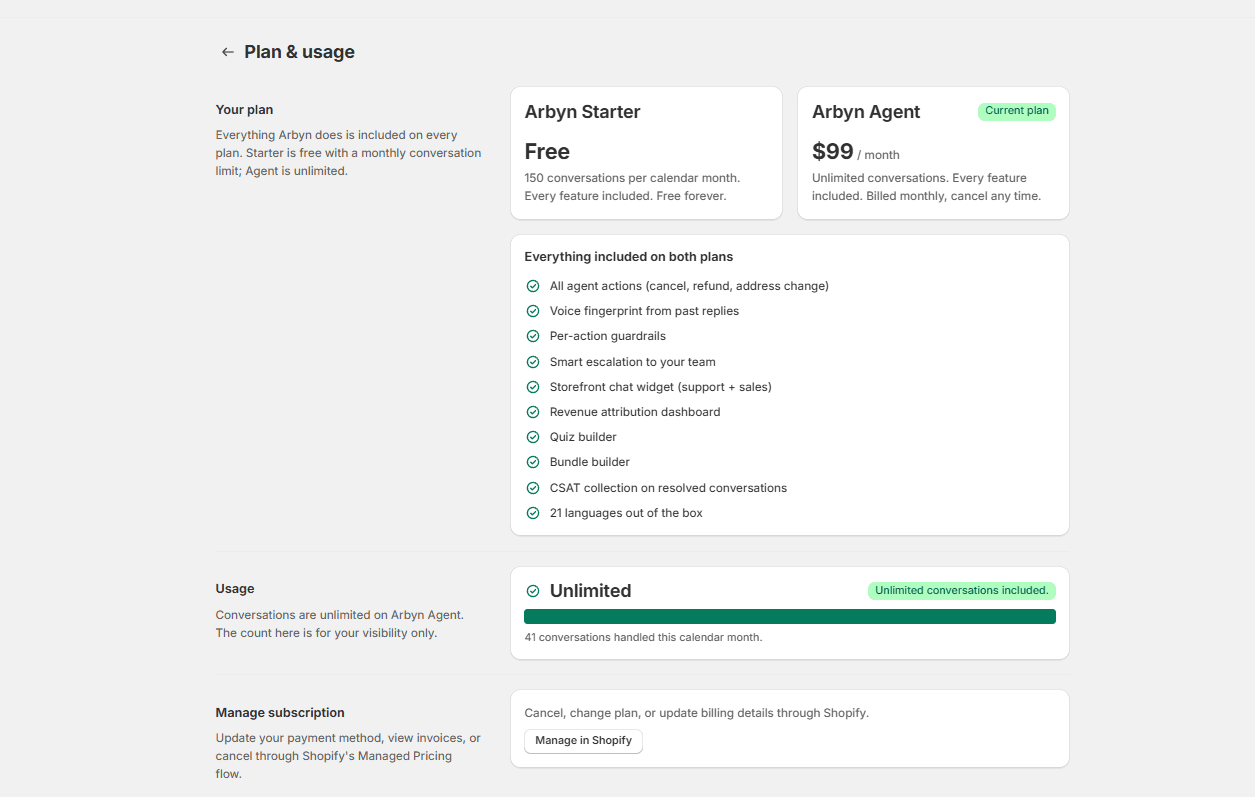
Flipping the switch on a live chat widget is the final, and by far the easiest, step in a long and strategic process. The real work lies in the methodical planning that precedes it, which determines whether you launch a helpful tool or a frustrating new problem. By deliberately defining your mission, calibrating your brand voice, setting clear operational rules, and diligently preparing your knowledge base, you build a robust foundation for success. This preparation ensures the tool serves your customers and your business goals, rather than creating another channel of chaotic, brand-damaging communication. An AI-powered tool like Arbyn is designed to handle the complex execution, learning your voice, answering common questions instantly, and managing intricate sales or support flows. But the strategy, the "why" behind the "what," must come from you. By completing this checklist, you provide that strategy, turning the promise of live chat into a tangible, profitable reality. You can start implementing this strategy today by installing Arbyn for free on the Shopify App Store and seeing how a well-prepared chat experience can transform your customer interactions.
Written by
For seven years I have led customer success and technical support inside high-growth SaaS and e-commerce companies. Customer Support Lead at DripShop.live, a live-commerce SaaS. Technical Support Specialist at Replo (Y...
View full profile